
Which Way Should My Fan Rotate
:max_bytes(150000):strip_icc()/ceiling-fan-rotate-direction-1907533-v4-5ba94e6346e0fb002576cebf.png)
Alright, settle in, grab a cuppa, because today we’re tackling one of life’s great mysteries. No, not the Bermuda Triangle. Not even how they fit all the caramel in those tiny squares. We’re talking about something far more pressing, something that impacts your very comfort: which way should your ceiling fan rotate?
I know, I know. You thought fans just… spun. You probably flicked it on, felt a breeze, and went about your day, blissfully ignorant of the complex aerodynamic ballet happening above your head. Well, prepare to have your mind gently blown, because there’s a secret life to your ceiling fan, a secret that can save you from a lot of unnecessary thermostat fiddling and existential sweatiness.
The Great Spin Debate: Summer vs. Winter
Here’s the deal: your fan isn’t just a simple air-pusher. It’s a sophisticated air-mover, a climate-control ninja with a hidden agenda. And that agenda changes with the seasons. Mind blown yet? Good.
Must Read
Think of it this way: are you trying to cool you, or are you trying to warm the room? Because those are two very different jobs, and your fan has a setting for each.
Summer Mode: The Glorious Downdraft
When the sun is blazing and you feel like you’re melting faster than a scoop of ice cream on a hot pavement, you want your fan to be in summer mode. This means the blades should be spinning to create a downdraft. Imagine a gentle waterfall of cool air cascading right over you.

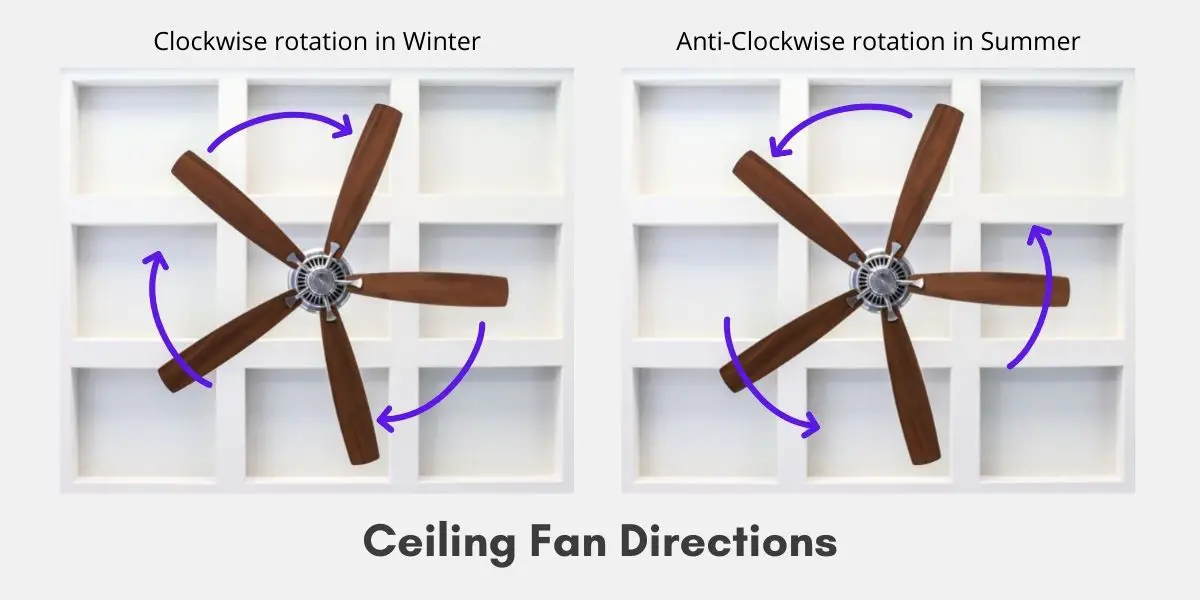
How do you achieve this magic? Your fan needs to rotate counter-clockwise. If you stand directly underneath it and look up, the blades should appear to be moving to your left.
Why counter-clockwise? Because this pushes air straight down. And what does that do? It creates a glorious little wind-chill effect. It’s not actually lowering the temperature of the room (that’s the AC’s job, the big show-off), but it’s making you feel cooler. It’s like having your own personal, subtle breeze. A gentle caress of refreshing air, whisking away that sticky feeling. You can often even set your thermostat a few degrees higher and still feel perfectly comfortable, saving you a few bucks on your energy bill. Who doesn't love that?
So, if you’re under the fan and you feel a distinct, delightful breeze hitting you square in the face (or chest, or head, depending on your height), congratulations! You’re in summer mode. You’re winning at life.
Winter Mode: The Stealthy Updraft
Now, let’s talk about when the chill sets in. You’ve got the heating on, but there’s still that lingering, slightly drafty feeling, or maybe you notice the warmest air is always hovering near the ceiling, mocking you. This is where winter mode swoops in, cape flowing dramatically.
In winter, you want your fan to create an updraft. This means the blades should be spinning clockwise. If you stand underneath and look up, the blades will appear to be moving to your right.
“But wait!” I hear you cry. “Doesn’t that just blow hot air up to the ceiling where it already is?” Ah, my friend, that’s the genius of it! When the blades spin clockwise, they actually pull the cooler air from below upwards. This cooler air then gently pushes the warm air that’s been chilling out at the ceiling (because hot air rises, remember your basic science class?) down along the walls and back into the living space. It’s a subtle, gentle circulation, like a warm, invisible hug for your room.

The key here is that it circulates the warm air without creating a direct draft on you. You don't want to feel a breeze in winter, because that would make you feel colder! The goal is to redistribute warmth, making the whole room feel cozier and more evenly heated. This means your furnace won’t have to work as hard, and again, your wallet gets a little break. It’s like magic, but with physics!
So, if you’re standing under your fan in winter and you feel little to no direct breeze, but the room generally feels warmer and less stratified, bravo! You’ve mastered winter fan usage.
The Mighty Switch: Your Power to Choose
“Okay, this is brilliant,” you’re thinking, “but how do I actually change this?” Fear not, intrepid fan-wielder! Most ceiling fans have a little switch on the motor housing itself. It’s often small, sometimes a bit fiddly, and occasionally requires a step stool and a sense of adventure to reach. But it’s there!

This little hero of a switch usually has two positions, one for each direction. Make sure the fan is turned off completely before you attempt to flip the switch. We don't want any rogue blades taking out an eye, do we?
Flip it, turn your fan back on, and observe the glorious direction change. It might take a moment to spool up to full speed, but you’ll see the difference.
The Verdict: A Spin in the Right Direction
So there you have it. The secret life of your ceiling fan, unveiled. It’s not just a decorative piece; it’s a subtle climate controller, an energy saver, and a surprisingly complex piece of home comfort tech. Now you know whether to go clockwise or counter-clockwise, for ultimate comfort and efficiency. Go forth, my friend, and spin wisely! Your thermostat (and your sweat glands) will thank you.