
Which Way Should My Ceiling Fan Go In Summer

Okay, let's talk ceiling fans! It might seem like a simple thing, but knowing which way to set your fan during the summer can actually make a big difference in your comfort and your energy bill. Who wouldn't want to feel cooler and save a little money? It's a win-win! Plus, tinkering with your fan is a super easy DIY project that practically anyone can handle.
So, what's the magic trick? In the summertime, you want your ceiling fan to spin counter-clockwise when you're looking up at it. This creates a downdraft, pushing air straight down and onto you. This is key for a couple of reasons. For beginners, think of it like this: the moving air helps evaporate sweat from your skin, making you feel cooler. Even if the temperature in the room is the same, the breeze makes a noticeable difference. You're not actually lowering the temperature of the room, you're just making your body feel cooler.
For families, this means you can crank up the thermostat a degree or two (or even more!) and still feel comfortable. That translates to serious savings on your air conditioning bill. Plus, a ceiling fan provides a gentler, more natural cooling sensation compared to blasting the AC. It's a great way to create a more comfortable and energy-efficient home for everyone.
Must Read
For the hobbyists out there who like to optimize everything, consider this: the effectiveness of your ceiling fan also depends on the height of your ceiling and the size of the room. In rooms with higher ceilings, you might need to adjust the fan speed to achieve the desired downdraft. Experiment with different speeds to find what works best for you. Some fans also come with different blade angles, which can affect the airflow. You can even find smart ceiling fans that can automatically adjust their speed and direction based on the room temperature and your preferences. The possibilities for customization are endless!
Now, how do you actually change the direction? Most ceiling fans have a small switch located on the motor housing. It's usually a simple toggle switch labeled with arrows or symbols indicating the direction of rotation. Before you flip the switch, make sure the fan is completely turned off and the blades have stopped spinning! Safety first! Once the fan is stopped, flip the switch and turn the fan back on to test the direction. If it's spinning clockwise, flip the switch again. It's that simple.
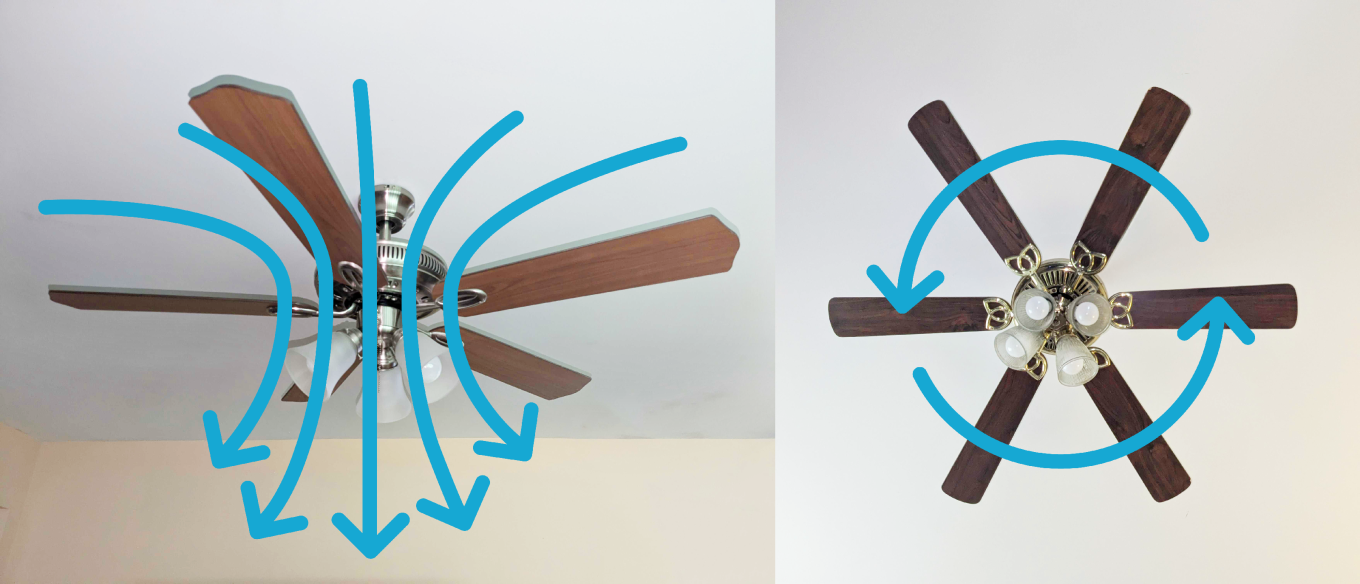
Here are a few practical tips to get started:
- Observe the direction of your fan. Is it currently spinning clockwise or counter-clockwise?
- Locate the directional switch. It's usually on the motor housing.
- Turn off the fan and let the blades stop. This is crucial for safety.
- Flip the switch and test the direction. Make sure it's spinning counter-clockwise in the summer.
- Experiment with different speeds. Find the speed that's most comfortable for you.
So, go ahead and give your ceiling fan a spin (pun intended!). Experiment with the direction and speed to find what works best for your needs. You might be surprised at how much of a difference it makes. Not only will you feel cooler and more comfortable, but you'll also be saving energy and money. Enjoy the breeze!

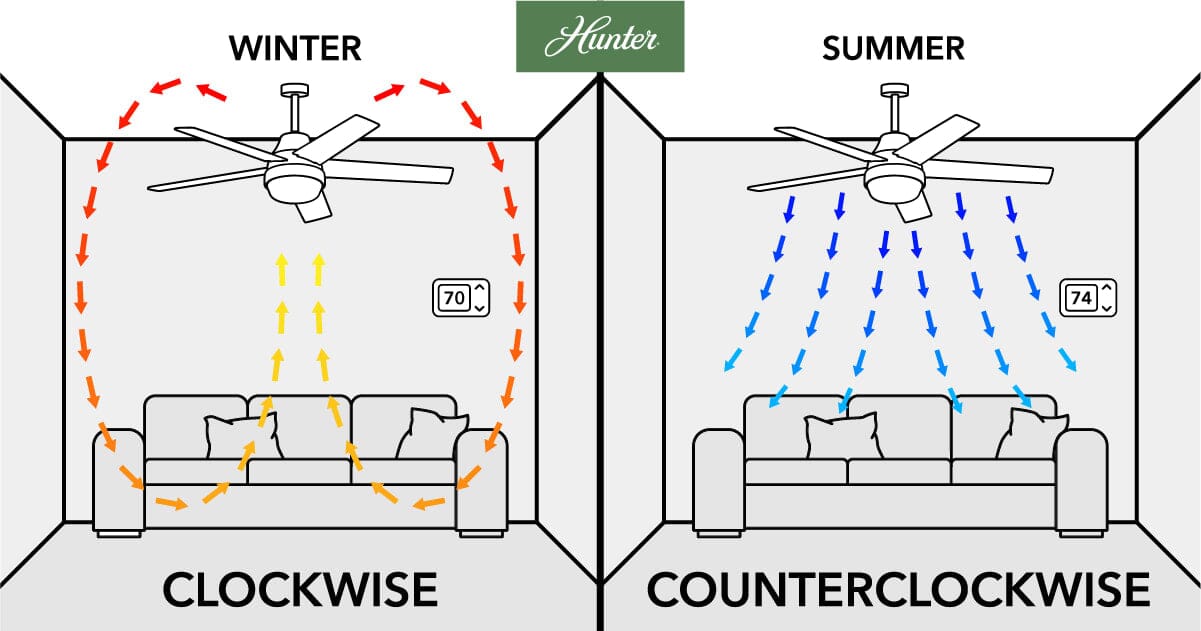
![Ceiling Fan Directions for Summer vs Winter [Infographic]](https://airflowacademy.com/wp-content/uploads/2021/06/Ceiling-fan-directions-infographic-552x1024.jpg)