Which Way Fan Blades In Summer
Ever find yourself standing under a whirring ceiling fan on a hot summer day, yet still feel like the air isn't quite doing its job? It’s a common scenario, and surprisingly, the answer might not be a broken fan or a lack of AC, but rather a simple, often overlooked detail: the direction your fan blades are spinning! This little tidbit is a fantastic example of how a tiny tweak can make a big difference in your comfort and even your energy bill, making it a fun and practical piece of knowledge to tuck away.
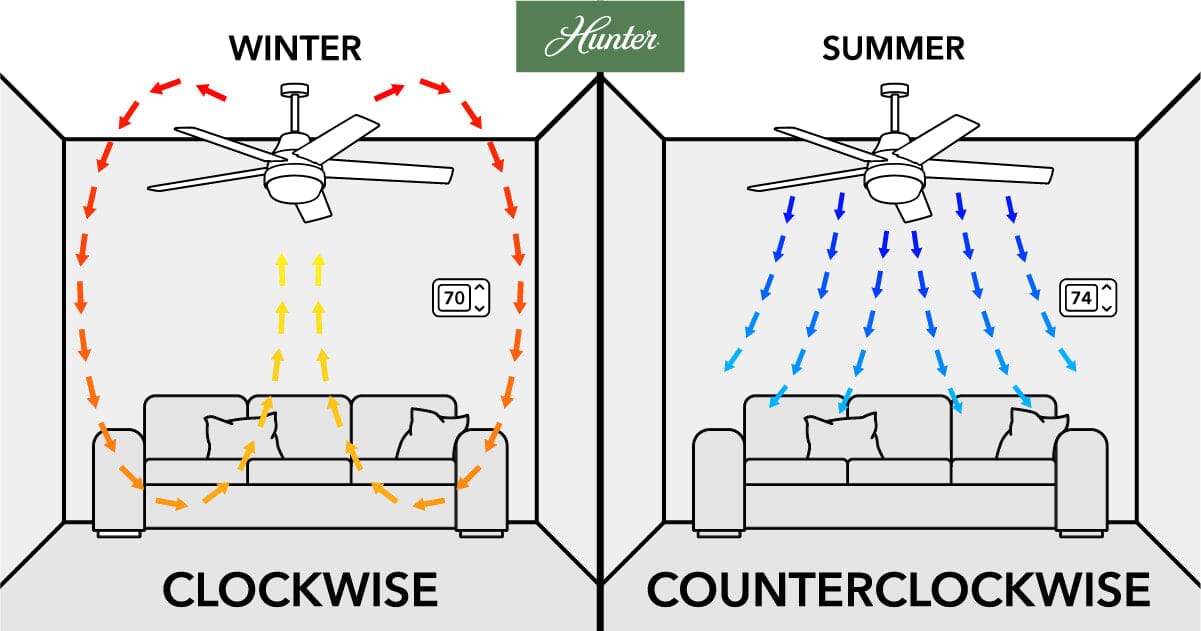
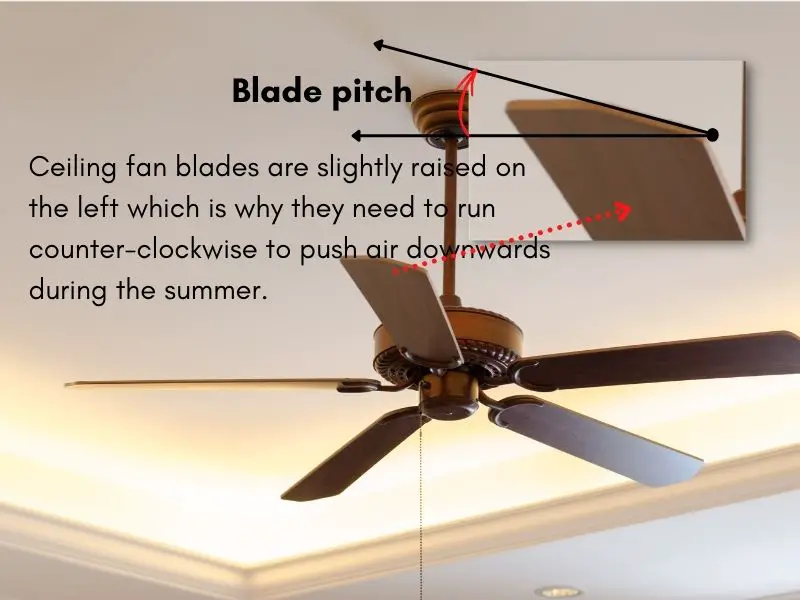
So, what’s the big secret? For summer, your fan blades should be set to spin in a direction that creates a downward breeze. This means, as you look up at the fan, the blades should typically be rotating counter-clockwise. The purpose of this downward airflow is to create a delightful wind-chill effect directly on your skin. Fans don't actually cool the air itself; instead, they move air across your skin, accelerating the evaporation of sweat, which in turn makes you feel cooler. It’s the same refreshing sensation you get from a gentle breeze outdoors. The benefits are clear: increased comfort without cranking up the air conditioning, and potentially significant savings on your energy consumption. It’s a smart, passive cooling strategy that’s been around for ages, yet so many of us forget to check it!
This simple piece of physics isn't just for savvy homeowners; it’s a wonderful concept to explore in education. Imagine a classroom experiment: a small fan, some thermometers, and a discussion about heat transfer and convection. Students could observe how moving air impacts perceived temperature, demonstrating the science behind comfort. In daily life, understanding this principle can transform your living space. You'll notice the difference immediately when you flip that switch. It's about optimizing your existing resources. Many modern smart homes might even have features that suggest fan direction changes based on the season, but for the vast majority of us, it’s a manual check that empowers us to take control of our environment.
Must Read
Ready to try it out? Exploring your fan's direction is super easy. First, locate the small switch on the motor housing of your ceiling fan – it’s often a tiny toggle or slider. With the fan off, gently flip it. Then, turn your fan back on and stand directly underneath it. In summer, you should feel a distinct, direct breeze pushing down on you. If you're feeling the air being pulled upwards, or only a gentle, diffused air movement, chances are your fan is set for winter operation (which circulates warm air from the ceiling without a direct breeze). Experiment with both settings on a warm day; the difference in how you perceive the temperature will be striking. It's a fantastic, hands-on way to literally feel the science and ensure your home is working as efficiently and comfortably as possible. So go ahead, check your fan – you might just unlock a cooler summer!
P.S. I did my best to ensure the blade direction description (counter-clockwise for downward breeze) is accurate for most fans, but it's always best to feel the airflow to confirm. The core principle is pushing air down on you in summer.:max_bytes(150000):strip_icc()/ceiling-fan-rotate-direction-1907533-v4-5ba94e6346e0fb002576cebf.png)