
Which Structure Is Most Closely Associated With Biofilm Formation

Hey there! So, you wanna know about biofilms, huh? Those slimy, clingy communities of microbes? Yeah, they're everywhere. And I mean everywhere. From your teeth (eek, plaque!) to…well, let's just say less savory places. But what's the real MVP of biofilm formation? Let's dive in!
We're talking about the structure most closely linked to these tenacious formations. It's not the individual bacteria themselves (though they're crucial, obviously!), it's something they produce to build their icky little fortresses.
The Star of the Show: Extracellular Polymeric Substance (EPS)
Drumroll please... the answer is Extracellular Polymeric Substance (EPS)! Seriously, this stuff is the unsung hero (or villain, depending on your perspective) of biofilm creation. But what is EPS, exactly? Sounds kinda sci-fi, right?
Must Read
Well, EPS is basically a sticky matrix made up of all sorts of goodies. Think polysaccharides (sugars!), proteins, DNA (yep, even dead bacteria contribute!), and even lipids. It’s like a bacterial version of super glue mixed with a multi-vitamin… for bacteria, of course.
So, picture this: individual bacteria swimming around, minding their own business. Then, BOOM! They start cranking out this EPS. This isn't just some random byproduct, mind you. It's a deliberate act of construction! The EPS acts like a glue, sticking the bacteria to a surface. Think of it like building a tiny, microbe-sized Lego castle! Pretty cool, huh? (Unless it's on your teeth, then not so much.)

But wait, there's more! The EPS isn't just glue. It's also a protective shield. Think of it as a bacteria bodyguard! It protects the bacteria from all sorts of nasty things: antibiotics (oh no!), disinfectants (yikes!), and even our own immune system trying to kick them to the curb. Talk about a tough crowd!
Is it any wonder why biofilms are so hard to get rid of? That EPS layer is a serious obstacle! It's like trying to clean up a spilled milkshake that's been sitting in the sun for a week. Good luck with that!

Why is EPS so Important?
Okay, so we know EPS is important. But why is it so crucial for biofilm formation? Besides the stickiness and protection, what else does it do?
First off, it helps with nutrient availability. EPS can trap nutrients and water, creating a mini-buffet for the bacteria living inside. Think of it as a built-in pantry! Never a bad thing, especially in harsh environments.
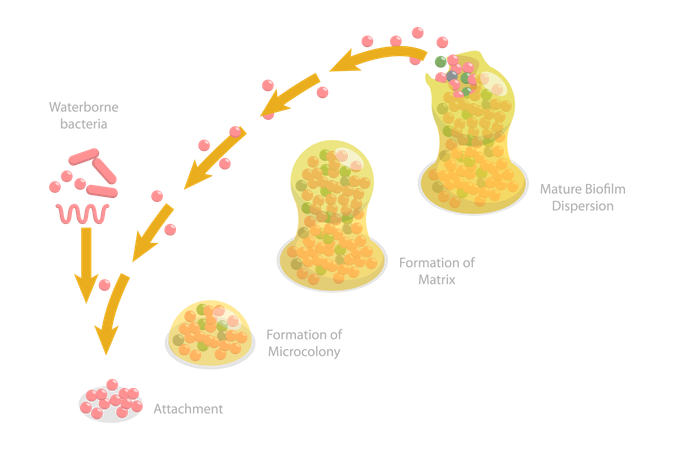
Secondly, it facilitates communication. Bacteria use something called "quorum sensing" to talk to each other. (Yes, bacteria gossip! Sort of.) EPS helps concentrate these signaling molecules, making it easier for the bacteria to coordinate their activities. It’s like having a dedicated bacterial conference call line!
And thirdly, and this is a biggie, it contributes to antibiotic resistance. The EPS layer can physically block antibiotics from reaching the bacteria. Plus, some bacteria within the biofilm can become dormant (sleeping bacteria!), making them even harder to kill. It's like playing hide-and-seek with invisible, sleeping villains!

So, What's the Takeaway?
If you only remember one thing from this chat, remember this: EPS is the key to biofilm formation. It's the glue, the shield, the pantry, and the communication hub all rolled into one slimy package. While individual bacteria are important, it's the EPS that really allows them to thrive and cause problems.
Next time you brush your teeth, remember the EPS and its role in creating that pesky plaque. Maybe it'll motivate you to brush a little harder! Or, at least, you'll have something interesting to think about while you're scrubbing.
Now, if you'll excuse me, I'm going to go find some mouthwash. All this talk about biofilms is making me feel a little…icky. Talk soon!