
Which Property Is True For Metals

Hey there! So, you're wondering which property is actually true for metals, huh? It's a good question! Because honestly, there are a LOT of things people say about 'em. Like, are they all shiny? (Mostly, but some are kinda dull, let's be real). Are they always super strong? (Depends on the metal, right?).
Let's break it down like we're dissecting a frog in high school biology, but, you know, way less messy. And no formaldehyde smell!
The Usual Suspects...
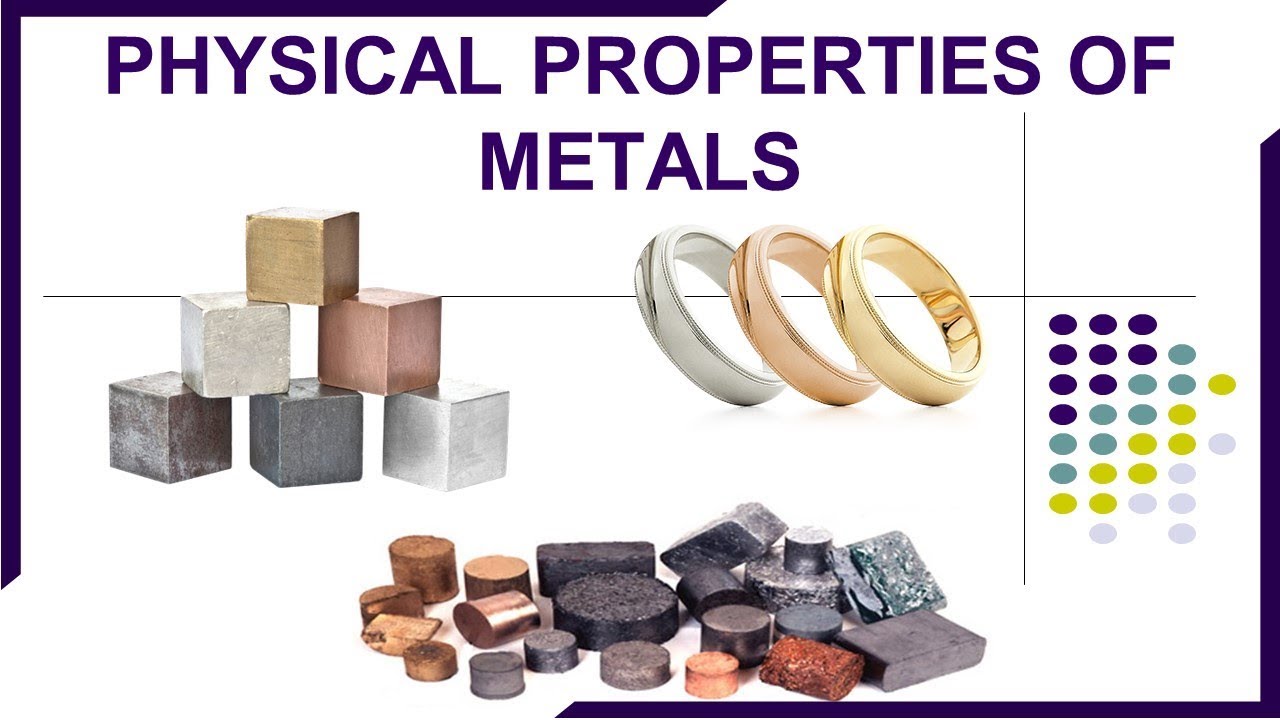
First, we gotta think about what pops into our heads when we picture a metal. We often imagine something shiny, like your grandma's silverware (if she actually uses it and it's not just for show, that is). This is because metals typically have a characteristic luster – that reflective gleam that makes them, well, sparkle. But, again, not all metals are super shiny, okay? Think dull lead. It's more…existential grey.
Must Read
Then there's the whole "metals are strong!" thing. True-ish. Strength and ductility (being able to be drawn into wires) are often associated with metals. But, honestly, have you ever tried bending a paperclip back and forth? It breaks pretty easily, doesn't it? So, not all metals are Hulk-level strong. Plus, strength is complicated. We're talking tensile strength, yield strength... it's a whole engineering textbook waiting to happen. Let's skip that part for now!
And what about magnetism? Iron, nickel, and cobalt are famous for their magnetic properties. Like, sticking-to-your-fridge famous. But most metals? Not so much. So, magnetism isn't a universal "metal thing."
The Winning Property: Conductivity!
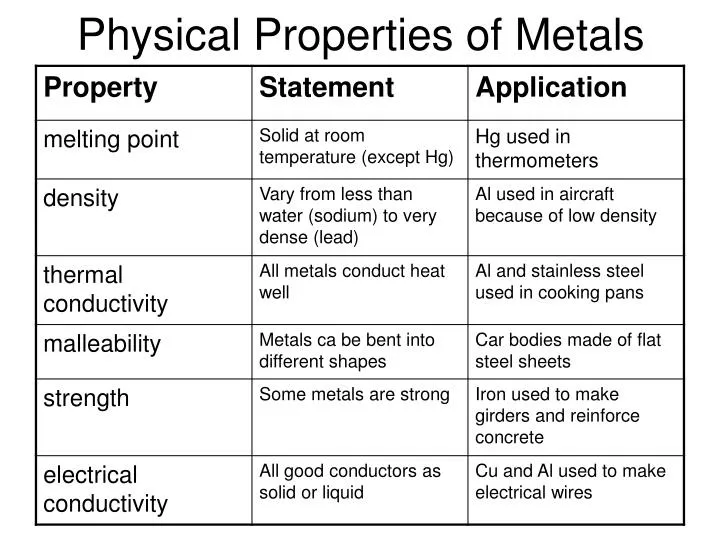
Okay, drumroll please... (imagine me drumming on the table with my pens). The most universally true property of metals is that they are generally good conductors of heat and electricity. That's the big one.
Why is this the case? Well, it's all down to the atomic structure. Metals have these “sea of electrons” floating around, which are free to move and carry electrical charge or thermal energy. Think of it like a crowd surfing at a rock concert. The electrons are the crowd, and they're carrying the energy from one side to the other.
Ever wondered why the wires in your phone charger are made of copper? Or why pots and pans are often made of aluminum or stainless steel? It's because those metals are really good at conducting electricity (in the charger) and heat (in the cookware), of course! Obvious, right?
Even metals that aren't super strong or particularly shiny are usually pretty decent at conducting. So, if you had to pick one property that applies to almost all metals, it's definitely conductivity.
But Wait, There's More! (A Little Caveat)
Now, before you go shouting "Conductivity!" from the rooftops, let's add a tiny little caveat. Even conductivity isn't perfectly universal. The conductivity of a metal can change depending on its temperature, its purity (are there other elements mixed in?), and even how it's been processed. Basically, there are exceptions to almost every rule in chemistry and physics.
Think of it like saying all dogs bark. Technically, most do, but some barely make a peep, right? It's the same with metals and conductivity. There might be a few weird exceptions hiding in a lab somewhere, but for the vast majority of cases, metals are your go-to conductors.
So, the next time someone asks you about properties of metals, you can confidently say, "They're generally good conductors of heat and electricity!" And then you can impress them with your knowledge of the "sea of electrons." Because who doesn't love a little science talk at parties?
Now, go forth and spread the word! And maybe grab another cup of coffee. I know I need one!
