
Which Properties Do Metalloids Share With Metals

Imagine a family reunion. You've got Uncle Tony, the life of the party, always tinkering with cars (definitely metal!). Then there's Aunt Carol, the artistic one, making gorgeous pottery (ceramic – think non-metal). Now, picture a cousin, let's call him Boris. He’s a bit of both! That's kind of like metalloids.
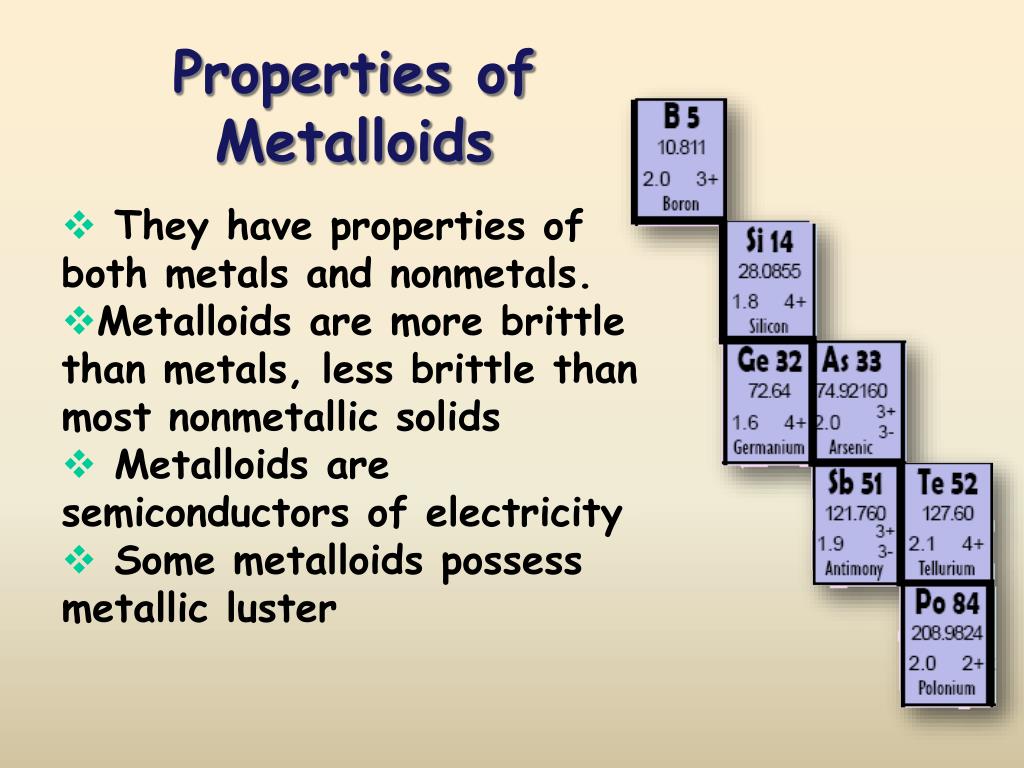
Metalloids are the quirky in-betweeners of the periodic table. They're not quite metals and not quite non-metals, sharing characteristics of both families. Think of them as the ultimate compromise artists of the element world!
Shiny Like My Car... Sometimes!
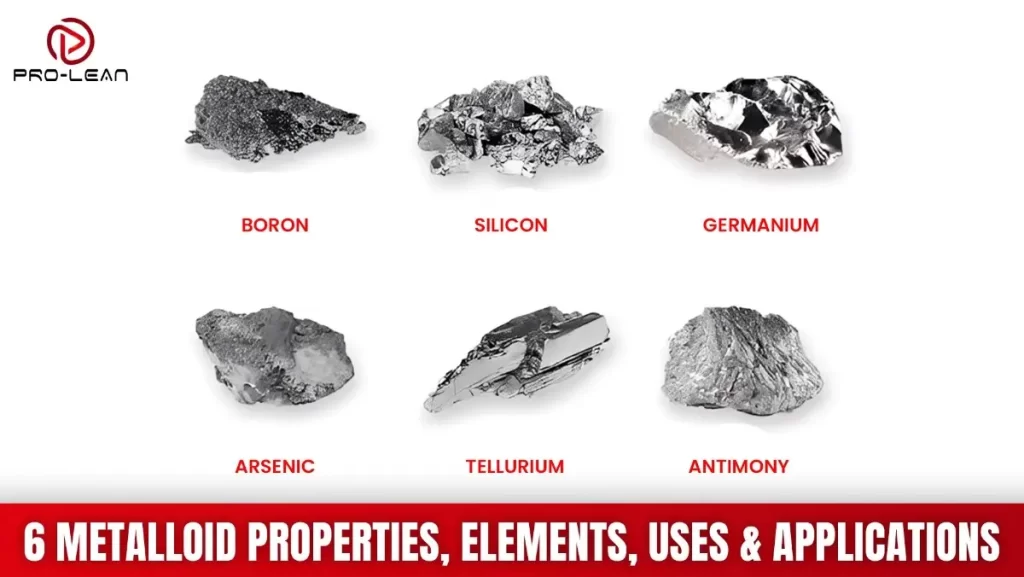
One thing metalloids swipe from their metal relatives is a certain shininess. Not all metalloids are gleaming superstars like gold, but some have a metallic luster that catches the eye. Think of silicon, for example. It can be downright sparkly!
Must Read
It’s like Boris borrowing Uncle Tony’s flashy belt buckle for a night out. He wouldn’t wear the entire jumpsuit, just a touch of the metal magic.
But here's the twist! This shininess often comes with a caveat. The metallic glint might be subtle, or only visible under certain conditions. It’s a peek-a-boo kind of shine, unlike the in-your-face gleam of, say, iron.
Conductivity: A Metallic Trait with a Twist
Metals are famous for their ability to conduct electricity. That's why they're used in wires and power lines. Metalloids can also conduct electricity, but they do it in a peculiar way.
They're not as efficient as metals – imagine trying to water your garden with a hose that has a few pinholes. Some water gets through, but not as much as you'd expect. This is why they are known as semiconductors!
This in-between conductivity is what makes them incredibly useful in electronics. Silicon, again, is a rockstar here. It's the foundation of computer chips and smartphones. We control the flow of electricity in tiny circuits, making our gadgets work.
Boris doesn't fix cars like Uncle Tony, but he can build you a robot that looks like a car, thanks to that controlled conductivity.
Hardness and Malleability: The Strength Test
Metals are typically strong, hard, and malleable, meaning you can bend them without breaking them. Metalloids? Well, it's a mixed bag. Some metalloids, like arsenic, are brittle and fragile. They shatter rather than bend.
Others, like silicon again (that superstar!), are harder and more robust. However, they still don't quite reach the impressive strength of metals like steel. They are closer to nonmetals in terms of their hardness.
It's like Boris trying to lift Uncle Tony's engine block. He might manage to move it a little, but he wouldn't be able to hoist it up and work on it like his uncle can.
This also means they aren’t easily drawn into wires. While metals happily stretch into long, thin strands, metalloids tend to crumble under the pressure. It’s a matter of structural integrity.

Bonding Behaviors: Joining the Family Fun
Metals generally form metallic bonds, where electrons are shared in a "sea" around the atoms. This creates strong, stable structures. Metalloids, being the in-betweeners, can form various types of bonds.
They can form metallic bonds, covalent bonds (where atoms share electrons more directly), and even ionic bonds (where atoms transfer electrons). It depends on what they're bonding with.
This versatility makes them incredibly interesting from a chemical perspective. They can play well with a wider range of elements than metals typically do. They are very reactive!
It's like Boris being able to chat with both Uncle Tony about car parts and Aunt Carol about art techniques. He can bridge the gap and find common ground.
Other Shared Traits: The Little Things
Beyond the big ones, there are other subtle traits that metalloids share with metals. Some have relatively high melting points, though usually not as high as metals.

They can also form alloys, which are mixtures of metals (or, in this case, metal-like elements). This allows for fine-tuning of properties to create materials with specific characteristics.
These subtle similarities add to the overall picture of metalloids as complex, fascinating elements. They’re not just trying to be like metals; they bring their own unique flavor to the table.
Think of Boris contributing a special dish to the family potluck. It might have a little bit of Uncle Tony's grilling expertise and a touch of Aunt Carol's artistic presentation.
The Metalloid Advantage: Versatility is Key
While metalloids might not be as strong or conductive as pure metals, their unique combination of properties makes them incredibly valuable. Their semiconducting abilities, for example, are crucial in modern electronics.
They also find uses in various other applications, from solar panels to medicine. Their versatility is their superpower. They have a unique chemistry.
It's like Boris not being the best at any one thing, but being good at a lot of things. He can adapt to different situations and contribute in unexpected ways.
And there's more to it! Because of their high reactivity, they are often combined with other elements to create different compounds. The combination of metalloid and metal is incredibly valuable!
So, next time you think about metals, remember their quirky cousins, the metalloids. They're not just trying to be like the cool kids; they're forging their own path, with a little bit of metal magic mixed in. They are important in our modern life.
They're a reminder that sometimes, the most interesting things happen in the in-between spaces. They're the Boris of the periodic table, full of surprises and unexpected talents!
Remember, the periodic table is a fascinating family tree, and metalloids are the awesome cousins who keep things interesting.