
Which Of The Following Occurs During Data Cleansing
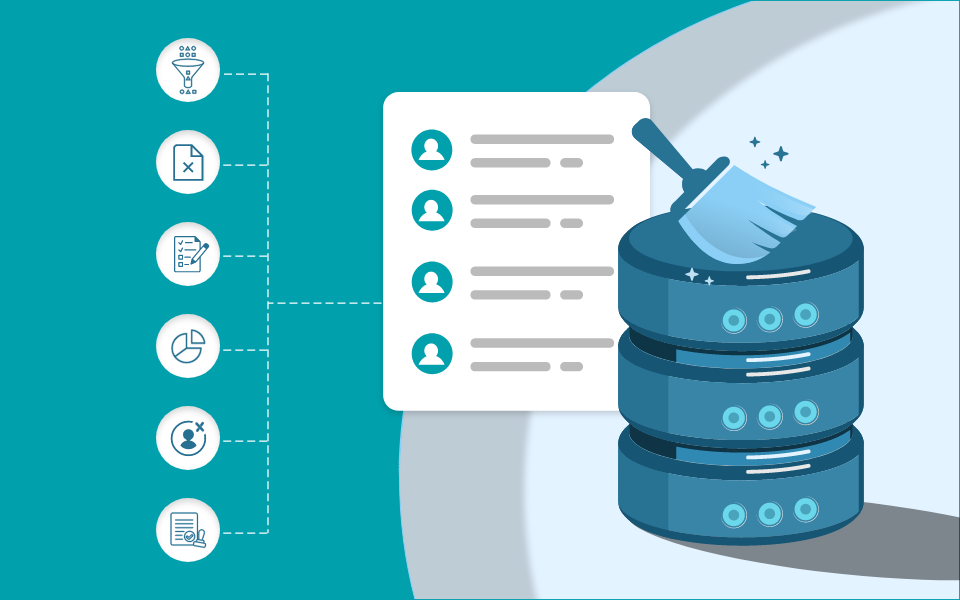
Ever heard of data cleansing? Think of it as giving your data a spa day! It’s all about getting rid of the grime and gunk that makes your data messy and unreliable. So, what exactly happens during this fabulous data makeover?
Spotting the Smudges: Missing Values
Imagine a spreadsheet with a bunch of empty cells. Those are missing values! Data cleansing involves figuring out what to do with them. We might fill them in with a best guess or just decide to ignore them. It's like deciding what to do with that empty space on your bookshelf!
Sometimes, we can use fancy algorithms to estimate what the missing values should be. Other times, the best approach is to simply flag them as missing. It is all about the context!
Must Read
The goal is to make sure the missing information doesn't throw off our results. A clean dataset allows for clean insights!
Banishing the Blemishes: Removing Duplicates
Duplicate data is like having two identical outfits in your closet. They just clutter things up! Data cleansing involves identifying and removing these duplicates. This helps keep our data accurate and efficient.
Imagine counting the same customer twice – yikes! By removing these duplicates, we can get a much clearer picture of what’s going on.
There are various ways to handle duplicates. Sometimes, we merge the duplicate entries. Other times, we delete all but one copy. Whatever you do, your database will thank you!
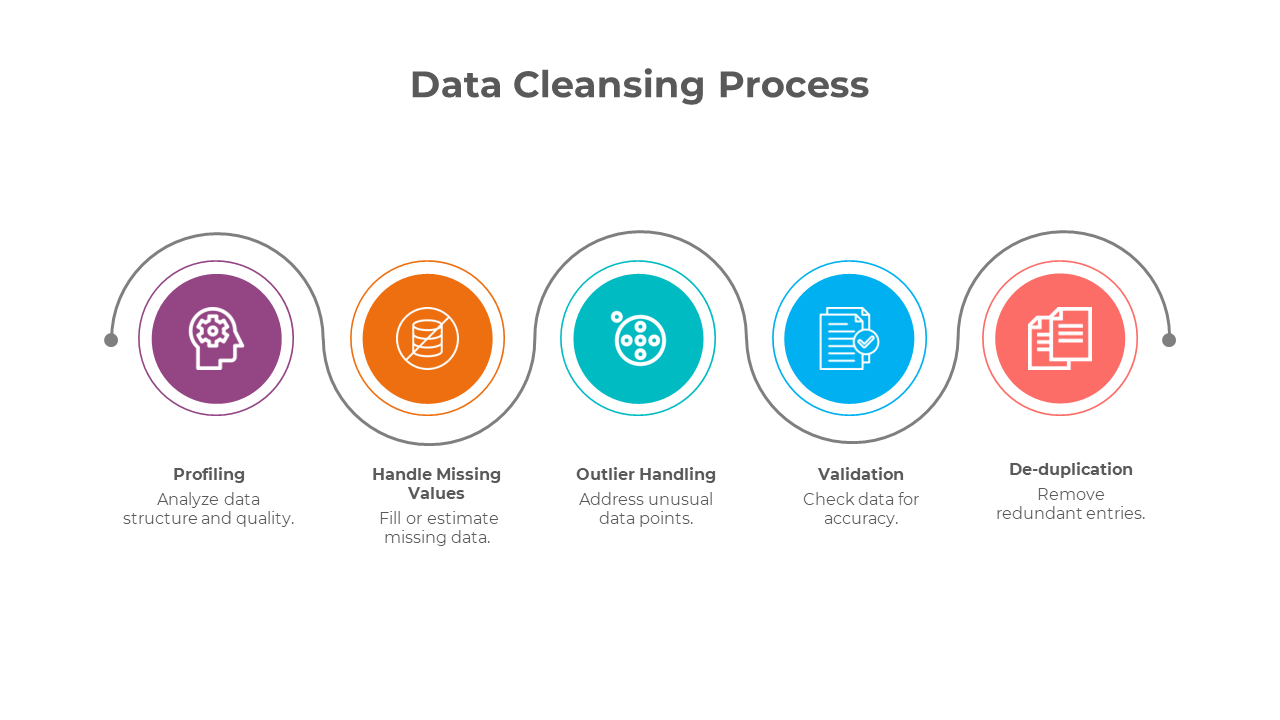
Taming the Typos: Correcting Errors
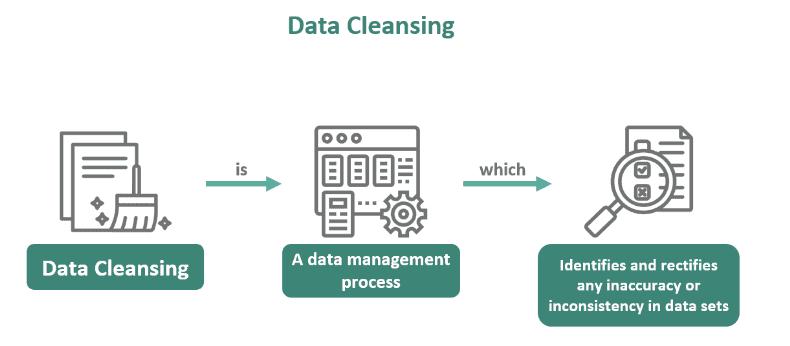
Typos happen to the best of us, even data! Data cleansing involves correcting these errors. It’s like having a proofreader for your data. This ensures that our data is accurate and consistent.
Think of a customer’s name spelled differently in two different places. We need to correct that! We can use spell checkers, look-up tables, and other methods to find and fix these errors. Think of it as a massive find-and-replace operation!
Correcting errors is crucial for data integrity. It leads to better analysis and better decision-making!
Standardizing the Style: Formatting Data
Data can come in all sorts of formats. Dates, numbers, and text can all be written in different ways. Data cleansing involves standardizing these formats. It is like giving all your data a uniform!
Think of dates written as MM/DD/YYYY in one place and DD/MM/YYYY in another. We need to choose a consistent format! This makes our data much easier to work with. Plus, you'll avoid confusion and potential calculation errors.
Standardizing data is key to ensuring compatibility. It allows different systems to “talk” to each other more effectively. A harmonious database is a happy database!
Dealing with Discord: Handling Inconsistent Data
Sometimes, data can be inconsistent. This means that different pieces of data contradict each other. Data cleansing involves resolving these inconsistencies.
Imagine a customer having a different address in two different systems. Which one is correct? It is like solving a data detective mystery! We need to investigate and figure out which data is most reliable.
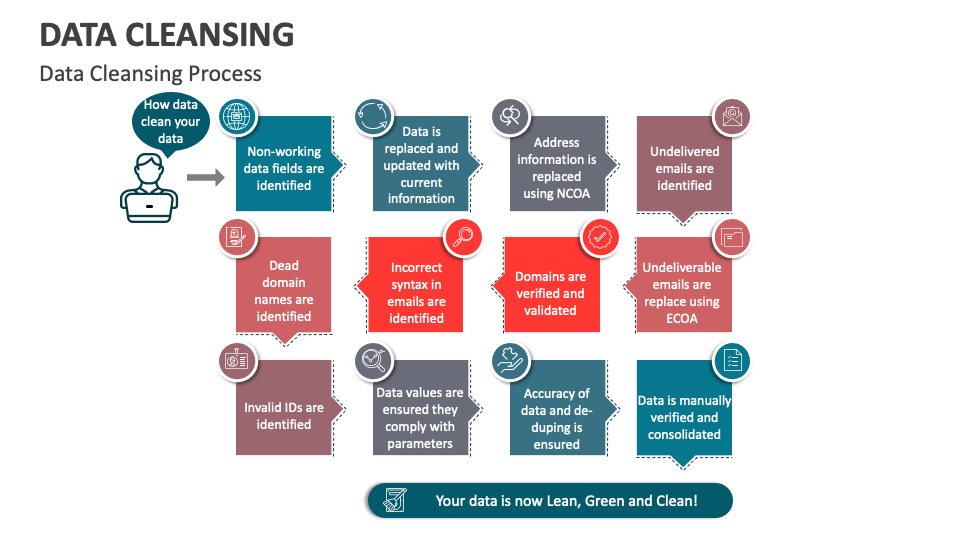
This might involve contacting the customer or checking other sources of information. Resolving inconsistencies ensures that our data tells a coherent story.
Finding the Outliers: Identifying Anomalies
Anomalies are data points that are way out of the ordinary. Data cleansing involves identifying these anomalies. Think of them as the black sheep of the data family!
Perhaps you see an unusually high sales number for a particular day. Is this an error? Or a genuine anomaly? It is important to investigate. Sometimes, these anomalies are actually fraudulent or the result of system error.
Identifying anomalies can help us prevent fraud, improve accuracy, and gain a deeper understanding of our data. It's like finding hidden gems (or hidden problems) in the data landscape.

Verifying the Validity: Checking Data Types
Data types matter! A number field should contain numbers, and a text field should contain text. Data cleansing involves verifying that data types are correct. This ensures that our data is used correctly.
Imagine trying to do math on a text field – not gonna work! We need to make sure that each field contains the correct type of data.
This might involve converting data from one type to another. Verifying data types helps prevent errors and ensures accurate calculations.
Data cleansing can be a little like detective work, a little like tidying, and a whole lot like problem-solving. But it’s all about making your data the best it can be. Ready to roll up your sleeves and give your data some love? The results are worth it! You might find it surprisingly addictive!