Which Direction Should Your Fan Turn In The Summer

Ever stare up at your ceiling fan and wonder if it's really making a difference? Or maybe you've heard whispers about changing its direction with the seasons and thought, "Is that just an old wives' tale?" Well, let's dive into the surprisingly fascinating world of fan direction and how it can impact your comfort (and potentially your energy bill!) during the sweltering summer months. It's a small tweak that can make a surprisingly big difference, and who doesn't love a simple life hack?
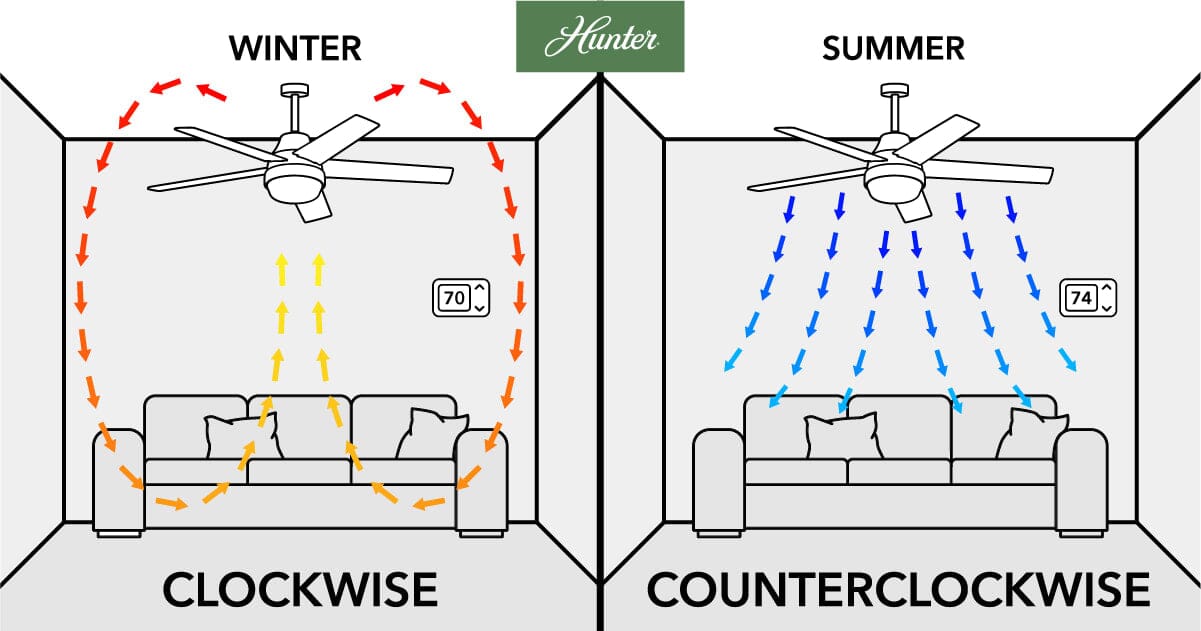
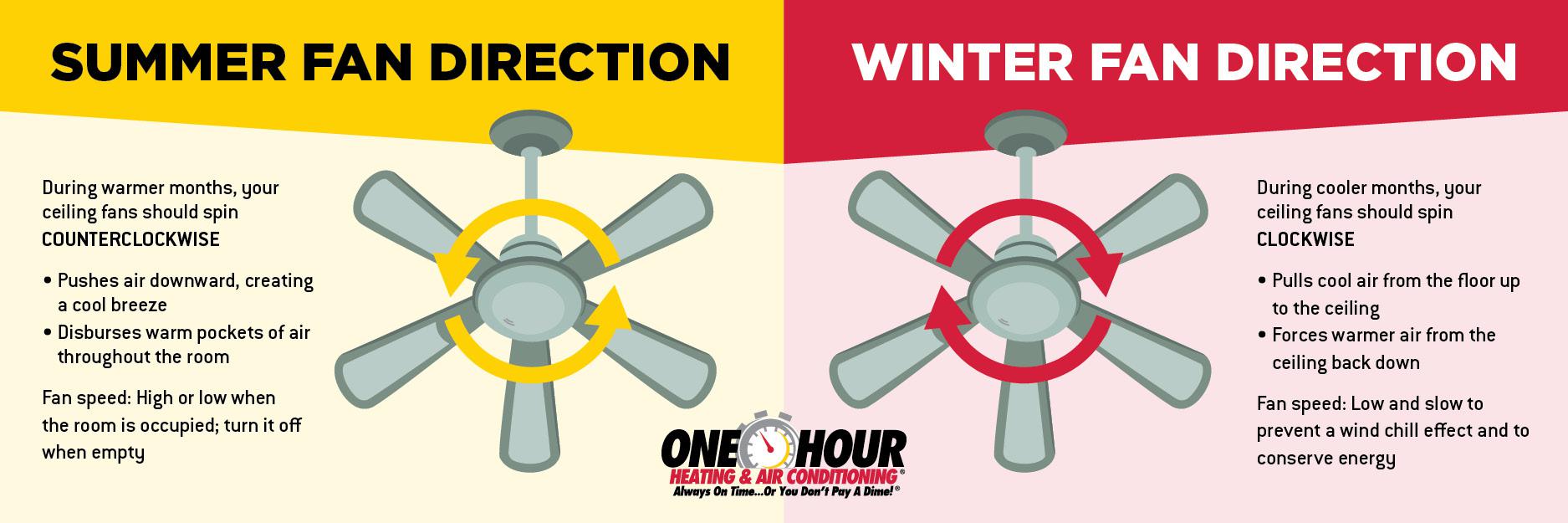
So, what's the deal with fan direction? In the summer, you want your fan to turn counterclockwise. Think of it this way: you want it to push air down, creating a cooling breeze. When the blades rotate counterclockwise, they angle downward, forcing air downwards and creating a wind chill effect. This breeze evaporates perspiration from your skin, making you feel cooler, even if the actual room temperature hasn't changed. This is especially helpful if you don't have air conditioning or want to supplement it to save energy.
The benefit is twofold. First, you feel cooler, allowing you to potentially raise your thermostat a few degrees without sacrificing comfort. This can lead to significant energy savings. Second, the moving air helps to circulate the air in the room, preventing stagnant air pockets and contributing to a more comfortable and even temperature throughout the space. Think of it as a mini-weather system in your living room!
Must Read
The principles of fan direction and airflow are applicable in various settings. In education, physics classes can use ceiling fans as a practical example of how blades and angles affect airflow and force. Students can experiment with different fan speeds and blade angles (if adjustable) to understand the principles of aerodynamics in a tangible way. In everyday life, understanding how to optimize airflow can extend beyond just ceiling fans. Knowing how air moves in a room can help you strategically place furniture, vents, and even plants to maximize comfort and minimize energy consumption.

Ready to give it a try? It's incredibly simple! Most ceiling fans have a small switch on the motor housing that controls the direction of the blades. Typically, you'll need to turn the fan off completely before flipping the switch. Try different settings! Start with a low speed and gradually increase it to find the sweet spot that provides a comfortable breeze without being overpowering. If you're unsure which direction is correct, stand directly under the fan and feel for the downward breeze. If you don't feel it, flip the switch. You could even use a lightweight piece of paper, like a receipt, to see which way the air current is pushing it. It's a fun, hands-on experiment that will make a real difference to your summer comfort. Don't be afraid to experiment and find what works best for you and your space!
So, go ahead! Give your fan a spin (literally!) in the right direction and enjoy a cooler, more comfortable summer. It's a simple change with a surprisingly refreshing payoff.