
Which Accurately Describes The Supremacy Clause

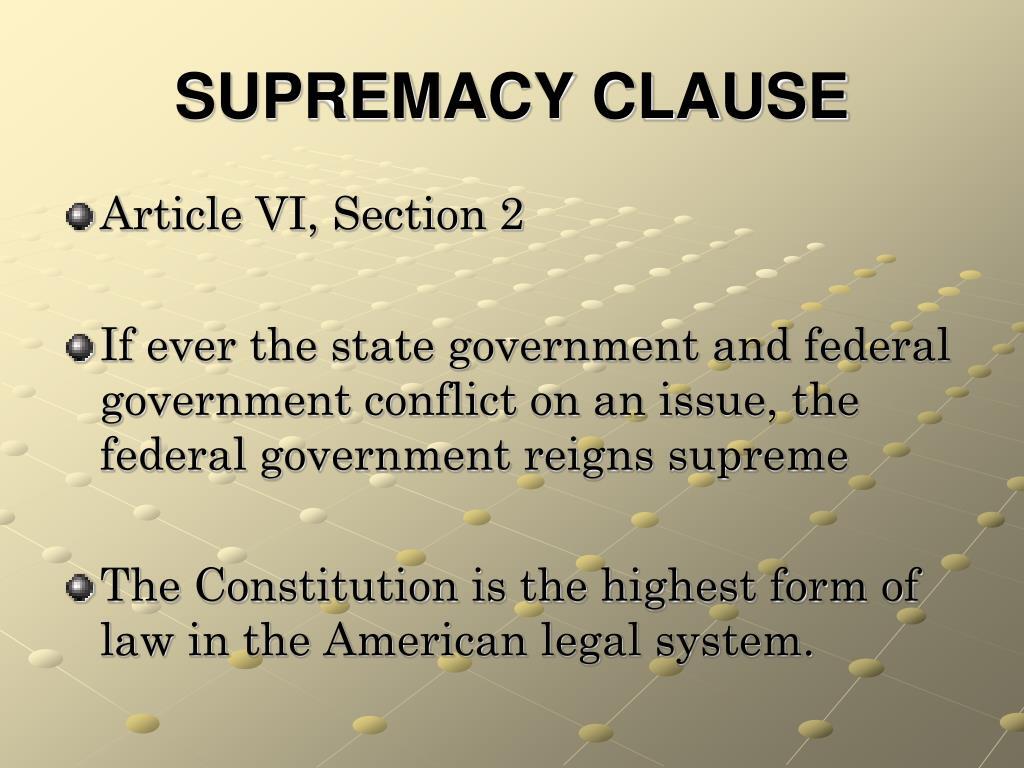
Ever feel like there's a boss of bosses? Someone who makes the rules everyone else has to follow? Well, in the grand scheme of American law, that's kind of what the Supremacy Clause is all about. It's a bit of legal jargon, sure, but it basically says that the Constitution and federal laws are the supreme law of the land. Think of it like the ultimate trump card in a legal game of poker.
Now, I know what you're thinking: "Supreme law? Sounds boring!" But trust me, it's way more relevant to your everyday life than you might think. Let's dive in without getting a headache.
So, What Does "Supreme" Really Mean?
Imagine you're baking a cake. You've got your grandma's secret recipe (the Constitution), and then you've got some newer instructions from a cooking blog (federal laws). But then, your neighbor chimes in with their "amazing" alteration of adding sardines (state law) but you know that would ruin the cake.
Must Read
The Supremacy Clause is like that voice in your head saying, "Stick to grandma's recipe and the blog's instructions! Sardines have no place in this cake!" It ensures that federal laws and the Constitution win out if there's a conflict with state laws.
Simply put, when federal and state laws clash, federal law prevails.

Why Should I Care?
Okay, so big government trumps smaller government. But why should you care? Well, think about it this way. Imagine if each state had its own entirely different set of rules about, say, air travel. Flying from New York to California would be a nightmare of changing regulations! Or if states could decide that the Bill of Rights didn't apply within their borders? Chaos!
The Supremacy Clause creates a certain level of uniformity and stability across the country. It helps ensure that fundamental rights and important federal policies are upheld everywhere, regardless of what individual states might prefer.
Think about civil rights laws. They were often challenged at the state level, with some states trying to maintain discriminatory practices. The Supremacy Clause played a crucial role in ensuring that federal laws guaranteeing equal rights were enforced, even when states resisted.
Examples in Action
Here are a few everyday examples where the Supremacy Clause comes into play:
- Federal drug laws vs. state marijuana laws: Even though some states have legalized marijuana, it's still illegal under federal law. This creates a tricky situation, and the Supremacy Clause technically gives the federal government the power to enforce its laws, even in states where marijuana is legal.
- Environmental regulations: The federal government sets minimum standards for things like air and water quality. States can create stricter rules, but they can't weaken the federal regulations.
- Federal funding: The federal government often provides money to states for various programs, like education or infrastructure. As a condition of receiving that funding, states must comply with certain federal requirements. This is another way the Supremacy Clause exerts its influence.
It's Not Always Black and White
Now, it's important to remember that the Supremacy Clause isn't a magic wand that automatically resolves every conflict between federal and state law. There's still a lot of room for interpretation and debate, especially when it comes to determining the proper balance of power between the federal government and the states. Courts are constantly grappling with these issues, and the specific facts of each case can make a big difference in the outcome.

Plus, the 10th Amendment reserves powers not delegated to the federal government to the states or the people. So states still have significant authority. It's a constant push-and-pull, a dynamic interplay between federal and state power.
The Takeaway
The Supremacy Clause might sound like a dry legal term, but it's a fundamental principle that shapes the relationship between the federal government and the states, and it impacts your life in countless ways. It's a crucial part of what makes the United States, well, united. Understanding it, even just a little bit, helps you understand how our country works.
So next time you hear about a conflict between federal and state law, remember the Supremacy Clause. It's the ultimate rule enforcer, ensuring that the Constitution and federal laws reign supreme (most of the time!). And who knows, maybe knowing this little tidbit will impress your friends at your next trivia night. Who knew constitutional law could be so… entertaining?
