
Where To Position Smoke Alarms In A House
:max_bytes(150000):strip_icc()/where-to-place-smoke-detectors-1152485_V2-3c5086adfaa646d69d312b45d342c621.png)
Ah, the humble smoke alarm. It’s that little white disc watching over us, usually from a ceiling. It’s also often the loudest, most dramatic member of the household.
Its job is simple: tell us if there’s a fire. But its execution? Sometimes, it seems to have a flair for the dramatic, especially when toast is involved.
Today, we’re not going to talk about where the experts tell you to put them. Oh no. We’re going to discuss the real-world, perhaps slightly rebellious, approach.
Must Read
Because let’s face it, the official rulebook sometimes forgets about real life. It forgets about that enthusiastic chef. It forgets about shower steam. It definitely forgets about burnt popcorn.
The Kitchen: A Minefield of Misunderstandings
Let’s start with the heart of the home: the kitchen. This is where most smoke alarm-related domestic disputes begin. It's not usually a real fire, but a culinary experiment gone slightly awry.
The general advice? Keep smoke alarms out of the kitchen. But not
Imagine the scene: you're making a simple breakfast. A piece of toast, just a little crispy. Suddenly, the entire house is alerted.
The alarm screams, the dog howls, and you wave a dishtowel like a frantic conductor. All because your toaster has a mind of its own.
My "unpopular" opinion? Place your kitchen alarm somewhere it can smell
Don't put it directly over the oven. You’re practically asking for trouble there. It’s like putting a referee in the middle of a wrestling match; it’s just asking to get involved in every tiny skirmish.
A good spot? Maybe just around the corner. In the doorway of the kitchen, but a foot or two
It allows you to open a window, fan the air, and perhaps admit defeat to the toaster before the siren song begins. We all need that grace period.
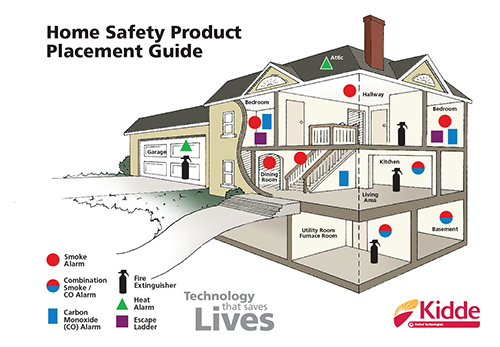
The Bathroom: Steam Dreams and Alarm Screams
Next up, the bathroom. Now, no one sensible suggests putting a smoke alarm
Have you ever taken a gloriously hot shower? The bathroom fills with a delightful cloud of steam. It’s like a personal sauna.
Then, the door opens, and that wonderful cloud wafts out. Right towards the smoke alarm you thoughtfully placed in the hallway just outside.
Cue the shrill symphony of false alarm. You're left dripping wet, apologizing to an inanimate object.
Steam is the silent enemy of smoke alarms. It mimics smoke perfectly in density, but without the actual danger. It’s a master of deception.
So, if your bathroom is particularly steamy, consider placing the hallway alarm a little further down. Give that steam a chance to dissipate before it triggers a crisis.
We want protection, not paranoia triggered by a relaxing bath. Let the steam be steam, not a false fire alert.
Bedrooms: Guarding Your Slumber
Bedrooms are important. You want to be woken up if there's a problem. But not by a spider, or a dust bunny, or a sudden draft.
The official line is usually "one in every bedroom." Makes sense, right? To wake you up quickly.
But sometimes, the placement can be a bit... intrusive. Especially if you’re a light sleeper.
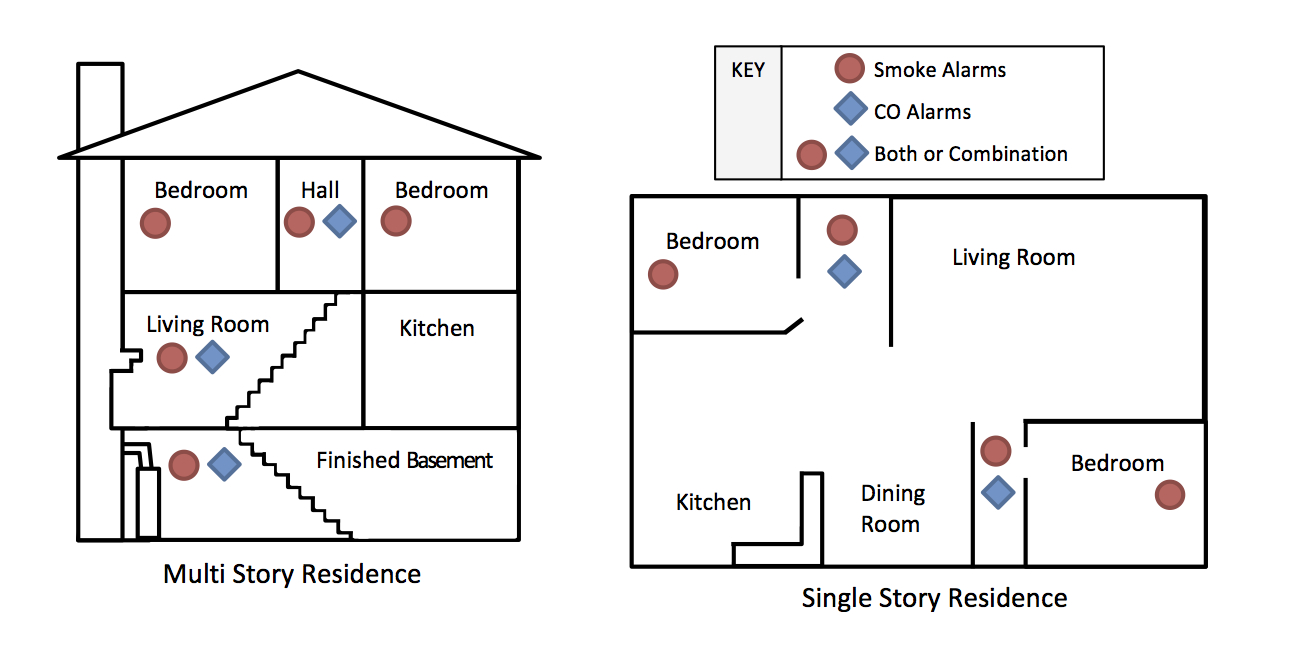
A ceiling-mounted alarm directly above your bed can feel like Big Brother. Every tiny pop or creak in the house can make you tense.
My playful suggestion: place it on the wall, near the door. About six inches from the ceiling, that is. This is a common and often effective spot for alarms on walls.
It still catches smoke entering or leaving the room. But it doesn't hover quite so oppressively over your dreams.
Avoid placing smoke alarms directly near ceiling fans or air vents. The constant airflow can prevent smoke from reaching the alarm effectively. It’s like trying to catch a feather in a wind tunnel.
You want the smoke to drift naturally to it, not be blown away. Physics, even playful physics, matters.
Hallways and Landings: The Designated Watchdogs
These are the classic, safe, often recommended spots. Hallways and landings act as natural conduits for smoke. They're like the main arteries of your home.
Placing an alarm in a central hallway on each floor is generally a good idea. It covers multiple rooms at once.
But even here, there are nuances. Imagine a long, narrow hallway. Placing an alarm at one end might not be enough.
Smoke could build up at the other end before it travels all the way down. Consider two if your hallway is particularly sprawling.
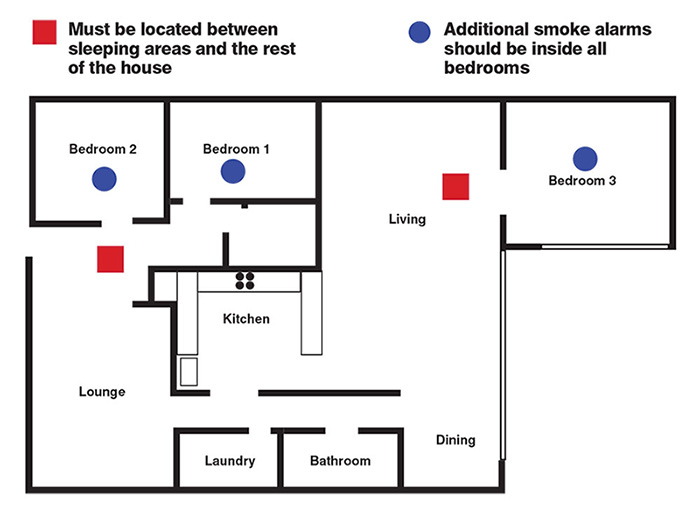
On stairwell landings, an alarm near the top of the stairs is ideal. Smoke rises, after all. It will naturally drift upwards.
The golden rule: keep them away from drafts. That includes open windows or frequently used external doors. A strong breeze can blow smoke away from the sensor.
You want the alarm to react to rising smoke, not the fresh air rushing in from your patio. It's about being smart, not just compliant.
The Garage: Where Things Get A Bit Grimy
Ah, the garage. Home to dusty tools, lingering car fumes, and maybe a forgotten lawnmower. Is a smoke alarm even necessary here?
Yes, absolutely. Fires can start in garages too. But regular smoke alarms might be a bit too sensitive for this environment.
Dust, exhaust fumes, even strong cleaning chemicals can trigger them. That’s why you might consider a
Heat alarms don't react to smoke or dust. They react to a rapid increase in temperature. Perfect for a garage where things might get a little grimy but still need protection.
A heat alarm is your garage’s best friend. It tolerates the everyday grime and fumes. It only screams when things get truly hot, indicating a genuine problem.
This way, you avoid the frustrating false alarms while still ensuring safety. It's a win-win for everyone, especially your eardrums.
The Basement: The Unseen Watch
Basements can be tricky. They often house furnaces, water heaters, and various stored treasures. They also tend to be dustier and sometimes damp.
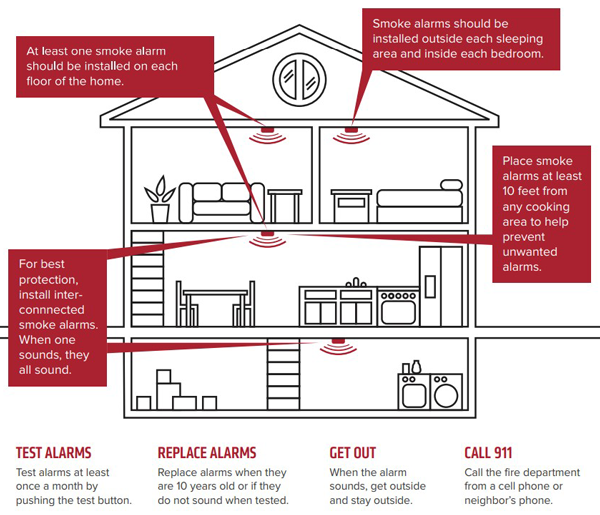
Just like garages, a standard smoke alarm might suffer from false alarms due to dust or humidity. Consider a combination smoke and carbon monoxide detector here.
For the smoke alarm aspect, try to place it away from direct furnace vents. You don't want it constantly getting a blast of whatever comes out of there.
A good spot is on the ceiling, in the main open area of the basement. If you have separate finished rooms, then place one in each.
Remember, smoke rises. Even in a basement, the smoke will move upwards towards the ceiling. Don't put it too low on a wall.
The goal is to catch any issue early, giving you time to escape. Even if that issue is just a very old, very dusty box of forgotten holiday decorations spontaneously combusting.
The Unpopular Opinion Summed Up
Ultimately, where you position your smoke alarms is a blend of official guidelines and good old common sense. But with a healthy dose of reality thrown in.
Don't let perfect be the enemy of good. And don't let a perfectly innocent piece of toast be the enemy of your peace and quiet.
Think about airflow. Think about steam. Think about toast. And definitely think about those low-battery chirps.
Because the best smoke alarm placement is one that protects you effectively, without making you want to rip it off the ceiling every other Tuesday.
So go forth, homeowners! Position your smoke alarms wisely, humorously, and with a wink to the everyday quirks of life. Your ears (and your pets) will thank you.