
Where To Install Carbon Monoxide Detectors

Alright, folks! Let's talk about our tiny, but mighty, household hero: the carbon monoxide detector! It's like having a superhero sidekick, but instead of capes and superpowers, it's got a sensitive nose for something you can't see, smell, or taste. We're talking about carbon monoxide (CO), the sneaky ninja of gases that can slip into your home without an invitation. But fear not! Installing these little guardians is easier than finding matching socks, and just as important!
So, where do these silent sentinels need to stand guard? Let's turn this into a fun little treasure hunt for safety!
The Sleep Zone Superstars: Your Most Important Pit Stops!
First things first, let's head straight to where the magic happens – where you, your family, and even your beloved furry friends catch some Zs. This is the absolute ground zero for CO detector placement.
Must Read
Think about it: You’re most vulnerable when you’re asleep. CO doesn’t care if you’re dreaming of sugar plums or spreadsheet victories; it’s dangerous either way.
Inside or Just Outside Every Sleeping Area
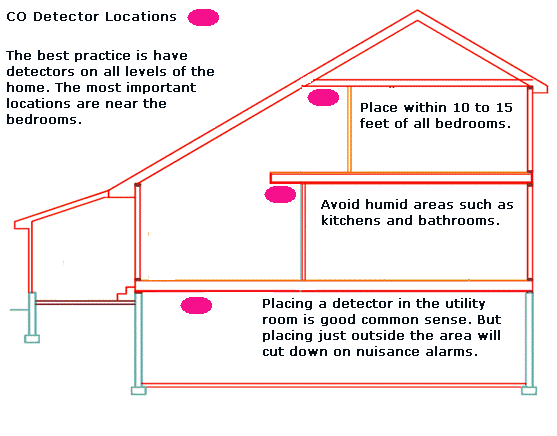
Imagine your bedrooms as little castles. You want a guard right at the entrance, or even better, inside the drawbridge! So, get a detector for each bedroom, or at the very least, one in the hallway just outside the bedrooms on each sleeping floor. If you have a sprawling master suite, maybe even two! We want to wake up to a chirping alarm, not… well, not to something much, much worse.
Every Level Needs Love (and a Detector, too!)
Your house isn't just one big room, right? It's got layers, nooks, and crannies. And just like you wouldn't send one tiny firefighter to guard an entire skyscraper, one CO detector can't cover your whole glorious abode.
On Every Single Floor
Yep, that means your main floor, your upstairs, your basement (especially if it’s finished or has a furnace), and even that cozy attic if it’s a living space. Carbon monoxide can travel, but it's not a master of disguise across floors. Having a detector on each level of your home ensures comprehensive coverage. Think of it as a neighborhood watch for your entire residence!
The Fuel-Burning Buddies: Sources of Potential Sneakiness
Now, let's pinpoint where CO might actually originate. These are the usual suspects, the spots where CO generators might be lurking.
Near Your Heat-Making Heroes (and Villains!)
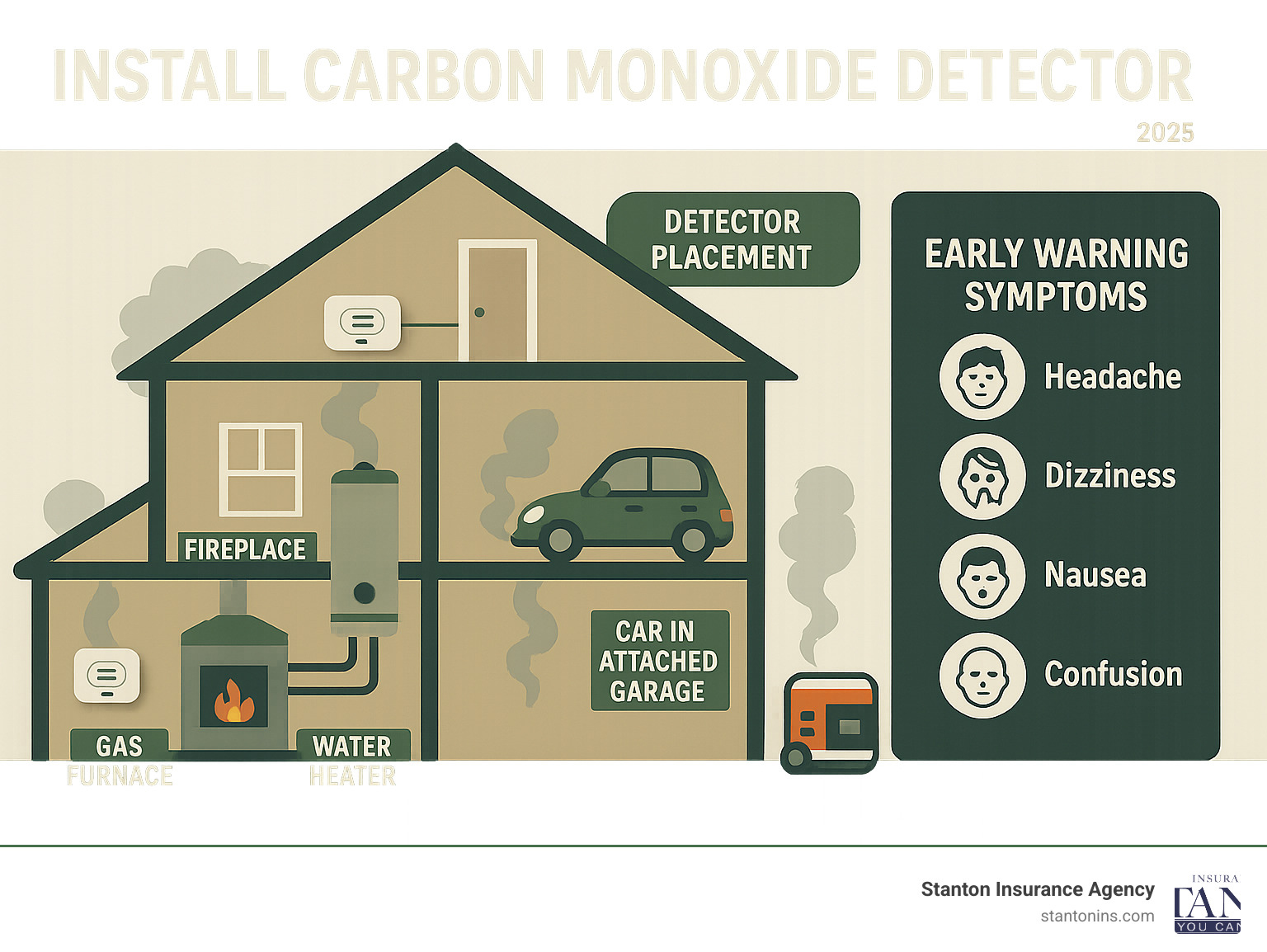
You know those trusty appliances that keep you warm and cozy? Your furnace, water heater, gas fireplace, oven, and clothes dryer that use natural gas, oil, or propane? They're wonderful, but sometimes they can be a bit leaky. Place a detector a safe distance away (check your manual!), but definitely in the general area of these fuel-burning appliances. Don't put it directly on them or right next to an exhaust vent – that's like asking your guard dog to sleep in the bad guy's bed!
By the Garage Door: Exhaust Exits
Got an attached garage? Fantastic! Your car, lawnmower, snowblower, or even that trusty old generator all produce CO. If your garage connects directly to your home, a detector should be placed near the door leading into your living space. We want to catch any garage-escaped CO before it makes its way into your kitchen for a snack.
The Nitty-Gritty of Placement: Avoid the Oopsies!
Okay, you've got your locations. Now for the super-important "how to install" part. It’s not just about where, but also how your detector stands guard!

Don't Play Hide-and-Seek (Badly!)
Your detector needs to "see" (or rather, "sniff") the air around it freely. So, don't hide it behind curtains, furniture, or in a cabinet. Also, avoid:
- Direct sunlight: It can mess with the sensors.
- Near open windows or doors: Drafts can give false readings.
- Too close to cooking appliances: Steam and fumes can trigger nuisance alarms.
- Within five feet of any fuel-burning appliance: Give it some breathing room!
The Height Dilemma: Eye Level is Often Good
CO mixes with the air, so it doesn't just float up or sink down dramatically. Many standalone CO detectors are best placed on a wall, generally at chest to eye level. If you have a combined smoke and CO alarm, follow the instructions for smoke alarms (usually high on a wall or ceiling), as smoke rises faster. When in doubt, always follow the manufacturer's instructions – they know their stuff!
You're practically a safety superhero now! So, grab those CO detectors, give them good homes, and enjoy the sweet peace of mind knowing your household heroes are on duty, keeping everyone safe and sound. It’s a small effort for a HUGE win in home safety. Go forth and detect!