
Where Are The Us Nuclear Power Plants
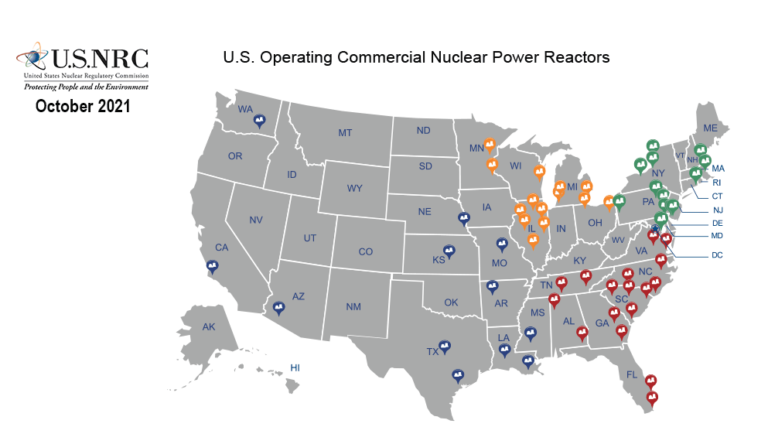
Hey there, curious friend! Ever been scrolling through a map and thought, "Gee, I wonder where the U.S. keeps all its nuclear power plants?" Maybe you haven't! But if you have, or even if the thought just crossed your mind right now, you're in for a treat. Let's embark on a fun, low-stakes treasure hunt, no Geiger counter required!
First off, ditch any visions of giant glowing green cooling towers popping up in your backyard. Or, even better, imagine them there, but only in your coolest sci-fi dreams. In reality, finding these powerhouses is less about stumbling upon a secret lair and more about understanding a few common-sense rules.
It's All About That H2O!
The biggest clue to where nuclear power plants are located? Follow the water! No, not like a divining rod (though that would be a fun party trick). Nuclear reactors need an absolute ton of water for cooling. Think of it like a really, really big, efficient, and very safe pressure cooker. All that energy generates heat, and that heat needs to go somewhere.
Must Read
So, you'll find most of these gentle giants nestled beside:
- Large rivers (hello, Mississippi River!)
- Lakes (the Great Lakes are practically a nuclear plant VIP lounge)
- Coastal areas (access to the vast, cool ocean)
Basically, if there's a huge body of water nearby, there's a decent chance you might spot a nuclear plant on the map. They're like big, thirsty energy factories!
![U.S. Nuclear Power Plants and Production by State [1650x1275] : MapPorn](https://external-preview.redd.it/IabWt3J8zmHtcCP04mPXZQaKuufPN2t7tvlvUtSatUU.png?width=960&crop=smart&auto=webp&s=35c6857a877c048ddb83a9b7b0f8b2ef93024b3b)
Not Too Close, Not Too Far
Another major factor? They’re generally not smack dab in the middle of Times Square, nor are they chilling in the most remote desert. There's a sweet spot. They need to be:
- Far enough from major population centers for safety (just in case, though they're incredibly safe).
- Close enough to serve those population centers with electricity (because, you know, we like our lights on).
This usually means they're in more rural or suburban areas, but within reach of existing electrical grids. They're like that cool, slightly aloof friend who lives just a little outside of town, but whose house is still super easy to get to for the best parties (aka, reliable power supply).
Where Are They Actually?
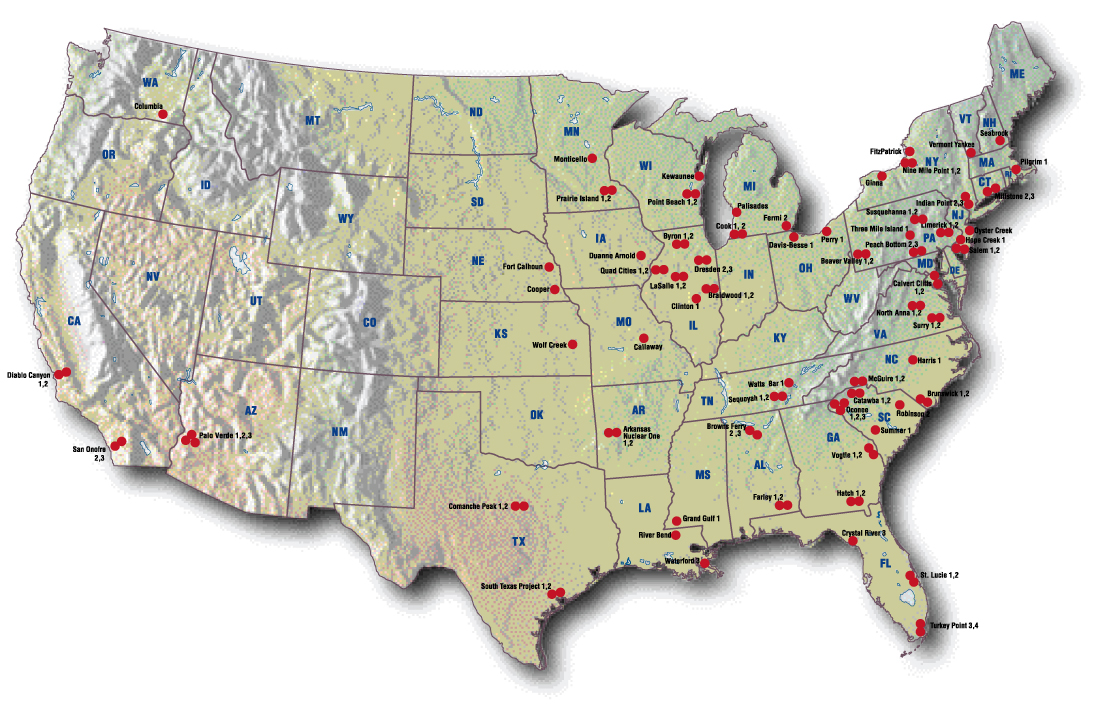
Okay, let's get down to some geographical brass tacks. While they're spread out, you'll find a higher concentration in certain regions:
The East Coast and Southeast are practically buzzing with nuclear energy. Think states like:
- South Carolina
- North Carolina
- Georgia
- Alabama
- Pennsylvania
- Illinois (even though it's landlocked, it has plenty of rivers and access to the Great Lakes!)
And yes, even California has one (Diablo Canyon), though earthquake concerns mean they're not exactly popping up everywhere in the Golden State. The good news? Modern plants are built to withstand some serious shaking, thanks to incredible engineering!

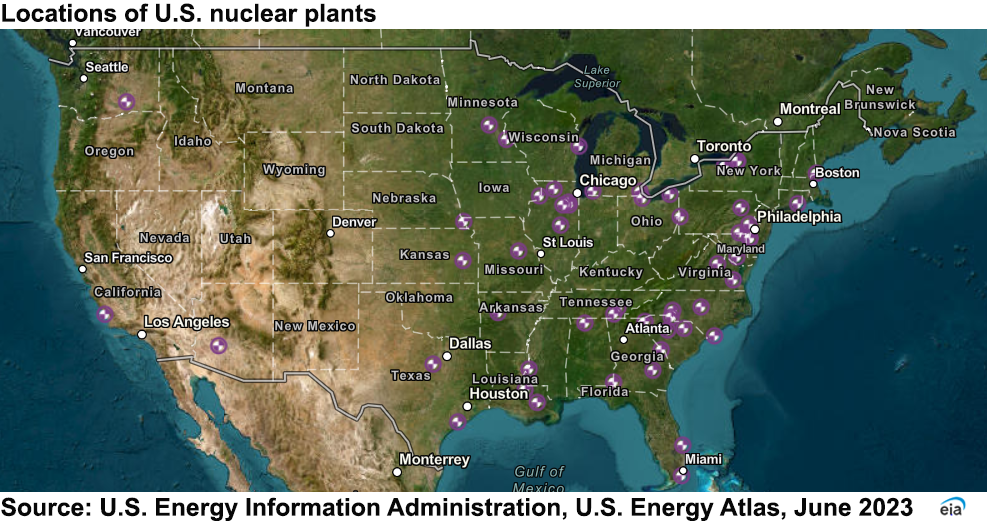
Currently, the U.S. has about 93 operational nuclear reactors across 28 states, spread across roughly 54 power plants. That's a lot of clean, reliable energy humming away quietly!
Safety First (and Second, and Third!)
You might be wondering about safety. And that’s a totally valid thought! But here's the reassuring news: U.S. nuclear power plants are some of the most heavily regulated and safest industrial facilities on the planet. They have more safety protocols than a nervous cat has hiding spots. Years of innovation and strict oversight mean these plants are designed with multiple layers of redundancy and protection.
They’re not just well-behaved; they're practically paragons of good citizenship, contributing to a stable and clean energy supply.
A Bright Future, Literally!
So, where are the U.S. nuclear power plants? They're out there, quietly doing their thing, generating about 20% of our nation's electricity, all while emitting virtually no greenhouse gases. They're the unsung heroes of our power grid, allowing you to stream your favorite shows, charge your phone, and keep the lights on without a second thought.
Next time you see a big lake or river on a map, give a little nod. Chances are, somewhere nearby, a nuclear power plant is humming away, working hard to keep our world powered, our air cleaner, and our future brighter. It's a pretty cool thought, isn't it? Go forth and enjoy your reliably powered life!