Where Are Nuclear Power Plants In The Us
Ever found yourself staring blankly at a map, wondering where all the nuclear power plants are? It’s one of those things that most of us just know exist, but rarely stop to think about their actual whereabouts. Like trying to remember where you parked your car at a huge fair – you know it’s there, just not precisely where. Well, buckle up, because we’re going on a low-key, totally non-alarming tour of where these electron factories hang out in the US.
First off, let’s get this out of the way: they aren't hiding in some secret lair, guarded by laser beams and sharks with frickin' laser beams on their heads. They're just… there. Often in places you'd least expect, or perhaps, places that make a lot of practical sense once you think about it. Think of them like the quiet, industrious neighbors who keep to themselves but are secretly running a massive, vital operation for the entire street.
The Big Thirsty Secret: Water, Water Everywhere
If there’s one thing a nuclear power plant loves more than a good electrical grid, it’s water. And I mean, a lot of water. We're talking industrial-sized thirst here. They need it for cooling, much like your car engine needs coolant, but on a colossal scale. This pretty much dictates their prime real estate choices.
Must Read
So, where do you find large quantities of water? Big rivers, massive lakes, and coastlines. Ding, ding, ding! If you're near one of these, there's a higher chance you might be sharing your geographical neighborhood with a nuclear buddy. Think about the mighty Mississippi, the Great Lakes, or either of our sprawling ocean coasts. It's like finding a fish market right next to the pier – makes perfect sense, right?
These places aren’t just chosen for a pretty view. They're chosen because they offer an almost endless supply of the wet stuff needed to keep things humming and, crucially, to dissipate heat. It’s a bit like having an air conditioner so powerful it needs its own private lake.
Not Too Close, Not Too Far: The Goldilocks Zone
Another key factor in their placement is a balance between being away from densely populated areas, but also close enough to actually deliver electricity where it's needed. They need a good bit of elbow room – imagine trying to build a giant Lego castle in your living room versus having an entire basement dedicated to it. They're the basement dwellers of the energy world.
So, you’ll often find them a little off the beaten path, often in more rural or suburban-edge areas. You won't typically see a nuclear plant plopped down in the middle of Manhattan, much like you wouldn't set up a giant farm in Times Square. They need space for the plant itself, safety zones, and all the associated infrastructure. But they can’t be so remote that the electricity has to travel halfway across the country, losing power like a phone battery on a long road trip.
Where They Tend to Cluster: East of the Mississippi
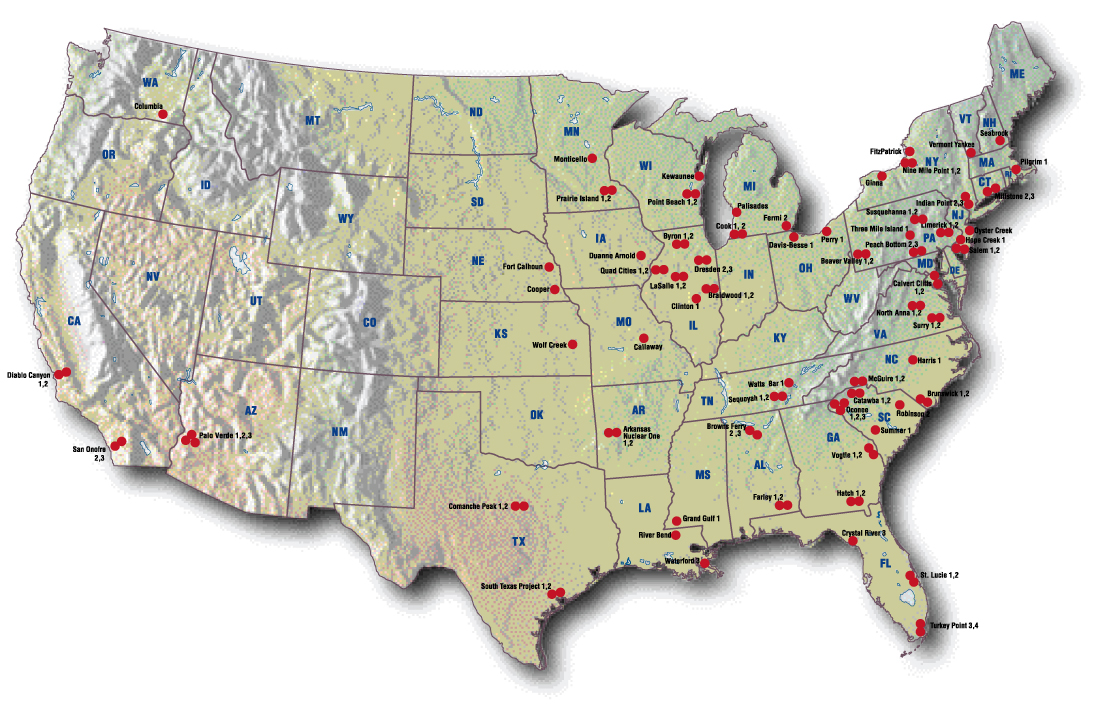
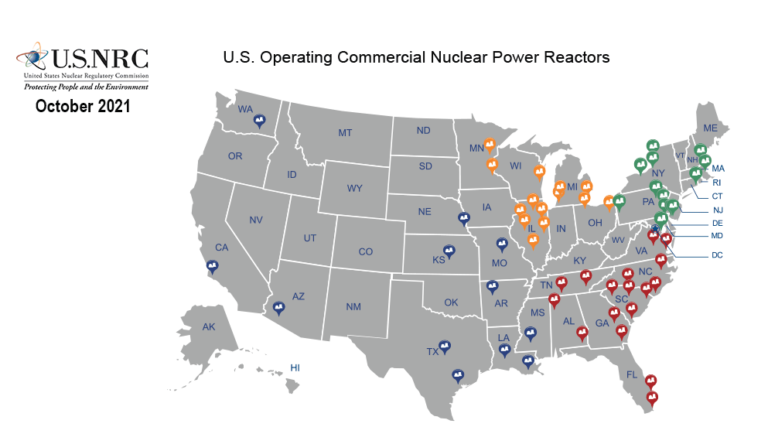
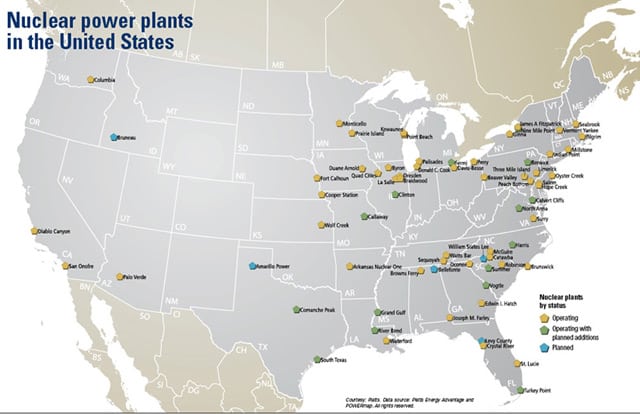
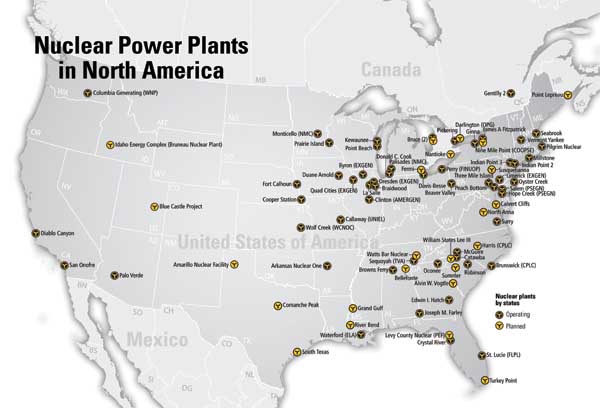
If you were to draw a line down the US from, say, Minnesota to Louisiana, you'd notice a pretty heavy concentration of nuclear power plants east of that line. The Southeast, in particular, is a bit of a hotspot. We're talking states like the Carolinas, Georgia, Alabama, Florida, and Virginia.
Why the Southeast love affair? Historically, there was a big push for nuclear power in these regions, combined with ample access to those crucial waterways (the Atlantic coast, major rivers like the Savannah and Tennessee). So, if you're cruising down I-95 or I-75 through some of these states, you might just catch a glimpse of those iconic cooling towers in the distance – often looking like giant, benign chess pieces.
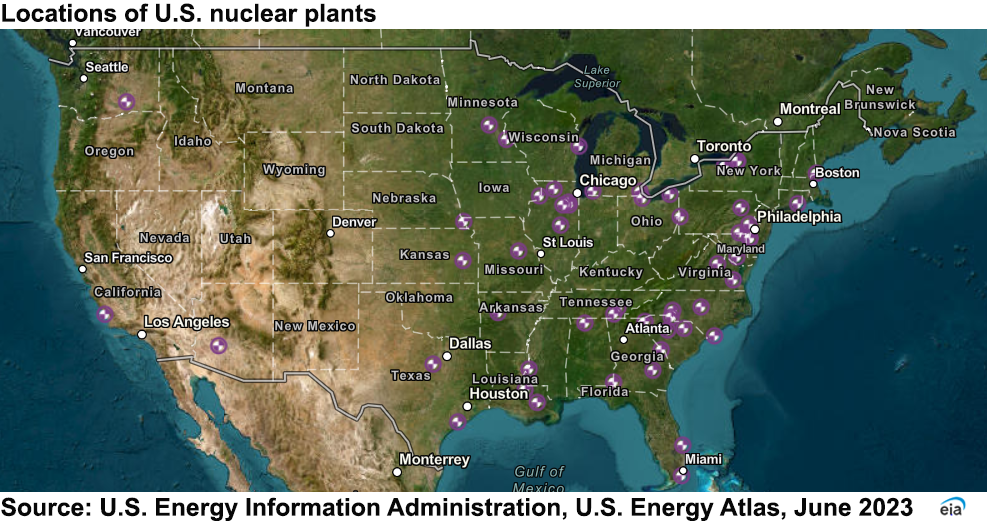
The Northeast also has its fair share, with some of the older, established plants. Think along the Hudson River or near the Great Lakes. The Midwest has them too, typically tucked away near its mighty rivers. Out West, they're a bit more spread out, often found near major water sources like the Colorado River or the Pacific coast, but fewer in number due to different energy mixes and population densities.
So, Am I Near One? Probably Not in a "Glow-in-the-Dark" Way
Chances are, unless you live next door to one, you're probably not thinking about it much, and that’s precisely the point. They operate quietly, efficiently, and very regulated. You're more likely to be closer to a Starbucks or a Walmart than to a nuclear power plant.
These plants are just part of the energy tapestry that keeps our lights on, our phones charged, and our Netflix streaming. They’re the unsung heroes of the power grid, diligently doing their thing, often in plain sight but rarely truly seen. So, next time you flip a switch, give a little nod to those quiet giants – they’re out there, chilling by a river or a lake, making electrons for you right this very second.