When Were Surveillance Cameras Invented
Ever find yourself walking down a street, minding your own business, when suddenly you spot it? A little lens, perched high on a pole, or tucked neatly under an eaves. It just stares. Unblinking. Watching. You give a little involuntary shrug, maybe even a quick wave (just in case it’s secretly friendly). Then a thought pops into your head: “Who even invented these things?”
It’s a great question, isn't it? One you’d expect a simple answer for, like “Thomas Edison invented the lightbulb!” But for the humble surveillance camera, the plot thickens. There’s no single “Eureka!” moment. It’s like trying to pinpoint the exact day gravity was invented. It just… was. Or maybe, it always has been.
The Great Surveillance Mystery: No Single Creator?
Here’s my slightly unpopular (but undeniably fun) opinion: Surveillance cameras weren't really invented by one genius in a lab coat. Nope. I think they just kind of… emerged. Like mushrooms after rain. They evolved from a simple human desire: to see things we couldn’t be present for. To keep an eye on stuff. To, well, surveil.
Must Read
“It’s like trying to pinpoint the exact day gravity was invented. It just… was. Or maybe, it always has been.”
If we’re talking about the earliest ancestors, we might tip our hats to folks messing around with television technology in the 1920s and 30s. Imagine clunky contraptions beaming grainy pictures from one room to another. These weren’t discreet marvels. Just early efforts to extend our sight.
One often-cited early example comes from Germany in 1942. A company called Siemens AG developed a system to observe the launch of V-2 rockets. They needed to watch fiery take-offs from a safe distance. So, they rigged up a camera to record events. Less about catching shoplifters, more about not getting blown up while gathering data. Purely practical, and definitely watching from afar.

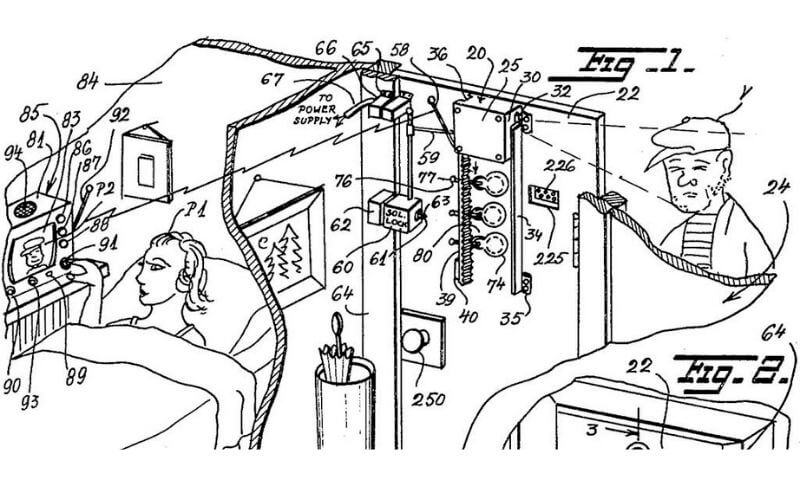
Fast forward to the 1960s. People wanted to feel safe in their homes. A remarkable woman, Marie Van Brittan Brown, stepped up. In 1966, she and her husband, Albert, patented a home security system. It included a camera that could slide between peepholes, letting her see visitors on a monitor inside. It even had a two-way microphone! This was a direct, proactive step towards watchful, personal security. Revolutionary, really.
Before sophisticated digital recording, what good was a camera if it couldn't save what it saw? This is where the VCR, or Video Cassette Recorder, comes in. Once VCRs became common in the 1970s and 80s, continuous recording from a camera became much easier. No more frantic scribbling. Just hit "record" and let the tape roll. This made continuous surveillance practical and widespread, moving cameras from scientific uses to everyday security.
The Unspoken Truth: They’ve Always Been Peeking
So, if there isn’t a single “Aha!” moment, what’s the real story? My theory: the desire for surveillance cameras has always been baked into human nature. From the moment we realized we couldn’t be everywhere at once, we’ve wanted eyes in the back of our heads. Or, on a pole, or in the corner of a ceiling.
The invention wasn’t a flash of inspiration; it was a slow, steady climb up the technological ladder. Each step – better lenses, smaller cameras, clearer recordings – just made the idea of watching from afar more effective.

It’s almost as if the cameras were always there, in spirit, just waiting for technology to catch up to their quiet, watchful ambitions. They started as big, noisy machines for rockets, then became a personal guardian for a home, and now they're so tiny they hide in doorbells. They’ve gone from specialized tools to an ever-present part of our landscape.
So next time you spot one, give a little nod. Not to the camera itself, perhaps, but to the collective human ingenuity that, over decades, helped these watchful little eyes find their way into every nook and cranny of our modern world. They weren’t invented; they were unleashed. And now they’re everywhere. Almost as if they were always meant to be.