
What's The Difference Between Fusion And Fission
Hey there, friend! Ever wondered what all the fuss is about with fusion and fission? They sound like fancy sci-fi terms, right? Like something Captain Kirk would be shouting about on the bridge of the Enterprise. But trust me, they're actually pretty straightforward, and super important for understanding how the universe, and even our power plants, work!
Breaking It Down (Literally!)
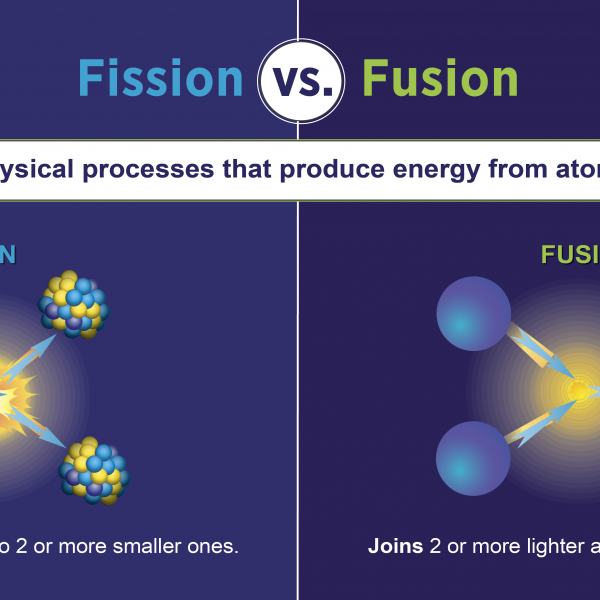
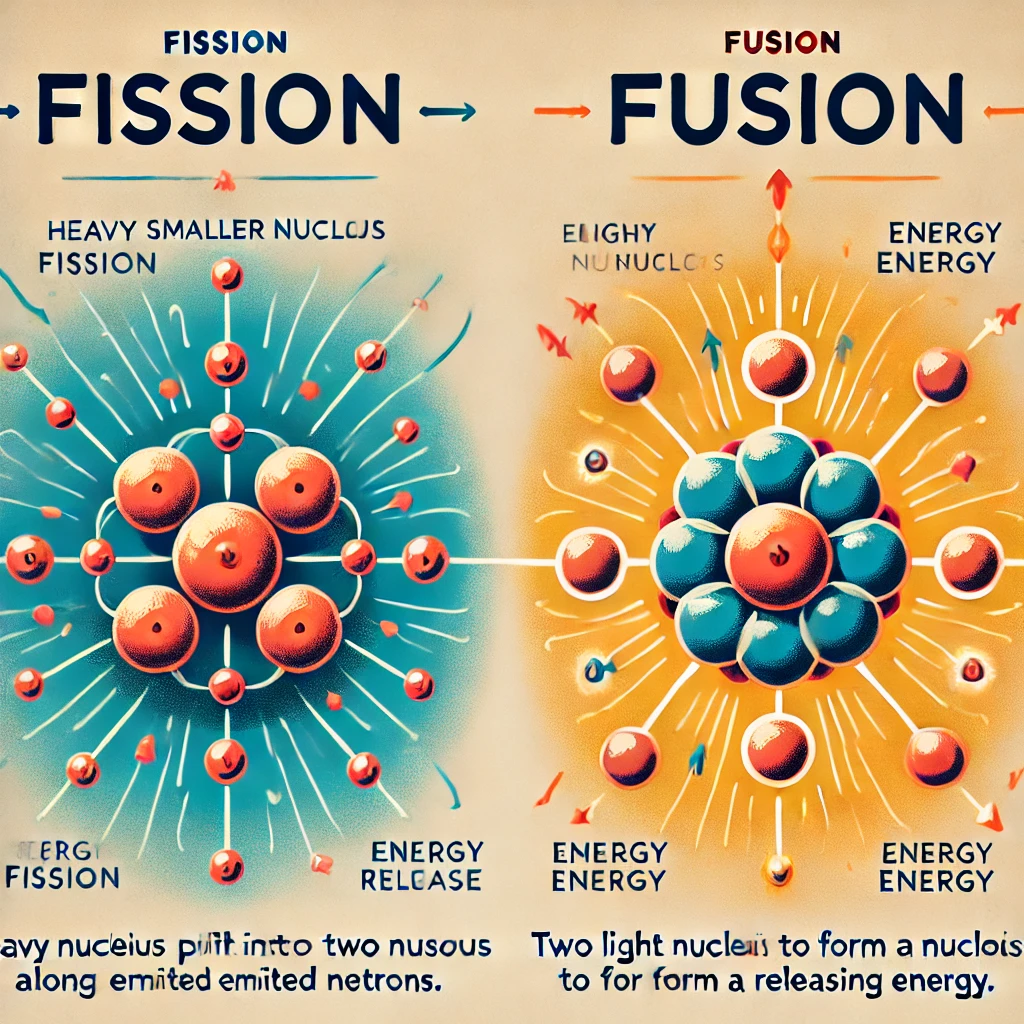
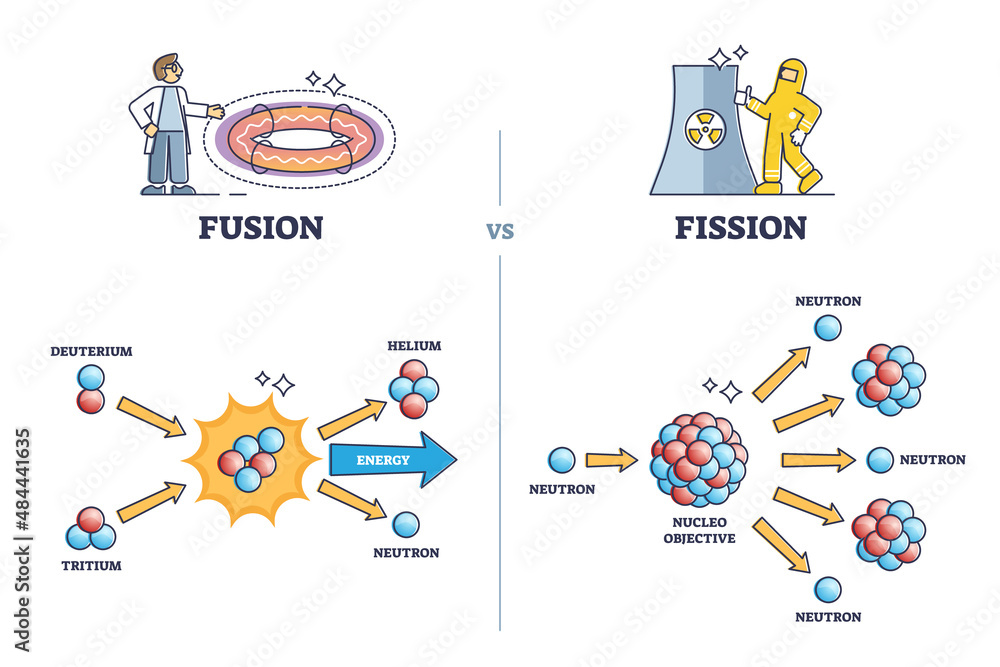
Let's start with fission. Think of it like this: you've got a really big, clunky Lego structure (an atom, specifically something like uranium). It's kind of unstable, like that tower you built as a kid that was always threatening to topple over. Now, imagine you throw a small Lego brick (a neutron) at it. What happens? BOOM! The whole thing breaks apart into smaller Lego structures (smaller atoms), and you end up with extra Lego bricks (more neutrons) flying everywhere. And, most importantly, you get a burst of energy! That’s fission in a nutshell!
Fission is what happens in nuclear power plants. We use controlled fission reactions to heat water, which creates steam, which turns turbines, which generates electricity. Pretty neat, huh? It's like a really complicated, nuclear-powered tea kettle. Just try not to imagine it too much like a tea kettle, things might get a little... scary.
Must Read
Now, the “extra Lego bricks” (neutrons) flying around are super important. They can go on to hit other big Lego structures (uranium atoms), causing them to break apart too, and releasing even MORE neutrons. This is called a chain reaction. Control that chain reaction and you've got power. Lose control? Well… let’s just say you don't want to lose control!
Putting Things Together (Even More Literally!)
Okay, now for fusion. Instead of breaking things apart, we're putting them together! Imagine you have two tiny Lego bricks (atoms of hydrogen, typically isotopes like deuterium and tritium). They're not very exciting on their own. But if you can force them to smash together with enough force (like, really enough force – think the pressure and heat of the sun's core!), they'll fuse into one bigger Lego brick (helium!), and release a whole heap of energy in the process. Like, a tremendous amount of energy.
This is what powers the sun and all the stars. They're giant, cosmic fusion reactors, constantly smashing hydrogen atoms together to create helium and light and warmth. So, next time you're basking in the sunshine, remember you're enjoying the result of nuclear fusion happening millions of miles away!
The catch with fusion? It's incredibly difficult to achieve here on Earth. You need insane temperatures and pressures to get those atoms to fuse. Think of trying to glue two magnets together when they're both repelling each other super strongly. We're working on it though! Scientists are building incredible machines (like tokamaks) to try and replicate the conditions inside the sun. If we can crack fusion, it could be a clean, virtually limitless source of energy! Imagine: powered by tiny stars on Earth!
So, What's the Big Difference?
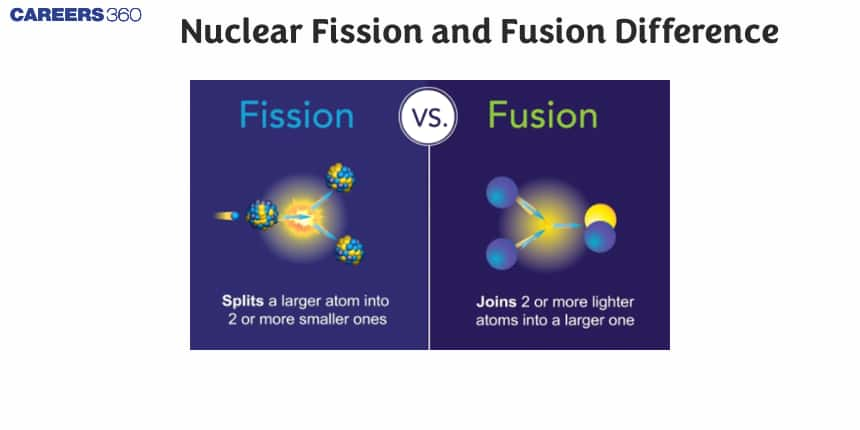
Let's recap. Fission is splitting big atoms, fusion is smashing small atoms together. Fission is happening in nuclear power plants today. Fusion is what powers the sun and is the holy grail of future energy.
Fission creates nuclear waste. Fusion produces very little waste (mostly helium, which is used for balloons!). Fission is like taking a building apart brick by brick. Fusion is like combining LEGO sets to make a super-awesome mega-structure.
In short: Fission = Break. Fusion = Make. Got it?
The Future is Bright (and Possibly Fusion-Powered!)
See? Not so scary, right? Fusion and fission are just two different ways of playing with atoms and unlocking the energy inside them. And while they both have their challenges, they also hold immense promise for the future. Who knows, maybe one day we'll all be zipping around in fusion-powered cars, or living in houses powered by miniature artificial suns. The possibilities are truly mind-blowing!
So, the next time you hear someone talking about nuclear energy, you can confidently chime in and explain the difference between fusion and fission. You'll be the smartest person in the room (or at least, you'll sound like it!). Keep learning, keep exploring, and keep looking up at the stars – who knows what other amazing discoveries await us!
