
What Time Do Most Robberies Occur At Night
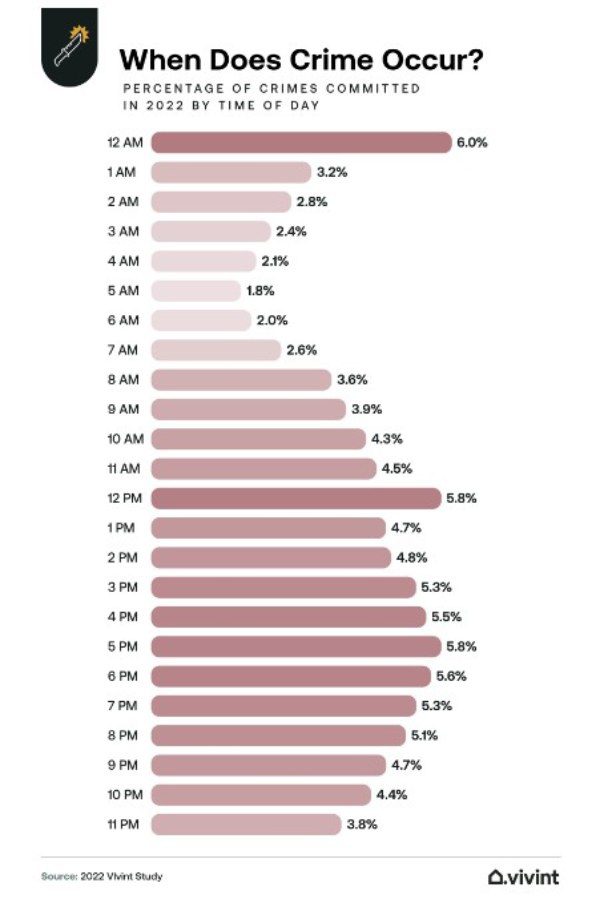
We've all seen the movies: a shadowy figure, creeping under the pale glow of a streetlamp, perhaps tiptoeing past a sleeping dog, ready to commit a daring act of larceny in the deepest, darkest hours of the night. It's the classic scene, isn't it? The clock ticks past midnight, maybe even nudges towards the spooky witching hour of 3 AM, and that's when the "bad guys" are supposedly most active. There’s a dramatic tension to it, a sense that the world is asleep, and only the mischievous are awake to cause trouble. But what if we told you that the reality of when most nighttime robberies occur is actually far less cinematic and, in a truly surprising twist, a bit more... social?
The Midnight Myth, Busted!
Forget those eerie, silent hours when only owls hoot and the moon casts long shadows. While the thought of a crime happening in the dead of night feels intuitively terrifying, statistics often tell a different, more nuanced story. If you've ever imagined a robber patiently waiting for the entire neighborhood to be in a deep slumber, it's time to gently adjust that mental picture. The peak time for many nighttime robberies isn't in the quiet, desolate hours of early morning. Nope, it's usually much, much earlier!
"It's not about the clock striking midnight; it's often about striking while the iron is... still warm!"
When Darkness Falls, But Not Too Deep
Here’s the surprising part: many nighttime robberies, the kind that target individuals or businesses, often hit their peak not at 2 AM, but rather in the early evening hours. Think about the window between roughly 6 PM and 10 PM. Yes, you read that right! Just when you're perhaps settling down for dinner, taking the dog for a final walk, or heading out for an evening stroll, that's often when these incidents are most common.
Must Read
Why this particular timeframe? It makes a surprising amount of sense when you think about it. People are still out and about. Businesses are bustling, then winding down and preparing to close. Folks are commuting home from work, often carrying bags, maybe distracted by their phones or simply tired after a long day. The streets aren't completely deserted like they might be at 3 AM, but the cloak of darkness has certainly descended, offering a bit more cover than broad daylight. It’s a period of transition, full of movement and, unfortunately, sometimes opportunity for those with ill intent.
More About Opportunity Than Deep Shadows
It turns out that it's less about the absolute deepest shadows and more about opportunity. Imagine a busy gas station at 9 PM, with customers coming and going, or a small grocery store making its final sales before locking up. These are moments when there might be cash on hand, or people might be less vigilant. It's not the dramatic, high-stakes vault heist from an action movie, but often something far more opportunistic and, in its own way, surprisingly predictable.
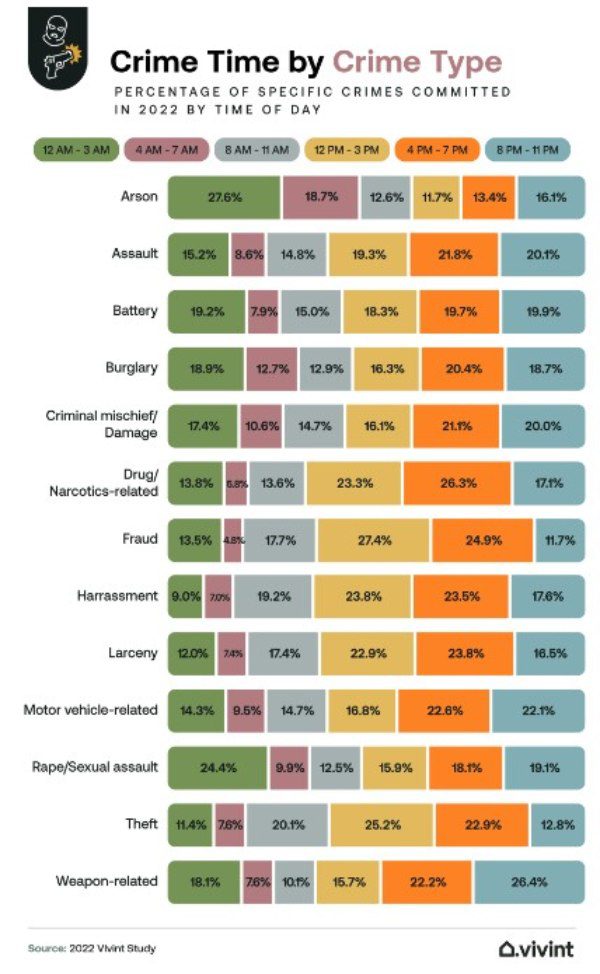
This insight helps us distinguish between different types of crime, too. We often confuse robberies (which involve confronting a person, usually with force or threat) with burglaries (unlawfully entering a building, often when no one is home). While burglaries often do happen during the day when properties are empty, personal robberies tend to follow this earlier-evening rhythm. It highlights that the target isn't always an empty house, but sometimes people and active places.
A Community's Quiet Strength
Now, this isn't meant to sound scary or to encourage anyone to suddenly become paranoid the moment the streetlights flicker on. Quite the opposite! It's about bringing a little piece of interesting, surprising information into the light. Knowing these patterns isn't a call to fear, but perhaps a gentle nudge towards community consciousness and a deeper appreciation for the rhythm of urban life. It's a reminder to keep an eye out for neighbors, to notice when things feel a little off, and to recognize the importance of well-lit public spaces and active, engaged communities.

Think of it less as a cold statistic and more like a gentle invitation to strengthen the bonds that make our neighborhoods safe and sound. When we understand the patterns, we can appreciate the efforts of local law enforcement who are often most active during these specific peak times. It reminds us that our shared vigilance, our collective presence, and the simple act of looking out for one another are incredibly powerful. That strong community spirit, the quiet strength of people caring about their surroundings, is truly one of the best deterrents to all kinds of trouble, no matter the hour.
"Ultimately, knowledge isn't just power; it's a comforting whisper that reminds us how interconnected and resilient our communities truly are."
So, the next time the sun dips below the horizon and the evening buzz begins, you’ll have a new, slightly surprising perspective. It’s not just the signal for dinner and winding down; it’s also a gentle reminder of the ebb and flow of city life, and the interesting, often unexpected, times when we might just need to be a little extra aware. Not because we're afraid, but because we're part of something bigger, something strong and resilient, that keeps our communities humming along, safely and soundly.
![What Time Do Most Robberies Occur At Night? [Answered]](https://home-cdn.reolink.us/wp-content/uploads/2024/12/what-time-do-most-robberies-occur-at-night.jpg)
