
What Size Window Ac Do I Need

Ever found yourself staring at a bewildering array of window air conditioners, wondering if you need something mighty enough to chill a meat locker or just a gentle breeze-maker? It’s a common summer dilemma, and honestly, it’s a bit like buying shoes. Too small, and your feet hurt. Too big, and you trip over yourself. The same goes for your window AC unit!
Getting the right size isn’t just about making your room cold. Oh no, it’s about creating that perfect oasis – that sweet spot where you’re comfortable, the air feels fresh, and your wallet isn't weeping from wasted energy. It’s actually pretty fascinating once you dig in a little!
Why Does AC Size Even Matter? (Spoiler: It's Not Just "Bigger is Better")
You might think, "Well, if I get a super powerful AC, it'll just cool my room faster, right?" And while that sounds logical, it’s actually a trap! Imagine trying to water a small houseplant with a firehose. You’d drown the plant and make a huge mess. An oversized AC unit is kind of like that firehose.
Must Read
An AC unit that's too big for your space will cool the air too quickly. Sounds good, but here’s the kicker: it won't run long enough to effectively remove the humidity from the air. You’ll end up with a chilly but clammy, damp feeling. Think of that slightly sticky feeling on a cool, rainy day – not exactly the crisp comfort you’re dreaming of. Plus, it'll constantly cycle on and off (called "short-cycling"), which is less efficient, puts more wear and tear on the unit, and honestly, just annoys your electric bill.
On the flip side, an AC unit that's too small is like trying to cool a ballroom with a handheld fan. It'll run and run and run, constantly struggling, never quite reaching your desired temperature. You'll be sweating, frustrated, and still paying for all that effort. Not ideal!
So, the goal is to find that Goldilocks zone – an AC that’s just right. And the key to unlocking this comfort secret is understanding a little term called BTU.
The Magical BTU: Your AC's Superpower Rating
Don't let the acronym intimidate you! BTU stands for British Thermal Units. In simple terms, it's a measure of how much heat an AC unit can remove from a room in an hour. Think of it as your AC's muscle power. The higher the BTU number, the more cooling power it has.
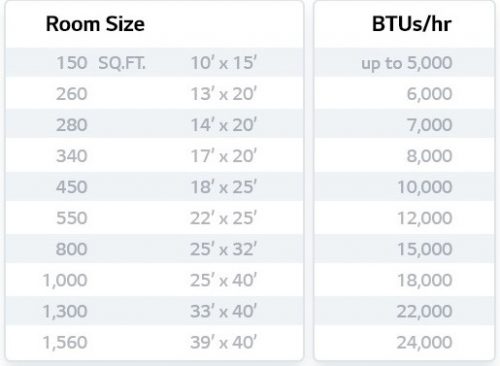
Every window AC unit will have a BTU rating, usually ranging from about 5,000 BTU for tiny rooms up to 24,000 BTU or more for really large spaces. But how do you match that number to your room?

Finding Your Room's AC Soulmate: The Easy Way
The first, and most crucial, step is knowing your room's square footage. This is super easy! Grab a tape measure, find the length and width of your room, and multiply them together. If your room is 10 feet long and 12 feet wide, that's 120 square feet. Simple!
Once you have that, you can use a general rule of thumb: you'll need roughly 20 BTUs per square foot. So, for our 120 sq ft room, 120 x 20 = 2,400 BTU. Wait, that's not right! Most small AC units start around 5,000 BTU. This is where the minimum recommendations come in.
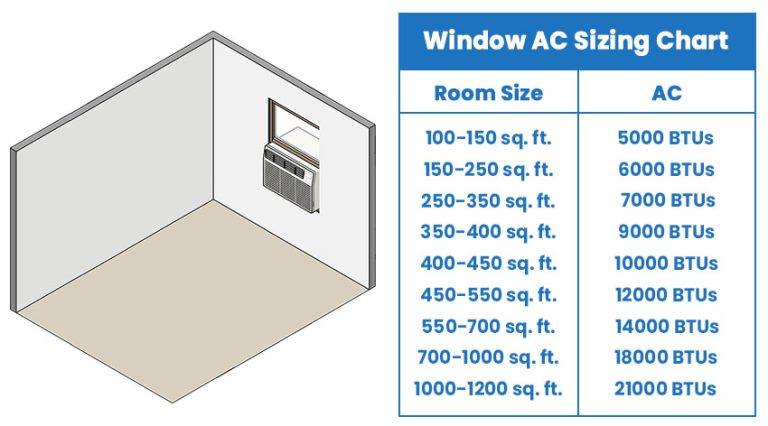
Here’s a simplified breakdown to get you started:
- 100-150 sq ft (a small bedroom or office): Aim for around 5,000 BTU.
- 150-250 sq ft (a medium bedroom): Look for 6,000 BTU.
- 250-350 sq ft (a larger bedroom or small living room): You'll likely need 8,000 BTU.
- 350-450 sq ft (a standard living room): Consider 10,000 BTU.
- 450-550 sq ft (a large living area or open-plan space): Step up to 12,000 BTU.
- 550-700 sq ft (a very large room): You might need 14,000 BTU.
These are great starting points, but there are a few other fun factors that can tweak your ideal BTU.
Beyond the Basics: Fine-Tuning Your AC Choice
Think of these as little secret ingredients that can nudge your BTU requirement up or down:
- Sunny Disposition? (+10% BTU): Does your room get blasted by direct sunlight for most of the day? All that sun brings extra heat, so you might want to add about 10% to your BTU estimate. It's like your room is sunbathing and needs a stronger cool-down drink!
- Kitchen Capers? (+4,000 BTU): If the AC is going into a kitchen, especially an open-concept one, remember that ovens, stovetops, and dishwashers all generate a lot of heat. You might need to add an extra 4,000 BTUs to compensate.
- Crowded House? (Add 600 BTU per person): Every person in a room radiates heat. If more than two people regularly occupy the space, add about 600 BTU for each additional person. It's like giving everyone their own little cooling bubble.
- High Ceilings? (Bump it up): If your ceilings are taller than 8 feet, you have more air volume to cool. You might need to go up to the next BTU level.
- Poor Insulation or Drafty Windows? (Consider bumping up): If your home feels like it has more holes than a sieve, your AC will have to work harder. In older homes, this might mean leaning towards the higher end of the BTU range for your room size.
See? It’s not just a cold calculation; it's about understanding your unique space and its personality!
The Payoff: Comfort, Efficiency, and Fewer Headaches
Taking a few minutes to correctly size your window AC unit is an investment in your summer comfort. You’ll get:
- Optimal Cooling: Your room will actually reach and maintain the temperature you set. No more endless running or short bursts of inadequacy.
- Better Humidity Control: That glorious, dry, crisp air that makes a hot day bearable.
- Lower Energy Bills: An appropriately sized unit runs more efficiently, saving you money in the long run.
- Longer AC Lifespan: Less strain means your unit will last longer, delaying that next shopping trip!
So, the next time you're browsing window ACs, remember: it’s not about brute force, but about finding the perfect partner for your room. A little bit of knowledge goes a long way in making your summer truly chill. Happy cooling!