
What Size Hvac For 1800 Sq Ft

Alright, pull up a chair, grab your imaginary latte, because we're about to dive into one of life's great mysteries: the meaning of life... I mean, HVAC sizing. Specifically, for an 1800 sq ft home. It sounds simple, right? Just multiply by a magic number, and voilà! Instant climate control nirvana!
Oh, honey. If only it were that easy. If HVAC sizing were a straightforward math problem, I’d be a millionaire and my cat, Mittens, would have her own personal mini-split. (She totally deserves one, by the way.)
The Great "Bigger Is Better" Myth (and Why It'll Haunt Your Energy Bill)
So, you've got an 1800 sq ft palace, and you're thinking, "Hmm, maybe I'll just go a little bigger, just to be safe. You know, a bit more oomph!" It's like buying a Monster Truck to commute to your job at the library. Sure, it's powerful, but it’s overkill, guzzles gas, and probably won't fit in the parking lot.
Must Read
The biggest, most common, most soul-crushingly expensive mistake people make is buying an HVAC unit that’s too large. You'd think more power equals better comfort, right? Wrong-o, Picasso!
When an HVAC unit is too big, it blasts cold (or hot) air into your home, hits the thermostat's target temperature super fast, and then shuts off. This is called "short cycling." It’s like a sprinter in a marathon – lots of quick bursts, but no sustained effort.
And here's the kicker: your HVAC system doesn't just cool; it also dehumidifies. When it short cycles, it doesn't run long enough to pull all that muggy moisture out of the air. So you end up with a house that feels like a chilly, clammy cave. Not exactly the spa-like experience you were hoping for, is it?
Plus, all that stop-and-start action wears down your unit faster and chugs energy like it’s going out of style. Your wallet will weep. Your AC unit will prematurely groan its last BTU.
The Flip Side: Too Small Is Also a Hot Mess (Literally)
Now, let's not pretend going too small is a genius move either. If your unit is undersized, it'll run constantly, desperately trying to reach that desired temperature, but never quite getting there. It's like trying to heat a ballroom with a single candle. You'll be sweating, your unit will be screaming (metaphorically), and your electricity bill will still be astronomical. So, balance is key!
Why 1800 Sq Ft Is Just a Number (Like My Age, It Doesn't Tell the Whole Story)
Okay, so you have 1800 square feet. That's a fantastic starting point! But it's just that – a starting point. Imagine trying to guess someone's favorite ice cream flavor just by knowing they're 5'8". Impossible, right?
HVAC sizing is similarly nuanced. Here’s what truly matters:

- Where do you live? Are you battling the scorching deserts of Arizona or the brisk breezes of New England? Climate zones are a huge factor.
- Insulation, glorious insulation! Is your attic insulated like a Yeti's fur coat, or does it resemble a sieve? Walls, attic, floor – the better the insulation, the less HVAC power you need.
- Window Wonderland: How many windows do you have? Are they single-pane relics from the 70s or energy-efficient, triple-pane fortresses? Which direction do they face? South-facing windows can be sun traps!
- Ceiling Height: A standard 8-foot ceiling is different from a vaulted 12-foot masterpiece. More air volume means more cooling/heating required.
- Human Hot Zones: How many people live in your house? Each person adds a little bit of body heat. A family of six will generate more warmth than a single person.
- Appliance Overload: Do you have a super-hot gaming rig running 24/7? A gourmet kitchen with multiple ovens firing? Heat-generating appliances add to the load.
- Shade and Sunshine: Is your house bathed in sunlight all day, or is it nestled under a canopy of shade trees?
- Ductwork (The Unsung Hero): Even if your unit is perfectly sized, leaky or poorly designed ducts can sabotage efficiency. It’s like having a super-fast car but with deflated tires.
The Actual Answer: It's All About the "Manual J" (No, It's Not a Dance Move)
Forget the old rule of thumb that says "X BTUs per square foot." That's like trying to navigate the Amazon rainforest with a crayon drawing of a map. It’s misleading at best.
The only truly accurate way to size an HVAC system is through a load calculation, specifically a "Manual J" calculation. This is an industry-standard methodology that takes into account all those quirky little details we just talked about (and then some!).
A qualified HVAC professional will come to your home, measure everything, look at your windows, check your insulation, ask about your lifestyle, and then plug all that data into specialized software. It’s basically Sherlock Holmes for your home’s thermal needs.
/air-conditioning-chart-1152654_final-01-5c522db7c9e77c0001d7671e.jpg)
So, What's the Guesstimate for 1800 Sq Ft? (With a Massive Caveat!)
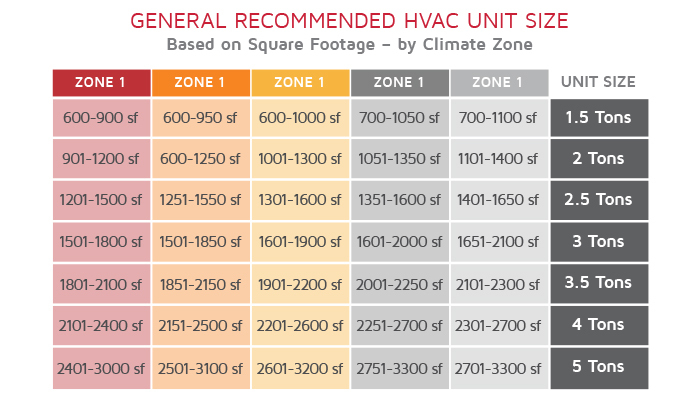
Okay, if you absolutely, positively need a ballpark number right now (and promise not to hold me to it, because I’m not wearing my official HVAC-sizing-wizard hat today), here’s the very rough starting point often thrown around for a moderately insulated home in a moderate climate:
You might hear numbers like 20-25 BTUs per square foot. BTU stands for British Thermal Unit – it's basically a measure of energy. Think of it as the horsepower for your air conditioner.
So, for 1800 sq ft:
- 1800 sq ft x 20 BTU/sq ft = 36,000 BTUs
- 1800 sq ft x 25 BTU/sq ft = 45,000 BTUs
HVAC systems are often measured in "tons." One ton of cooling equals 12,000 BTUs. So:
- 36,000 BTUs / 12,000 BTUs/ton = 3 tons
- 45,000 BTUs / 12,000 BTUs/ton = 3.75 tons
This means your 1800 sq ft home might need a 3-ton to 3.5-ton (or even 3.75-ton) unit. But again, this is a guesstimate based on averages that probably don't perfectly describe your unique home.
The Golden Rule: Don't DIY Your HVAC Brain!
Seriously, folks. Choosing the right HVAC system is one of the most important comfort and financial decisions for your home. You wouldn't perform open-heart surgery on yourself based on a quick Google search, right? (I hope not!)
So, for your 1800 sq ft abode, do yourself a massive favor: call in at least three reputable HVAC professionals. Get them to perform a Manual J load calculation. Compare their recommendations and quotes. It's the only way to ensure your home is perfectly comfortable, your energy bills are manageable, and your HVAC system lives a long, happy life.
Otherwise, you might just find yourself living in a clammy cave, arguing with your oversized AC unit about its commitment issues. And trust me, that's not a conversation you want to have.