
What Size Generator To Run Ac And Refrigerator
Hey there, friend! So, you're thinking about getting a generator to keep your fridge cold and your AC blasting during a power outage? Smart move! Nobody wants warm beer and sweaty brows when the lights go out. But figuring out what size generator you need can feel like deciphering ancient hieroglyphics. Don't worry, I'm here to break it down for you in plain English (and maybe throw in a dad joke or two along the way).
Understanding the Wattage Wrangle
Okay, first things first, we need to talk about watts. Think of watts as the energy currency your appliances use. Every appliance has a wattage rating, usually found on a sticker on the back or bottom. This rating tells you how much power it needs to run. Now, here's the tricky part: appliances like your fridge and AC need extra power to start – this is called the starting wattage or surge wattage. It's like needing a little extra oomph to get a car going uphill.
Your refrigerator's running wattage might be, say, 150 watts. Sounds innocent enough, right? But that starting wattage could be 600 watts or more! Air conditioners are even bigger energy hogs. A small window AC might run at 500 watts, but it could need a whopping 2000 watts to kickstart. That central AC unit? Fuggedaboutit! (Just kidding... sort of.)
Must Read
Pro-Tip: Always overestimate a little. It's better to have too much power than not enough. Think of it like bringing an extra sandwich on a picnic. Nobody ever complained about too much food!
The Fridge Factor
Let’s talk specifically about that refrigerator, your trusty keeper of leftovers and ice cream. You absolutely don’t want it to go down during a power outage and turn into a petri dish of questionable science experiments. So, how do we figure out its wattage needs?
1. Check the Sticker: Look for that sticker on the back or inside the fridge. It should list the wattage or amperage (amps). If it's in amps, you can convert it to watts by multiplying the amps by the voltage (usually 120 volts in the US). So, Amps x Volts = Watts. Easy peasy!
2. Consider the Age: Older refrigerators tend to use more power than newer, energy-efficient models. If your fridge is older than you are (just kidding... mostly!), you might want to overestimate its wattage needs.
3. Assume the Worst (Kind Of): As a general rule, assume your fridge needs at least 600-800 starting watts and 150-200 running watts. This is a safe bet for most standard-sized refrigerators.
The AC Anthem (A High-Energy Song)
Air conditioners are the power-hungry beasts of the appliance world. Getting the right generator size for your AC is crucial. Here's the lowdown:

1. Window AC Units: These usually require between 2,000 to 3,000 starting watts and 500 to 1,500 running watts, depending on their size and BTU rating (British Thermal Units – basically, how much cooling power they have).
2. Central AC Units: These are the big kahunas. They can easily require 5,000 to 10,000 starting watts (or even more!) and 2,000 to 4,000 running watts. Consult your AC unit's manual or a qualified electrician to get the exact figures.
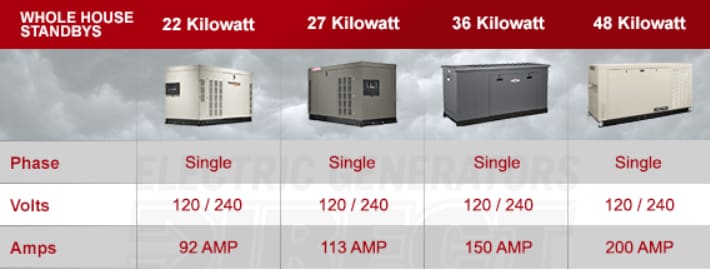
Important Note: Running a central AC unit on a generator requires a substantial generator. We're talking a whole-house generator, not a little portable one. Don't try to cheap out here – you could damage your AC or the generator.
Adding It All Up (The Math-y Part)
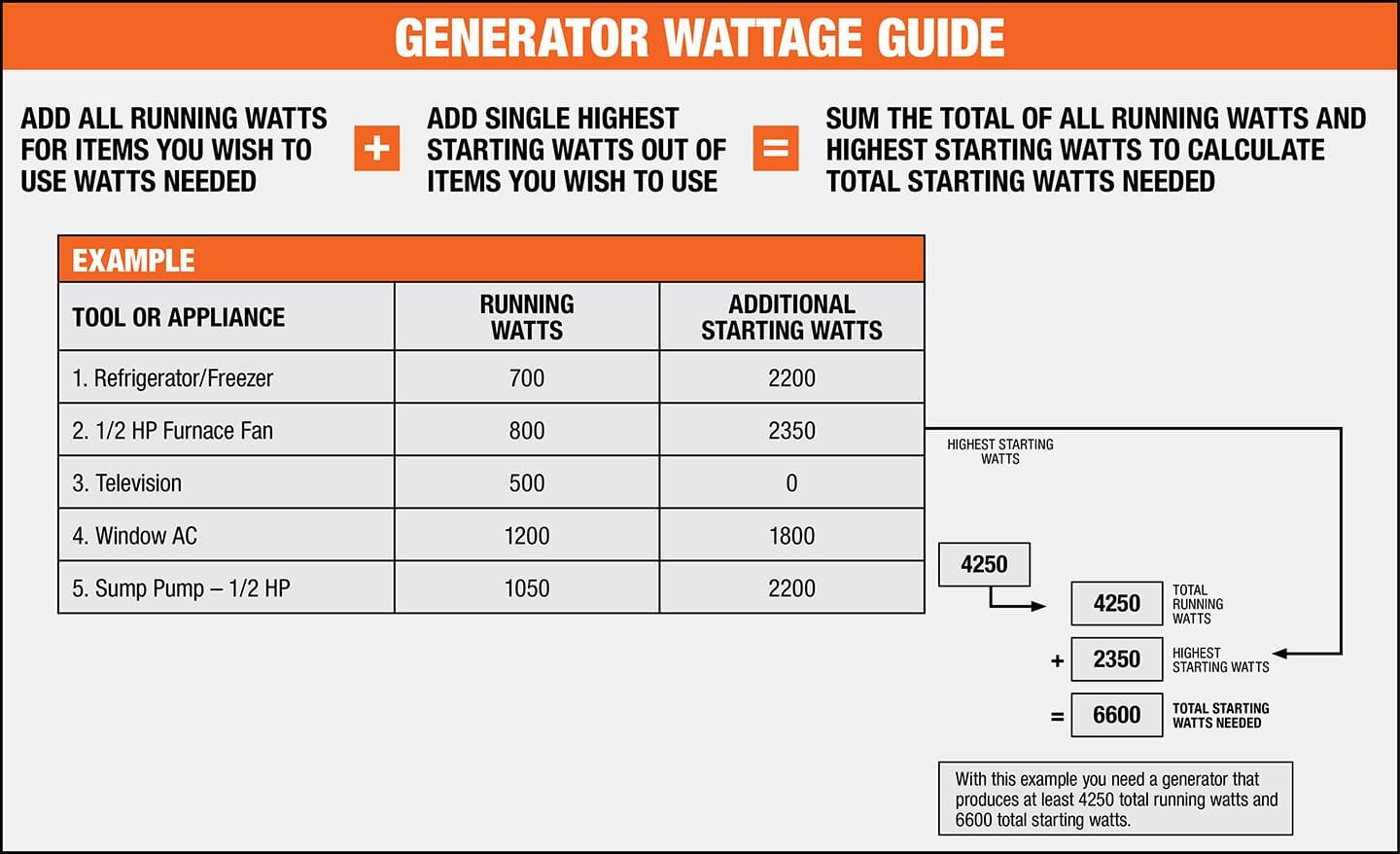
Okay, time for some simple math! To figure out the minimum generator size you need, add up the starting wattage of the appliance with the highest starting wattage (usually the AC) to the running wattage of all the other appliances you want to run simultaneously. This is a simplification, but it’s a good starting point.
For example, if you want to run a window AC (2000 starting watts, 500 running watts) and a refrigerator (600 starting watts, 150 running watts), you'd need at least:
2000 (AC starting) + 150 (Fridge running) = 2150 watts

But, remember to add some headroom! It's always better to have more power than you need.
The Final Verdict (And a Little Encouragement)
So, what size generator do you need? It depends! But hopefully, this guide has given you a clearer picture of the wattage wrangle. Remember to check the wattage ratings on your appliances, consider the starting wattage, and always overestimate a little. Don't be afraid to consult with an electrician or generator expert if you're unsure.
Choosing the right generator can seem overwhelming, but it's totally achievable! And imagine the peace of mind knowing you can keep your food cold and your home cool during a power outage. It's an investment in comfort, convenience, and maybe even your sanity. You got this!