
What Size Battery Does A Smoke Detector Take
Alright, friend, pull up a chair. Got your coffee? Good. Because we're about to tackle one of life's great, persistent mysteries: that chirping, beeping menace in your ceiling. You know the one. It always seems to start at 3 AM, right when you've finally drifted off. And then you're left staring up, groggy and bewildered, thinking, "What size battery does that thing even take?!"
It's not just you. This is a universal struggle. We've all been there, standing in the aisle at the grocery store, squinting at battery packs, muttering to ourselves, "Is it a AA? A AAA? A… C? Did they even make C batteries anymore?" Stressful stuff, I tell ya.
So, let's demystify this, shall we? Take a deep breath. Most of the time, the answer is delightfully, predictably simple. Drumroll please...
Must Read
The Grandaddy of Smoke Detector Power: The 9V
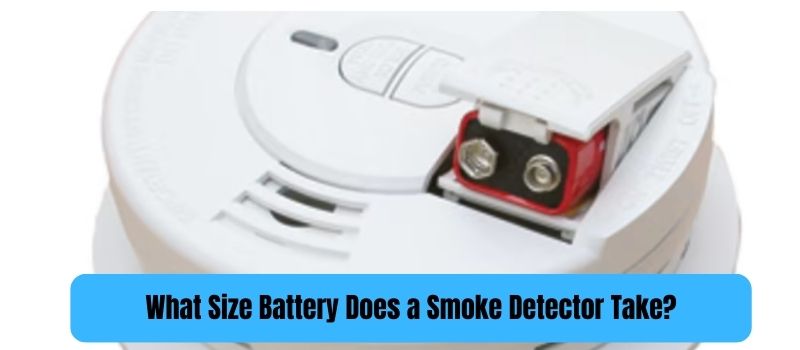
Yep, you heard me. For the vast majority of traditional smoke detectors out there, especially the older ones and many modern, basic models, the answer is a sturdy, rectangular, slightly awkward-looking 9-volt battery. You know the one. It's got those two little nubs on top, ready to snap into place. It's practically the official mascot of "annoying midnight chirps."
Think of the 9V as the reliable workhorse. It's been powering our smoke detectors for decades. Why? Well, it delivers a decent amount of power in a compact size, and it lasts a good long while for its intended purpose – which is, let's be honest, mostly just sitting there, waiting patiently for a tiny spark, or more likely, for your toast to burn a little.

So, next time you hear that tell-tale chirp, your first, best guess should always be: "It's probably a 9V." Go ahead, grab one. Odds are, you'll be a hero in minutes.
But Wait, There's More! (Because Life Is Rarely That Simple)
Of course, just when you think you've got it all figured out, technology steps in to make things a little more... interesting. While the 9V reigns supreme, it's not the only game in town. Some newer or more advanced smoke detectors might be a bit different.

The AA and AAA Crew
Yep, some smoke detectors, particularly certain newer, sleeker designs or combination CO/smoke detectors, will happily run on your standard AA or AAA batteries. Usually, it's not just one; you might need two or even three of these smaller cylindrical powerhouses. Why? Because they're common, easy to find, and can collectively provide enough juice. It's like a tiny battery party inside your smoke detector!
If your detector takes AA or AAA, you'll often notice a slightly larger battery compartment, or perhaps a slide-out tray designed for multiple batteries. It's always a good idea to check the old batteries when you pop them out – they're usually pretty clear about their size!
The Long-Haul Lithium Units
Then we have the fancy, modern ones. The ones that boast "10-year battery life!" These are often sealed units, meaning you don't actually replace the battery. When the battery dies, you replace the whole detector. But for the ones that do allow battery replacement, they might use special, long-life lithium batteries. These aren't your typical grocery store find, and they’ll usually be clearly marked with what type of specialized lithium battery is needed, often specific to the manufacturer.
These are great for peace of mind, but remember, even a sealed 10-year battery means the detector itself needs replacing after 10 years! More on that in a sec.

How to Be 100% Sure (The Smart Way)
Okay, so you've got the general idea. 9V is king, but AA/AAA and specialized lithium are out there too. But how do you know for absolute, positive certain, without climbing a ladder twice?
- The Old Battery: This is the easiest trick in the book. Pop open that smoke detector (carefully, it's not a puzzle box, promise!). Take out the old, offending battery. What size is it? There's your answer! Duh, right? But sometimes in a panic, we forget the obvious.
- Check the Detector Itself: Many smoke detectors have the battery type printed right on them – either inside the compartment, on the back, or even on the front label. A quick glance might save you a trip (or an incorrect purchase).
- The Manual (Remember Those?): If you're super organized (and maybe a bit of a packrat), the original manual will definitely tell you. Good luck finding it, though!
Beyond the Battery: A Quick Pep Talk
Alright, now that you're a battery guru, a few quick reminders, because this isn't just about stopping an annoying beep; it's about safety, my friend!
- Replace ALL Batteries: If your smoke detector takes multiple AA or AAA batteries, replace them all at the same time. Don't be that person who leaves one old one in there, creating a lopsided power dynamic.
- Test Button: After you swap out that battery, hit the "test" button! Make sure it shrieks its approval. If it doesn't, something's amiss.
- Clean It Up: While you're up there, give it a quick wipe with a damp cloth. Dust and cobwebs can actually interfere with its ability to detect smoke. Who knew, right?
- The Big One: Detector Lifespan: This is crucial. Most smoke detectors, regardless of their battery type, have a lifespan of about 10 years. After a decade, the internal components start to degrade, making them less reliable. So, even if it's still chirping happily with a fresh battery, if it's older than your last phone upgrade, it's time to replace the whole unit! There's usually a manufacture date on the back.
So, there you have it. The secret to smoke detector batteries, laid bare. Mostly 9V, sometimes AA/AAA, occasionally a special lithium. Now you're equipped, not just to silence that persistent chirp, but to keep your home safe. Go forth, conquer those beeping nuisances, and enjoy uninterrupted sleep. You've earned it!