
What Makes The Rumbling Sound Of Thunder
Ever been cozied up inside, rain pattering gently, and then suddenly, BOOM! goes the sky? That magnificent rumble of thunder is one of nature's most dramatic sound effects. It’s like the universe is clearing its throat before a truly grand announcement!
But what exactly causes that deep, rolling growl that makes your windows vibrate, and sometimes, your heart skip a beat? It’s not a giant bowling ball rolling across the clouds, though that's a fantastically fun image, isn't it?
Get ready, because we're about to uncover the super cool, explosive secret behind that epic sound. It’s a spectacular story of extreme heat, super-speedy air, and a little bit of cosmic acoustics, designed just for you!
Must Read
Lightning: The Ultimate Sky Party Starter!
First things first, we absolutely need to talk about the main event, the undisputed star of the show: lightning. This isn’t just any old spark you get from rubbing your feet on the carpet; it’s an absolute powerhouse, a sizzling streak of pure, raw energy.
Think of lightning as nature’s most flamboyant rockstar, strutting across the sky with unmatched brilliance and ferocity. But instead of playing an ear-splitting guitar solo, it’s delivering an unbelievable burst of pure, unadulterated heat.
We're talking about temperatures hotter than the surface of the sun itself – seriously! A lightning bolt can reach up to 50,000 degrees Fahrenheit in a mere blink of an eye. That's hotter than your oven set to "incinerate toast," multiplied by a million!
The Air's Big Surprise Party
Now, imagine this insane, mind-boggling heat zipping through the air molecules. The air, which was just peacefully chilling, suddenly gets the biggest, most shocking surprise of its tiny molecular life. They go from calm and collected to absolutely chaotic in a nanosecond!
These tiny air molecules are like miniature party animals, instantly super-heated and forced to expand outwards at an unbelievable, breakneck speed. This isn't just a gentle puff; it's an explosive, supersonic shove, pushing everything out of its way!

This incredibly rapid expansion creates something amazing: a shockwave. It’s essentially the sound of air literally being ripped apart by force, like popping a gigantic, invisible balloon right there in the sky above you!
From "POP!" to "RUMBLE!" – The Sound Journey
So, we’ve got our initial, powerful "POP!" which is that sharp, startling crack you sometimes hear with very close lightning strikes. But where, oh where, does the famous, lingering rumble come in? Ah, that’s where the sound truly begins its epic, winding adventure!
After the air explodes outwards so violently, it quickly cools down just as fast and then collapses back in on itself, trying to fill the sudden vacuum. This rapid expansion and immediate contraction create the massive vibrations that we ultimately hear as sound. It’s a bit like snapping a massive, invisible whip across the heavens, making the air crackle!
But here’s the cool part: thunder isn't just one single sound wave from a single point. Lightning strikes are often miles long, twisting and turning like a fiery river through the sky. This means the sound isn't coming from just one spot, but from an entire superheated pathway, all at once!
The Echo Chamber of the Sky
Imagine standing in a vast, grand canyon and letting out a mighty yell. Your voice echoes and bounces off all the different towering walls, creating a prolonged, rolling sound that seems to go on forever, right? The sky, in a magnificent way, is one big, glorious echo chamber for thunder!
The sound waves from different parts of that long, winding lightning channel arrive at your ears at slightly different times. Some parts of the strike might be much closer, some significantly further away, and some might even be temporarily hidden behind a thick, fluffy cloud, playing hide-and-seek with the sound.
It's like a cosmic orchestra where each section of the lightning strike plays its part, but they're all slightly out of sync due to distance and obstacles. This beautiful, natural delay creates that wonderfully drawn-out, rolling, "BRRRRRUMBLE" effect we know and love.
Distance Makes the Difference
The distance between you and the actual lightning strike plays a truly huge role in what you ultimately hear and how you perceive it. If lightning strikes very, very close by, you'll hear that sharp, immediate, startling "CRACK!" It’s like a super-sized firecracker going off right next to you, making you jump!
This happens because the sound waves haven't had much time or space to spread out, bounce around, and overlap with each other. They hit your ears almost all at once, intense and incredibly powerful, delivering a direct sonic punch.
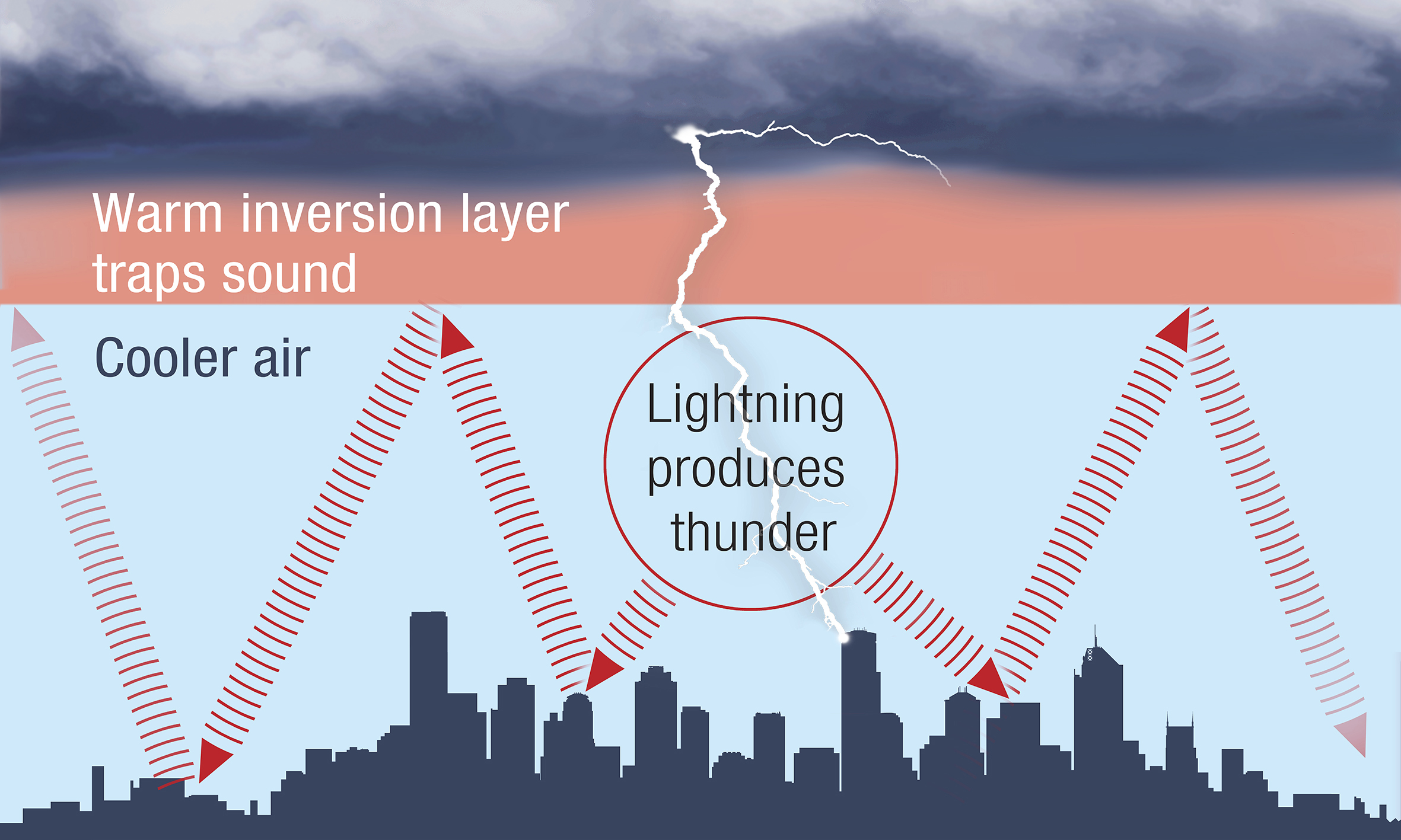
But if the lightning is further away, those sound waves have a much, much longer journey to embark upon. They travel through different layers of air, bump off clouds like a giant pinball machine, and even get refracted (bent) a little bit by changes in temperature and air density.
Sound Waves on an Obstacle Course
Think of those distant sound waves as tiny, determined athletes running a truly challenging obstacle course through the atmosphere. They’re dodging air currents, leaping over temperature gradients, and weaving around towering cloud formations, trying to reach you.

Some waves might take a super-fast, direct path, while others take a more scenic, roundabout route, getting delayed along the way. By the time they all finally reach your ears, they’re a jumbled, beautiful, delayed mess of echoes and overlapping sounds.
This wonderful, natural jumble transforms that initial sharp crack into a softened, drawn-out, majestic rumble. It's nature's fantastic way of telling you the storm is putting on a grand show, but perhaps from a safe, comfortable distance, allowing you to enjoy the full performance!
Why Thunder Lingers: The "Surround Sound" Effect
Sometimes thunder just keeps going and going, like an enthusiastic encore at an amazing rock concert! This lingering effect is part of what makes it so incredibly majestic and awe-inspiring. It’s not just a single, fleeting sound event; it’s a whole, immersive sonic experience.
The atmosphere itself acts like a giant mixing board, masterfully blending all these different arriving sound waves into one cohesive symphony. Clouds can powerfully reflect sound, and even the ground can play a vital part in bouncing those mighty vibrations around, creating a complex soundscape.
It’s truly nature’s own surround sound system, perfectly engineered over millennia to give us that deep, satisfying, and sometimes truly goosebump-inducing growl. It makes you feel tiny in the vastness of nature, in the best possible, most humbling way, doesn't it?
The Lightning's Lengthy Path
Remember how lightning isn't just a tiny, singular dot in the sky? It’s often a long, complex, branching path, sometimes several miles long, like an electric river stretching through the clouds! Imagine a super squiggly line of fire snaking through the sky.

Sound travels at a certain speed (much, much slower than light, which is why you always see the flash before you hear the boom!). So, the sound from the closest part of that incredibly long lightning path reaches your ears first.
Then, moments later, the sound from a slightly further part arrives, then another, and another, in quick succession. It's like a chain reaction of hundreds of little "pops" all strung together with incredible speed, creating that wonderfully continuous, rolling rumble.
The Grand Finale: Appreciating the Rumble
So, the next time a truly magnificent thunderstorm rolls in and the sky starts its theatrical, awe-inspiring performance, you'll know the incredible secret! It's not angry gods or playful giants playing celestial drums (though those are wonderfully imaginative stories, aren't they?).
It’s the incredible, fascinating physics of lightning, superheating the air into an explosive expansion, followed by countless sound waves bouncing, delaying, and overlapping in a spectacular aerial ballet. It's truly a magnificent natural phenomenon, a true marvel to behold.
That deep, comforting, or sometimes wonderfully startling rumble is a powerful reminder of the raw power and intricate, beautiful complexity of our amazing planet. So go ahead, appreciate that thunderous applause from the sky, knowing its secrets!
"Thunder is the sound of the entire atmosphere reacting with explosive delight to lightning's fiery, supersonic rock concert!"
It’s a spectacular light show paired perfectly with nature's most impressive, ancient sound engineering. So next time, don't just hear it, feel it, and remember the incredible science putting on the most amazing, free show just for you!