
What Makes Carbon Monoxide Alarm Go Off

Ever been chilling at home, maybe binge-watching your favorite show, when suddenly – BEEP! BEEP! BEEP! – your carbon monoxide alarm decides it's time for a solo concert? It’s startling, right? You probably jump three feet in the air, frantically sniff the air (for something you can't smell!), and wonder what mysterious invisible intruder just triggered your home’s tiny guardian.
Well, buckle up, because we're about to dive into the surprisingly cool, often quirky, world of how these little lifesavers work. It's like a tiny detective unit, constantly on the lookout for a truly sneaky villain.
Meet the Invisible Villain: Carbon Monoxide (CO)
First off, let’s talk about our invisible antagonist: Carbon Monoxide. We’re not kidding when we say invisible. It’s a gas that’s colorless, odorless, and tasteless. Basically, the ultimate ninja of toxic gases. You wouldn't know it's there until it's too late – which is precisely why those alarms are such absolute superheroes!
Must Read
CO is a byproduct of incomplete combustion. Think furnaces, gas stoves, fireplaces, car exhausts, even portable generators. If anything that burns fuel isn't doing its job perfectly, CO can be lurking. And it’s seriously bad news because it loves to cuddle up with your red blood cells way more than oxygen does – like 200-250 times more efficiently! Yikes!
The Alarm's Secret Weapon: The Sensor!
So, how does a little plastic box know something is wrong when even you can’t tell? It all comes down to a super clever component inside: the sensor. There are a few different types, each with its own brand of genius.
The "Fake Blood Cell" Sensor (Biomimetic)
One type, called a biomimetic sensor, is pretty wild. Imagine a gel that changes color when it absorbs carbon monoxide, much like how real blood cells would react to CO instead of oxygen. It’s essentially a tiny chemical mimic of our own blood! When the gel changes color, it triggers an optical sensor, which then yells, "Hey! We've got a problem here!" Pretty ingenious, right?
The Electrical Jolt Sensor (Semiconductor)
Then there’s the metal oxide semiconductor sensor. This one is a bit more like a tiny electrical magician. It has a layer of tin dioxide, and when CO gas hits it, the gas changes the electrical resistance of the layer. Think of it like a toll booth. When CO tries to pass, it changes how easy it is for electricity to flow. The alarm constantly monitors this flow, and if it deviates too much, it knows CO is in the house. Zap! Alarm time!

The Chemical Reaction Superstar (Electrochemical)
But the most common and arguably coolest type you'll find in modern alarms is the electrochemical sensor. This one is like a miniature chemical lab. It contains electrodes immersed in an electrolyte, kind of like a tiny battery. When carbon monoxide gas comes into contact with these electrodes, it causes a chemical reaction. This reaction generates a very small electrical current. The more CO, the stronger the current.
It's super precise and reliable. The alarm's internal brain is constantly measuring this tiny current. If it detects a current that indicates a dangerous level of CO, it doesn’t just casually note it. Oh no, it goes full siren mode!
When Does It Scream? It's All About Timing & Concentration!
Here’s a crucial and often misunderstood part: your CO alarm isn't just detecting any whiff of CO. It’s calibrated to go off based on both the concentration of CO in the air AND how long that concentration has been present. It’s super smart about it!
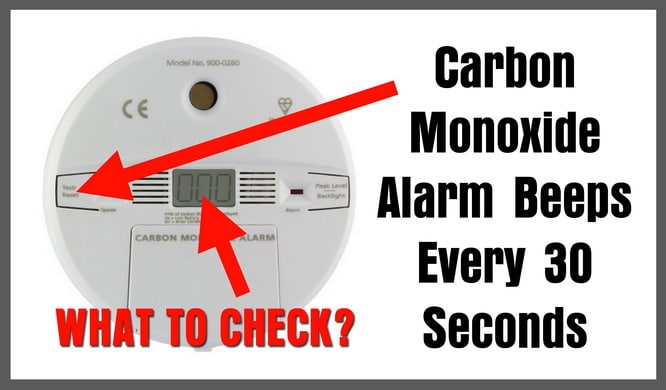
Think of it like this: a tiny, harmless amount of CO might be around for a second (maybe from a leaky oven door opening briefly) and the alarm won't freak out. But if there’s a sustained, low level of CO over a longer period (say, 30 parts per million for several hours), or a really high concentration (like 400 ppm) even for a few minutes, that’s when it screams bloody murder. It's programmed to react to potentially harmful situations, not just every random molecule.
This is why you might hear different beep patterns or even see varying digital readouts on some advanced models. They’re giving you a subtle heads-up or an urgent warning based on these precise calculations.

Why This Is So Fun To Know!
Isn’t it awesome how much clever engineering goes into something we often take for granted? These unassuming little boxes are constantly sniffing the air, performing complex chemical reactions, or monitoring electrical changes – all to protect us from a danger we can't detect ourselves.
It's a testament to human ingenuity, turning an invisible threat into a loud, undeniable warning. So next time your CO alarm beeps during a test, or (hopefully not!) for real, give it a little nod of appreciation. It's doing its vital, invisible job, making sure your home stays safe and sound, one silent chemical reaction at a time!
Remember to test your alarms regularly and replace them according to the manufacturer's instructions. They're your home's silent, yet very loud, guardian angels!