What Is The Wind Speed For A Category 1 Hurricane
Okay, let's talk hurricanes! Not in a doom-and-gloom, batten-down-the-hatches kind of way, but in a “wow, nature is a powerful, sometimes surprising, and even strangely beautiful thing” kind of way. Specifically, let's zoom in on our friend, the Category 1 hurricane. You've probably heard the term, maybe even evacuated because of one. But what exactly defines this meteorological marvel?
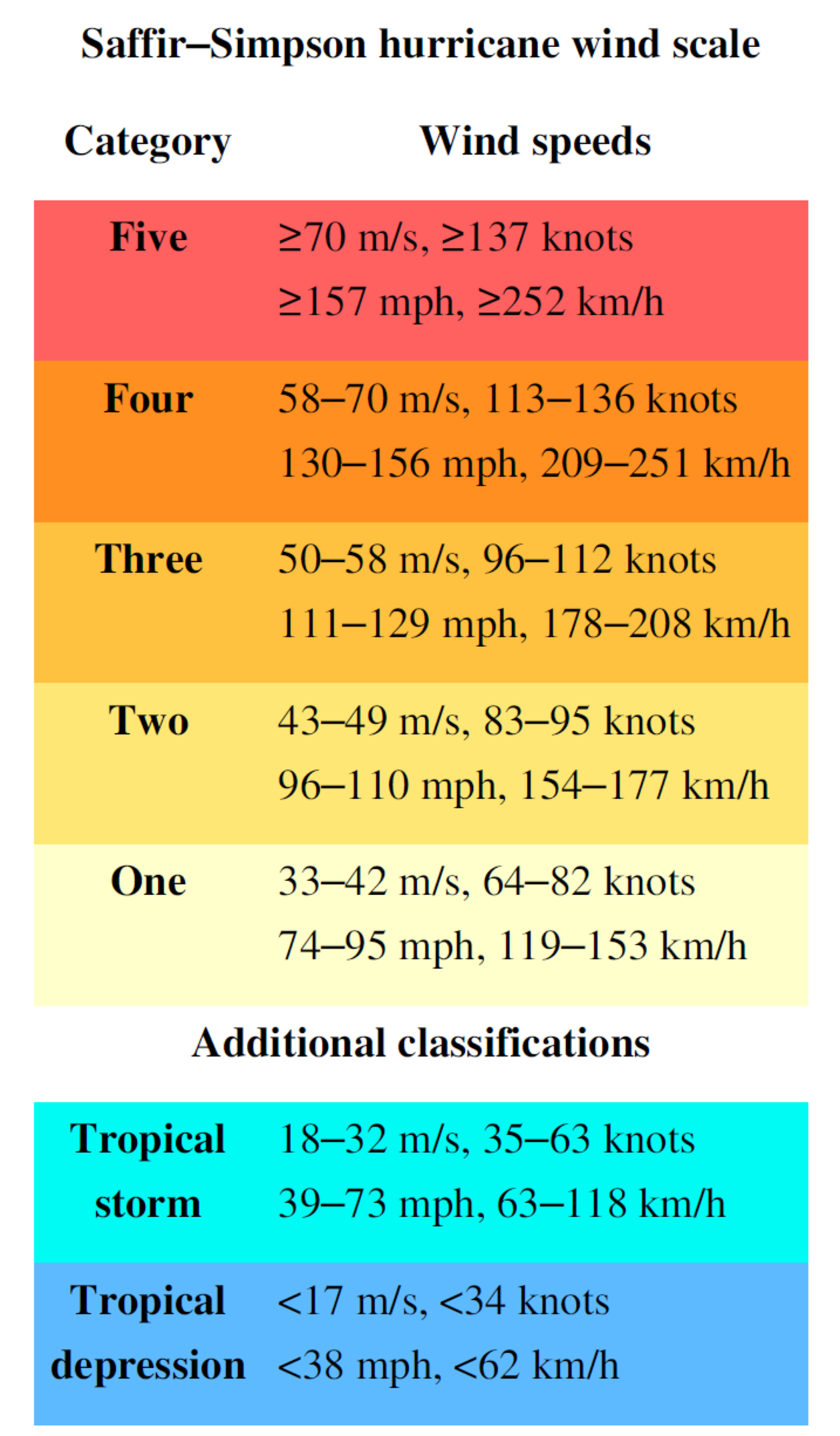
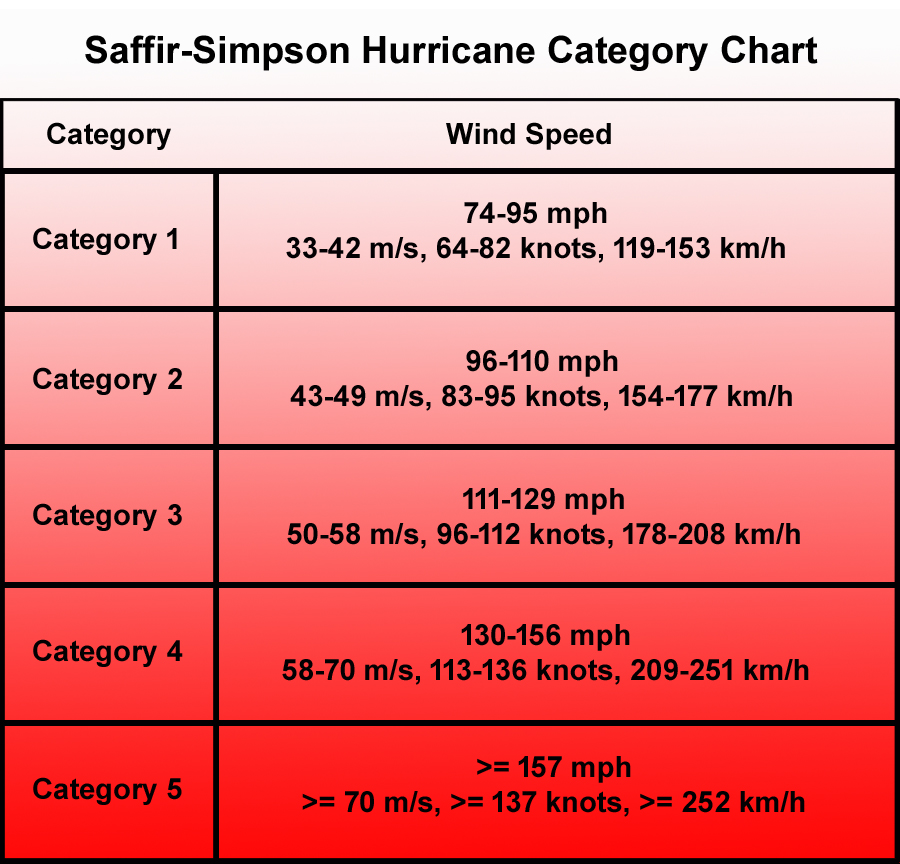
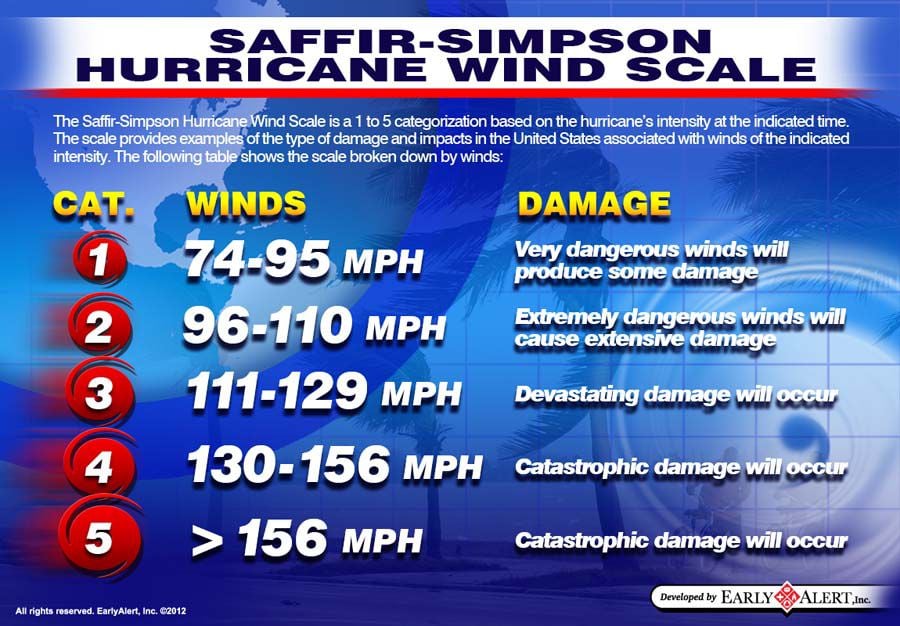
The simple answer? Sustained winds of 74 to 95 miles per hour. That's it. That's the magic number. But numbers can be boring, right? Let’s put that into perspective.
Category 1: A Gentle Giant... Kinda
Imagine standing on a beach. A Category 1 hurricane is starting to make its presence known. The wind is howling, whipping your hair around your face like a crazed stylist. If you're trying to hold an umbrella, forget about it. It's going to become a kite, heading towards the nearest palm tree (which is probably swaying like it's at a rock concert). Palm trees can withstand a lot, but a Category 1 hurricane will damage the plants, and some of the weaker ones will snap.
Must Read
Think about your average car. A Category 1 hurricane would make driving tricky. You'd feel the wind pushing against you, making it hard to stay in your lane. It would be best not to drive at all if you could avoid it.
Here's where it gets a little less fun and a little more… impactful. Category 1 winds can break tree branches, topple poorly secured signs, and cause minor damage to roofs and siding. Power outages are likely. Picture your garden gnome collection. Suddenly, those adorable little guys are missiles! Best bring them inside.
From Zero to Hurricane Hero: How Wind Gets Measured
So, how do they actually measure these winds? It's not just someone sticking their head out the window with a handheld anemometer (although, that would be pretty entertaining). NOAA (National Oceanic and Atmospheric Administration) uses sophisticated tools on weather buoys, aircraft, and even satellites to track wind speeds. These instruments send data back to forecasters, who then use complex models to predict the hurricane's path and intensity.
Think of it like this: imagine baking a cake. You need precise measurements of flour, sugar, and eggs to get it right. Similarly, meteorologists need precise measurements of wind speed, air pressure, and temperature to understand a hurricane. The more data they have, the better they can predict what that storm is going to do. So next time you see a weather forecast, appreciate all the tech going into it.
The Saffir-Simpson Scale: A Hurricane's Report Card
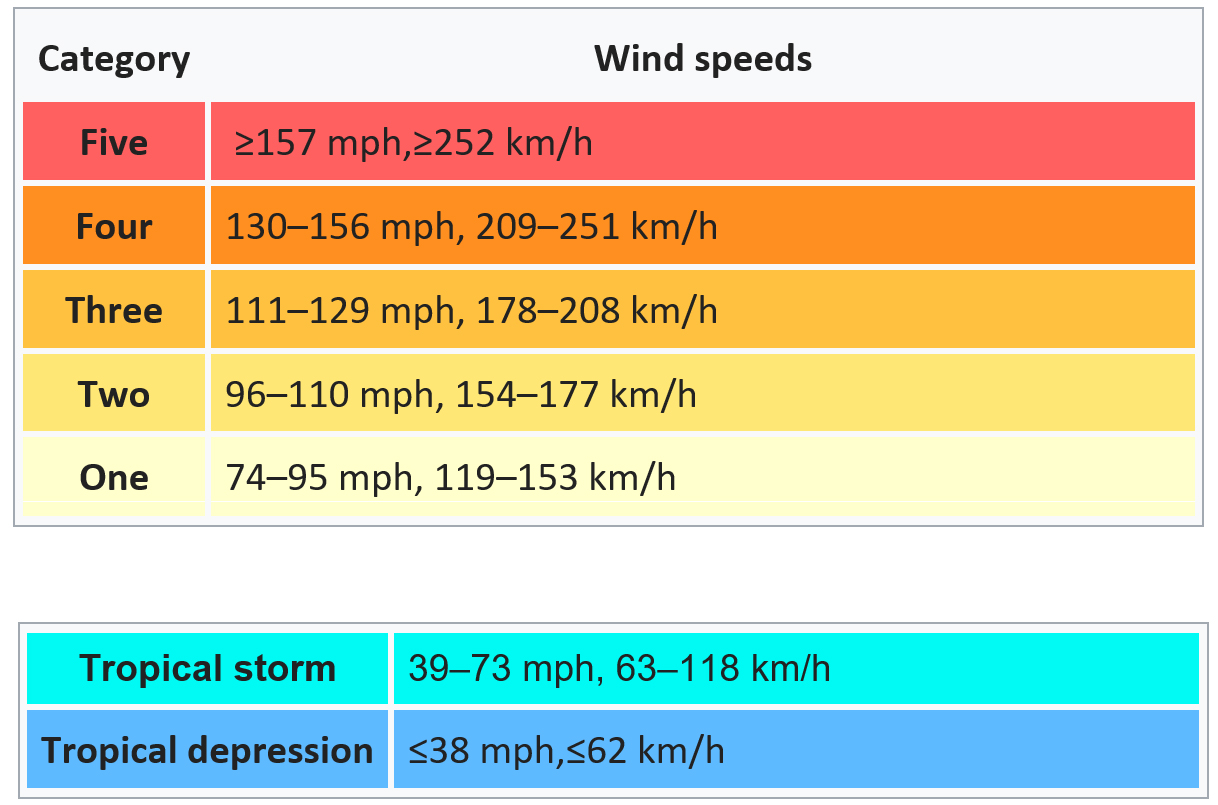
A Category 1 hurricane sits at the bottom of the Saffir-Simpson Hurricane Wind Scale, which is a handy tool for categorizing hurricanes based on their wind speeds and potential for damage. It goes from Category 1 (our gentle giant) all the way up to Category 5 (the big kahuna, capable of catastrophic destruction). It’s like a hurricane report card, telling you how powerful the storm is at a glance.
While Category 1 is the "weakest" hurricane, don't underestimate it. A Category 1 storm can still cause significant damage, especially if it lingers for a long time or brings heavy rainfall and storm surge. Remember, it's not just the wind; it's the whole package. Heavy rain can lead to flooding, and storm surge – the abnormal rise in sea level during a hurricane – can inundate coastal areas.

Respect the Wind, Respect the Science
The key takeaway? 74 to 95 mph winds. That's the mark of a Category 1 hurricane. It's a force to be respected, a reminder of the incredible power of nature. So next time you hear about a Category 1 heading your way, take it seriously. Secure your belongings, listen to the advice of emergency officials, and stay safe. And maybe, just maybe, spare a thought for the dedicated scientists who are working tirelessly to understand these storms and keep us informed.
After all, understanding the science behind the storm helps us become more prepared and resilient. And who knows, maybe you'll even impress your friends with your newfound hurricane knowledge!