
What Is The Stress Strain Curve
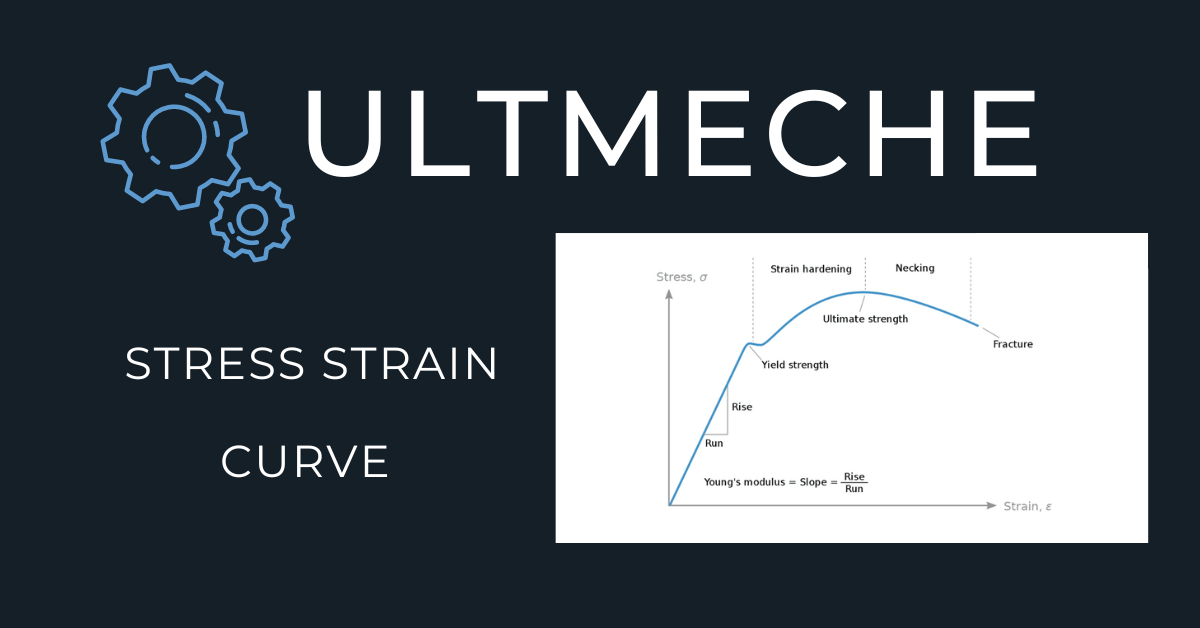
Hey there! Grab another coffee, pull up a chair. Ever heard people in engineering or science-y fields throw around terms like "stress-strain curve" and just kind of... nod sagely, pretending you totally get it? Yeah, me too. For a while, it sounded like something incredibly complicated, maybe involving quantum physics or alien technology. But guess what? It’s actually pretty cool, super useful, and honestly, not nearly as scary as it sounds.
Think of it this way: materials have personalities. Some are super chill and bouncy, some are tough as nails, and others are just a bit… fragile. The stress-strain curve is basically their psychological profile. It tells us how a material reacts when you push it, pull it, or try to bend it out of shape. Pretty neat, right?
First Up: What Even Is Stress?
Alright, let’s simplify. When we talk about stress in materials science, we’re not talking about your deadline anxiety (though that’s a whole other curve!). We’re talking about the force being applied to an object, spread out over its area. Imagine pushing your finger onto a piece of soft clay. The harder you push, the more stress you’re applying. If you push a tiny pin into the clay, the force is concentrated on a small area, so the stress is huge! If you push with your whole hand, the same force is spread out, so less stress. Got it? It's literally how much "oomph" per square inch (or millimeter) is hitting the material.
Must Read
And What About Strain?
Now, if you push or pull on something, what happens? It usually changes shape a little bit, right? That change in shape is what we call strain. It’s basically how much a material deforms relative to its original size. So, if you have a rubber band that’s 10 cm long, and you stretch it to 12 cm, it’s strained by 2 cm. But more technically, we express it as a ratio: the change in length divided by the original length. In our rubber band example, that's 2cm/10cm = 0.2 (or 20%). It's all about how much it stretches or squishes compared to its starting point. Pretty intuitive, once you think about it!
The Grand Reveal: The Stress-Strain Curve!
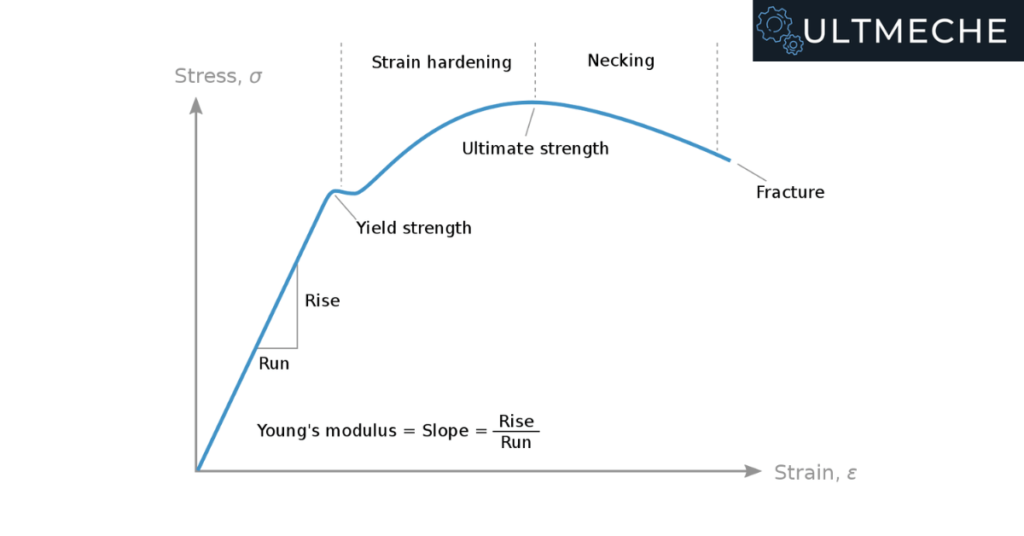
Okay, so we have stress (the pushing/pulling) and strain (the stretching/squishing). Now, imagine you’re in a lab, doing a little experiment. You take a sample of, say, steel. You start pulling on it, slowly increasing the force, and measuring how much it stretches. Then, you plot those numbers on a graph. Guess what you get? Yep, the stress-strain curve! It’s literally a picture of how much a material deforms as you apply more and more load to it. Each material has its own unique curve, like a fingerprint!

The "Happy Zone": Elastic Region
The first part of the curve is usually a nice, straight line, heading upwards. This is the elastic region. In this phase, the material is like a good friend: it stretches a bit when you apply stress, but if you let go, it bounces right back to its original shape, no harm done! Think of pulling a spring or a rubber band a little bit. Let go, and boing! back it goes. This is where Hooke’s Law lives, the idea that stress is proportional to strain. Pretty chill, right?
The "Uh Oh" Moment: Yield Point
Keep pulling, and eventually, that nice straight line starts to curve. This bend marks the yield point. This is a big deal! It's the point where, if you let go, the material won't quite return to its original shape. It’s experienced permanent deformation. Imagine bending a paperclip just a little. It springs back. Bend it a bit more, and it stays bent. That "a bit more" moment? That's the yield point! It's the material saying, "Okay, I'm not going to be exactly the same again."

Beyond No Return: Plastic Region
After the yield point, you enter the plastic region. Here, the material is permanently deforming. You apply more stress, and it keeps stretching, getting thinner and longer. Think of pulling on taffy or modeling clay. You stretch it, and it stays stretched. It doesn't snap back. This is where the material starts to "neck" – it gets narrower in the middle, like a tiny waist forming before it gives up the ghost entirely.
The Peak: Ultimate Tensile Strength
As you keep pulling, the stress actually reaches a maximum point on the curve. This is the ultimate tensile strength (UTS). It’s the maximum stress the material can withstand before it starts to truly fail and break apart. It's like the material's last gasp, its final burst of strength before things go really downhill. Even though it's still deforming (straining) after this point, the actual load it can support starts to decrease. Interesting, huh?
The End: Fracture Point
And finally, snap! The curve plummets. This is the fracture point. The material breaks. Game over. Mission failed. It's quite dramatic on the graph, often a sharp drop, because, well, it broke!
So, Why Should We Care?
Alright, so we’ve got a fancy graph describing how things bend and break. But why is this useful in the real world? Uh, everything! Engineers use these curves to design bridges that don't collapse, cars that are safe in a crash, tiny smartphone components that won't give up, and even to figure out how strong a plastic bottle needs to be. Knowing a material's stress-strain curve helps them choose the right material for the right job. If you want something stretchy, you look for a long plastic region. If you want something super strong that won't deform, you look for a high yield strength.
See? Not so scary after all! It’s just a helpful, visual story about how materials react under pressure. Next time someone mentions it, you can just casually say, "Ah yes, its mechanical autobiography, truly fascinating." And maybe grab another coffee.
