
What Is The Source Of Energy For Nuclear Power
Hey, wanna talk about something kinda… explosive? I'm talking nuclear power! But don’t freak out, it's not as scary as it sounds. Actually, it’s kinda cool. Ever wondered where that crazy amount of energy comes from?
It All Starts with the Atom (duh!)
Okay, science class flashback! Remember atoms? Tiny little things that make up, well, everything. Think of them like LEGO bricks for the universe. Atoms have a nucleus, a core packed with protons and neutrons. And that’s where the magic – and the energy – lives!
Now, here’s where things get interesting. Einstein told us that energy and mass are basically the same thing. E=mc²! Yeah, that equation. Basically, a tiny bit of mass can be converted into a HUGE amount of energy. Seriously huge. We're talking "power a city" huge.
Must Read
Uranium: The Star of the Show
So, which atoms are nuclear power plants obsessed with? Usually, it's uranium. Why uranium? Because it’s a bit of a drama queen. Its nucleus is naturally unstable. Kinda like that one friend who's always on the verge of a meltdown.
Think of the uranium nucleus like a tightly wound spring, just waiting to burst. And that burst, my friend, is called nuclear fission. BOOM!
Fission: Splitting the Atom
Here's the gist: a neutron, a tiny subatomic particle, slams into the uranium nucleus. The uranium nucleus, already unstable, splits apart. It's like hitting a piñata full of smaller particles and… energy! Lots and lots of energy. We’re talking thermonuclear amounts!
And get this: when the uranium atom splits, it doesn't just break apart. It also releases more neutrons! These neutrons go on to hit other uranium atoms, causing them to split too. It's a chain reaction! Like dominoes falling, but with more… oomph.
Imagine setting off one uranium atom. It splits, releases neutrons. Those neutrons split two more. Then those two split four. Then eight. Sixteen. Thirty-two… You get the idea. It grows exponentially! This is why nuclear reactions can release so much energy.
From Atoms to Electricity
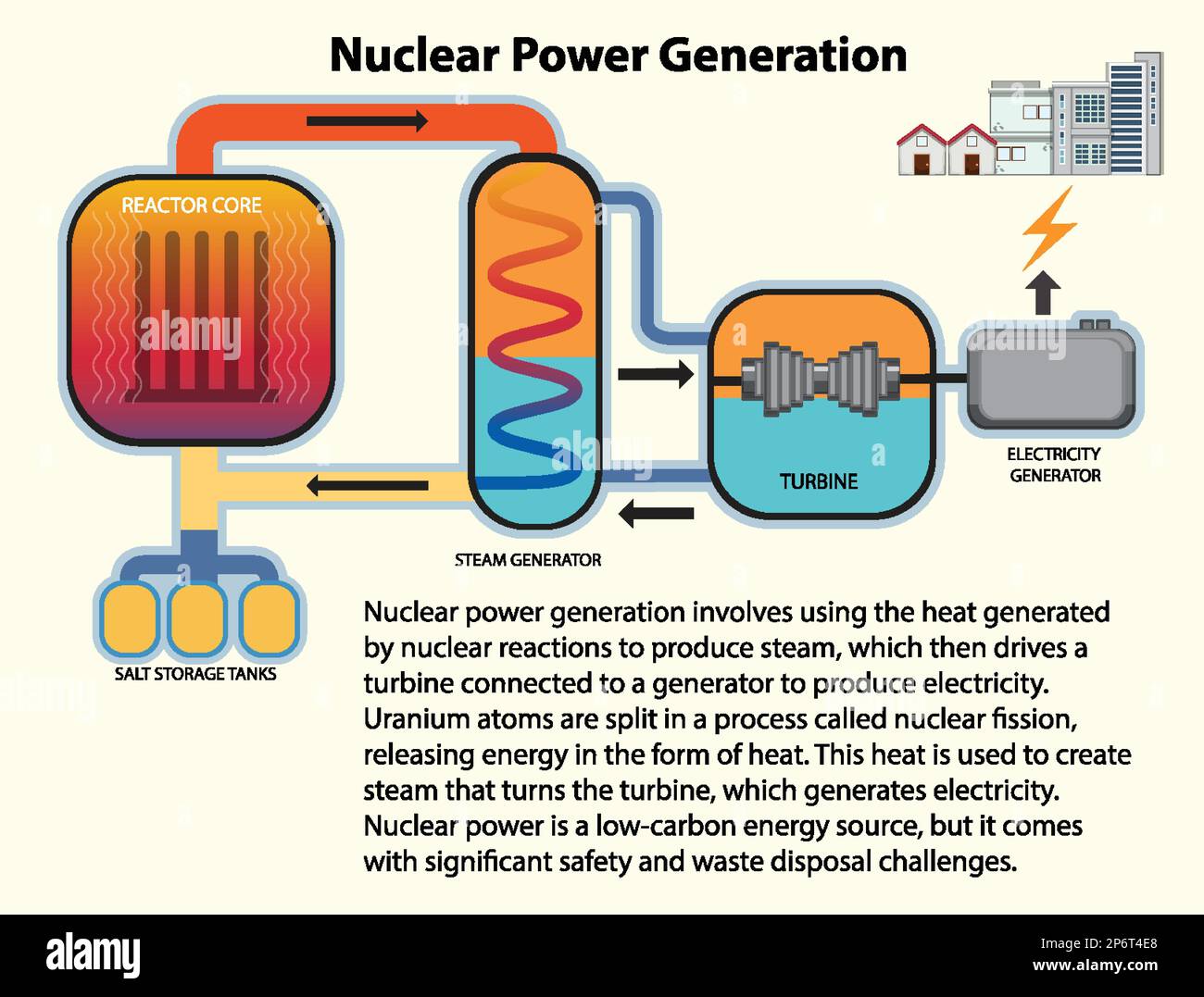
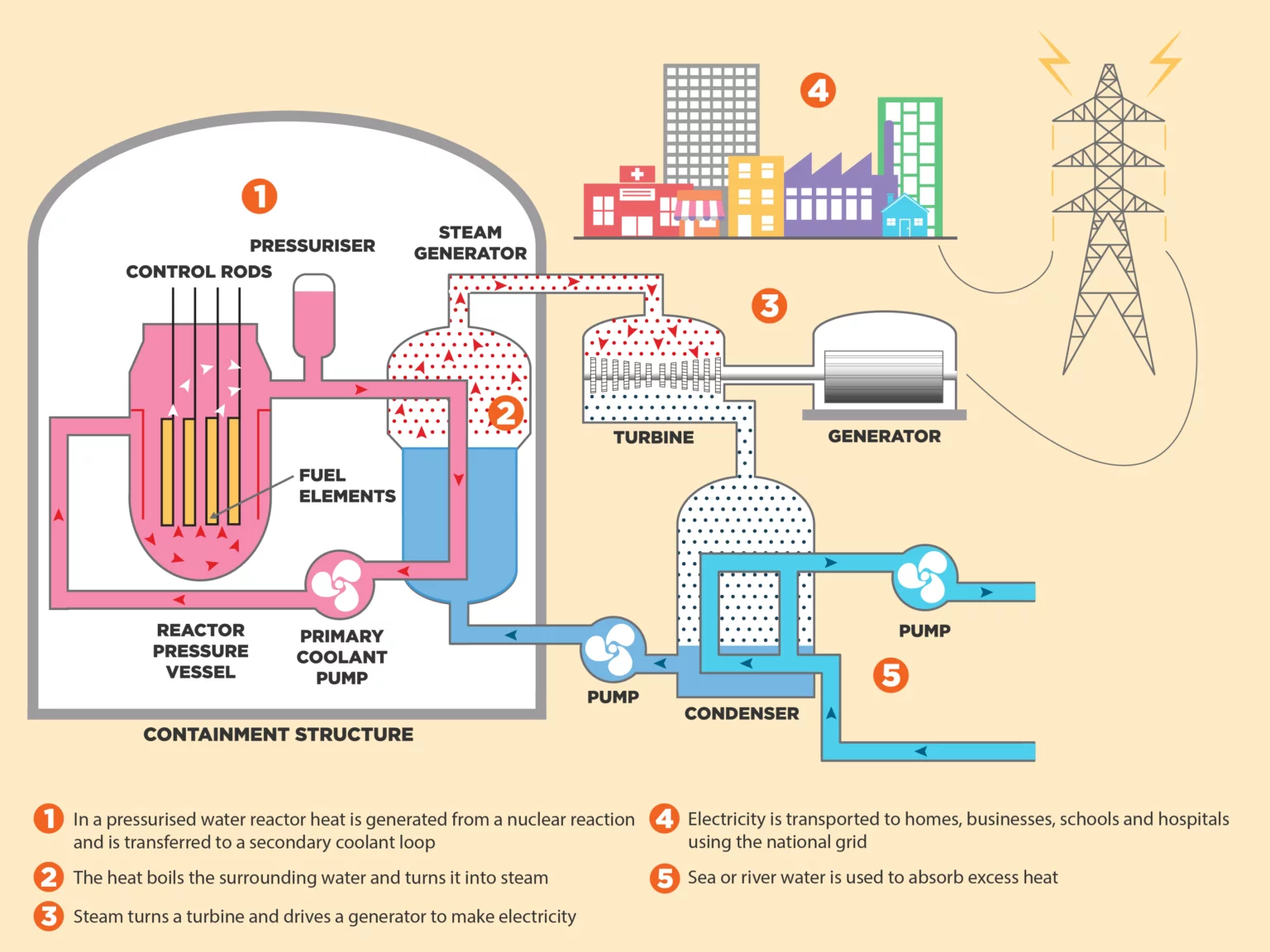
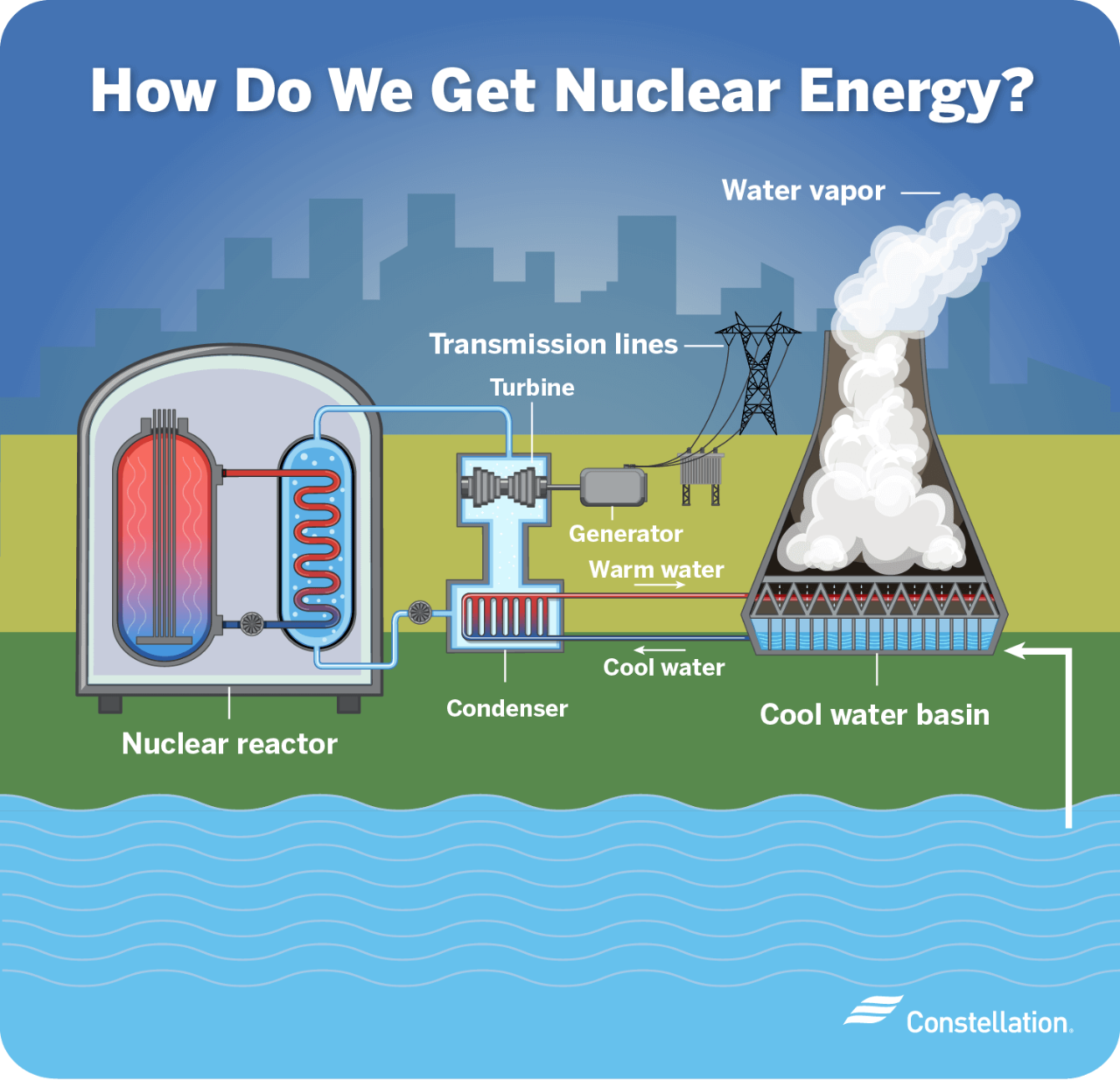
Okay, so we have this controlled chain reaction happening inside a nuclear reactor. (Controlled is the key word here, folks!). That chain reaction releases a ton of heat. What do we do with that heat? We boil water!
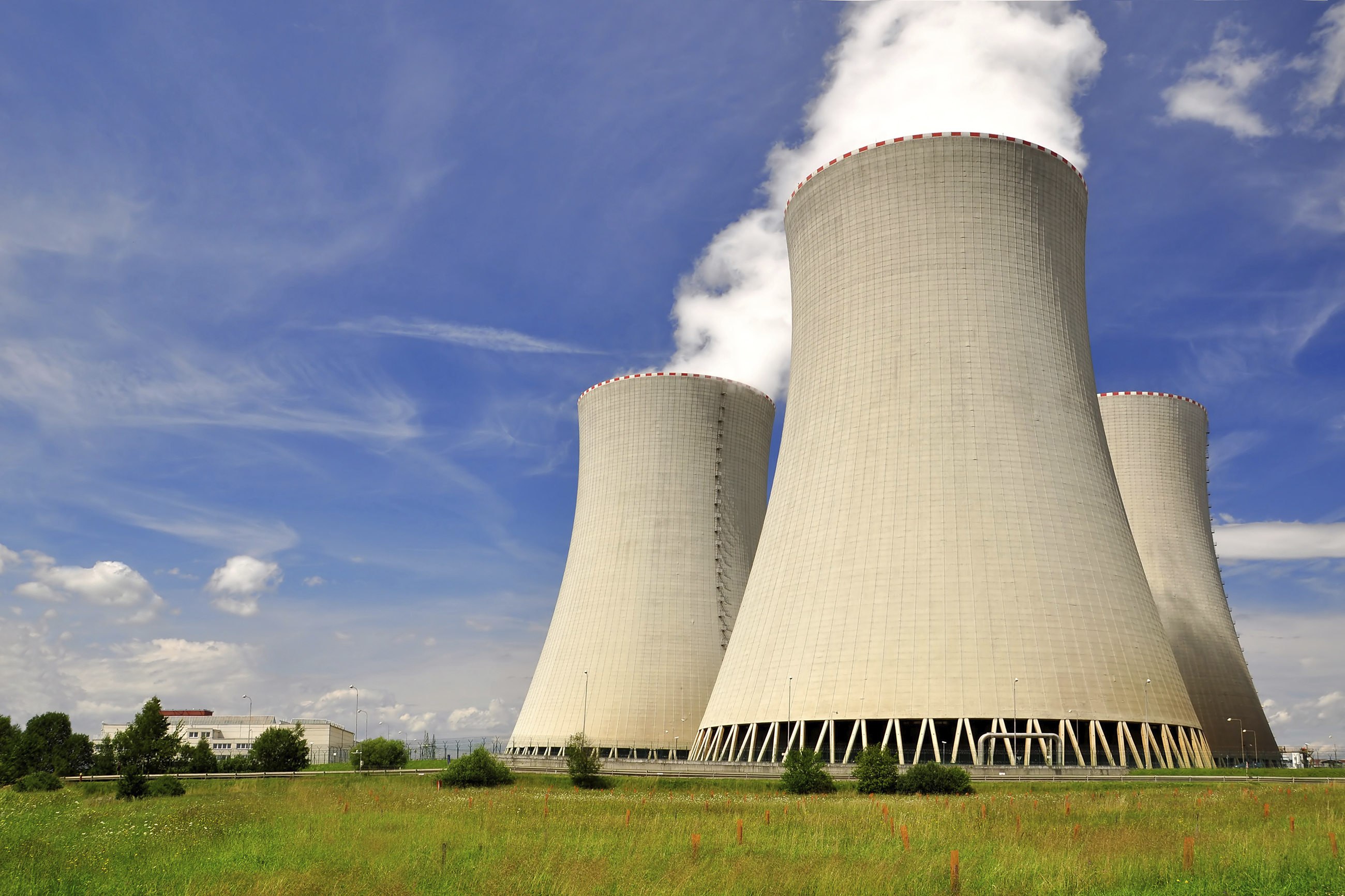
Yep, it's surprisingly simple. The heat from the fission process boils water, creating steam. That steam spins a turbine, which is connected to a generator. The generator then produces electricity. It’s basically the same process as a coal-fired power plant, except instead of burning coal to heat the water, we're splitting atoms!
Think of it as a really, really fancy tea kettle. A tea kettle that can power a whole city.
The Quirky Side of Nuclear Energy
Did you know that the first controlled nuclear chain reaction happened in a squash court under the stands of the University of Chicago’s football stadium? Seriously! Talk about a secret weapon!
And here's another fun fact: Uranium is actually pretty common. It's found in rocks all over the world, even in seawater! (Although extracting it from seawater is a bit tricky.)
The key to nuclear power isn’t just having uranium. It's about enriching it. Naturally occurring uranium isn't quite "fission-ready." It needs to be processed to increase the concentration of the uranium isotope that's good at splitting. This is a complicated and expensive process, but it's essential for making nuclear power work.
So, What's the Big Deal?
Nuclear power is a powerful source of energy. It doesn't produce greenhouse gasses like burning fossil fuels, which is a big plus in the fight against climate change.
But it also has its challenges. Nuclear waste, for example. What do you do with all that radioactive stuff after it's been used in the reactor? Storing it safely for thousands of years is a serious challenge.
And then there's the risk of accidents. Nobody wants another Chernobyl or Fukushima. That's why safety is the top priority in nuclear power plants.
Nuclear Power: A Complex Question
Nuclear power is a complicated issue. There are strong arguments for and against it. But one thing is for sure: understanding where that energy comes from – the heart of the atom – is pretty fascinating. It all boils down (pun intended!) to harnessing the incredible power locked within those tiny building blocks of matter. It’s something to think about, right?
So, next time you flip on a light switch, maybe take a moment to ponder the atom and its awesome power. Who knows? Maybe you'll even become a nuclear physicist! Or at least have a good story to tell at your next party.