What Is The Molarity Of A Bleach Solution Containing 9.5
Ever wondered exactly how strong your household bleach is? It's more than just "strong" or "weak" – there's a specific measurement called molarity that tells us precisely how concentrated the active ingredient is. Figuring out the molarity of a bleach solution containing 9.5% sodium hypochlorite (NaClO) might sound like a chemistry lesson, but trust me, it's surprisingly useful and even a bit fun once you get the hang of it! Understanding this can help you use bleach more effectively and safely around the house.
So, why should you care about the molarity of bleach? Well, it depends on who you are! For beginners just starting to explore cleaning solutions, understanding molarity is a gateway to appreciating the science behind everyday products. It helps you move beyond blindly following instructions and empowers you to make informed decisions. For families, knowing the concentration of bleach is crucial for safe handling, especially when diluting it for cleaning surfaces or disinfecting toys. Over-diluting might render it ineffective, while using too much can be harmful. And for hobbyists, like those who enjoy tie-dyeing or creating special effects with fabric, understanding molarity allows for precise control over bleaching processes, leading to consistent and predictable results. Plus, it's a great party trick to impress your friends!
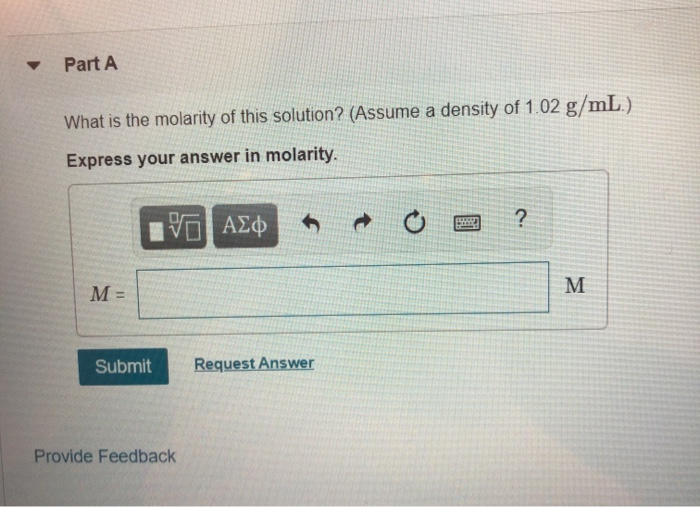
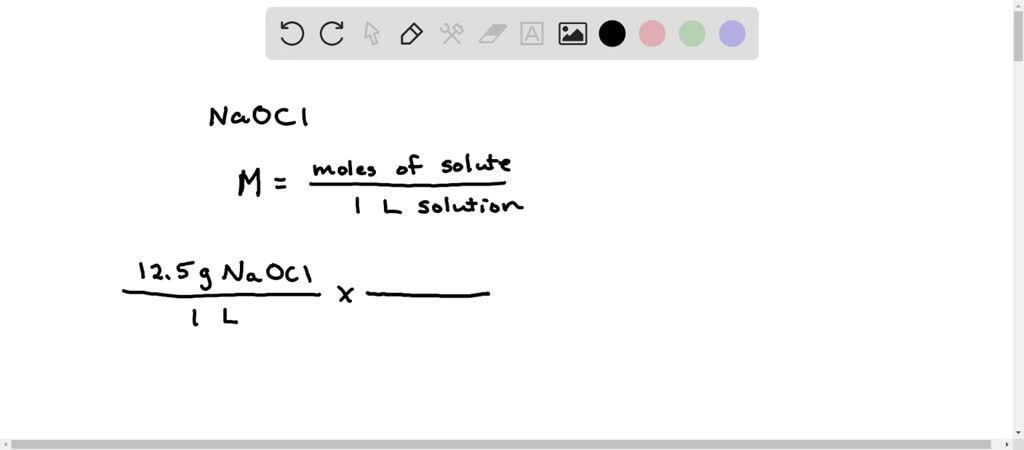
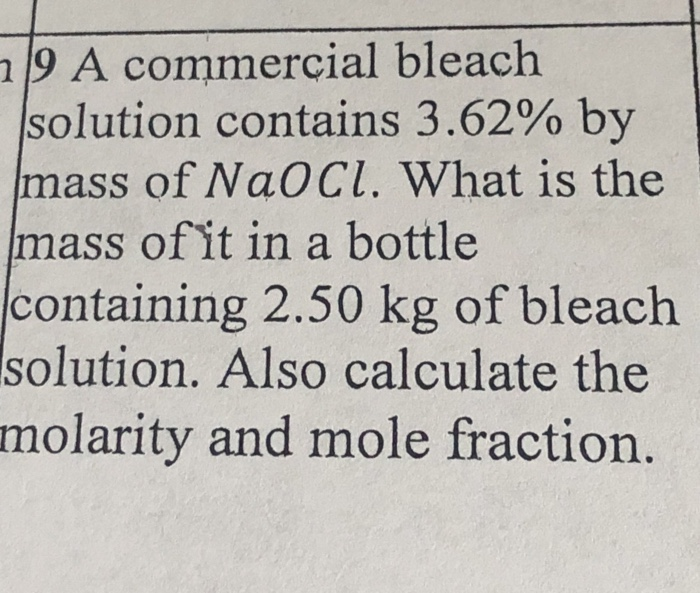
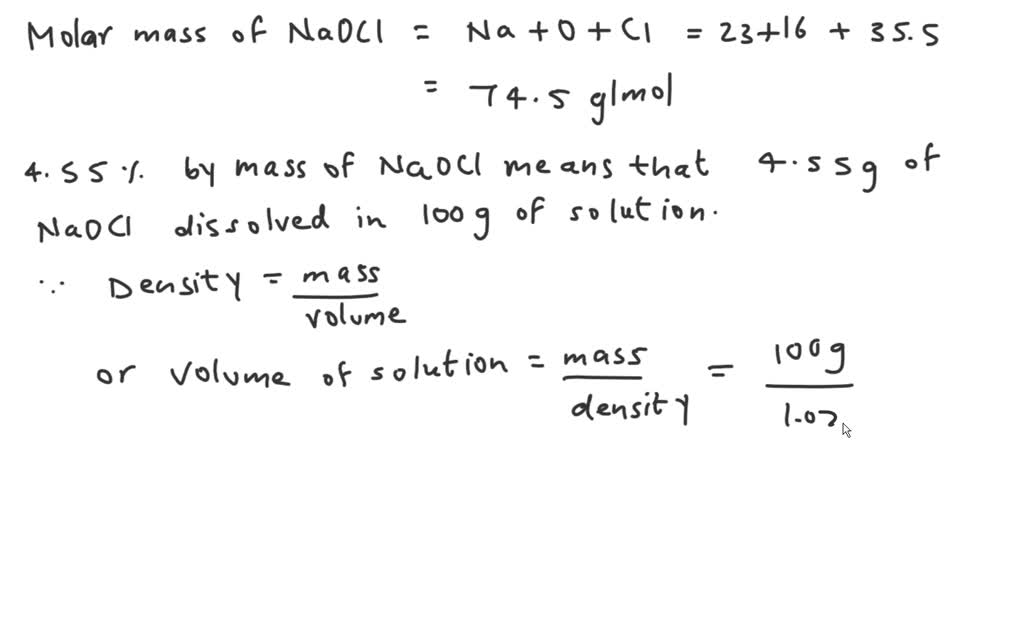
Okay, let's tackle that initial question: What’s the molarity of a bleach solution containing 9.5% NaClO? This means that 9.5 grams of NaClO are present in 100 grams of the solution. We need a little chemistry to work this out, but don’t worry, we’ll keep it simple. First, we need to know the molar mass of NaClO, which is approximately 74.44 g/mol. Then, we need to consider the density of bleach, which is about 1.1 g/mL. From there, we can determine that a 9.5% bleach solution has a molarity of approximately 1.43 M.
Must Read
Think of molarity like this: it's similar to knowing how much sugar is in your coffee. A high molarity is like a super sweet coffee – very concentrated! A low molarity is like weakly sweetened coffee – less concentrated. Bleach solutions can come in different concentrations, and even slight variations can affect how they perform. For instance, some specialized bleaches used in labs might have a higher molarity than your regular household bleach.
Here are some simple, practical tips to get started with understanding bleach molarity:
- Read the label! Many bleach products will state the concentration of NaClO.
- Dilution is your friend. Always dilute bleach according to the manufacturer's instructions. Diluting to the correct molarity for specific tasks ensures effectiveness and safety.
- Use a calculator! There are plenty of online molarity calculators that can help you determine the concentration of diluted solutions. Just plug in the values, and let the calculator do the work.
- Start small. Practice with simple dilutions before tackling more complex calculations.
Understanding the molarity of bleach might seem intimidating at first, but it's a valuable skill that can empower you to use cleaning products more effectively and safely. It opens the door to understanding the science behind common household items and allows for more informed decision-making. Plus, feeling like a mini-chemist is pretty cool. So go ahead, dive in, and discover the fascinating world of bleach molarity! The knowledge is power (and a cleaner, safer home!).