What Is The Least Common Multiple Of 20 And 30
Okay, confession time: you might not see "Least Common Multiple of 20 and 30" trending on TikTok anytime soon. But trust me, this little piece of math magic is surprisingly useful, especially if you're into anything creative, crafty, or just enjoy solving puzzles. Think of it as a secret ingredient in the recipe for organized chaos!
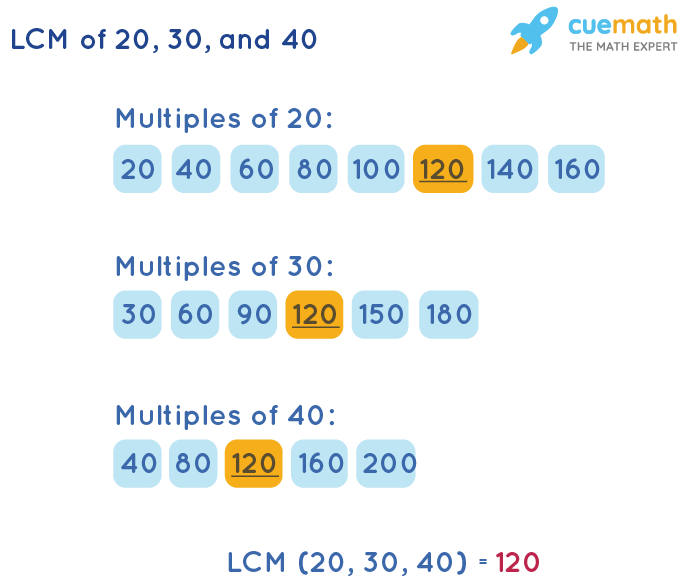
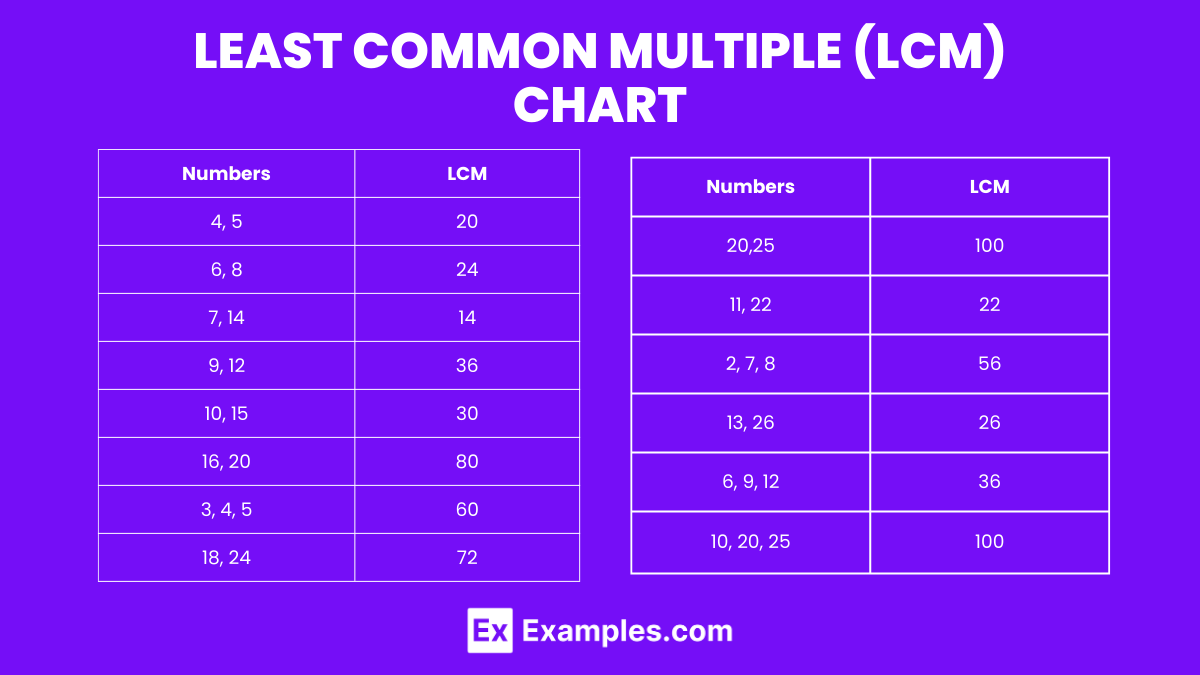
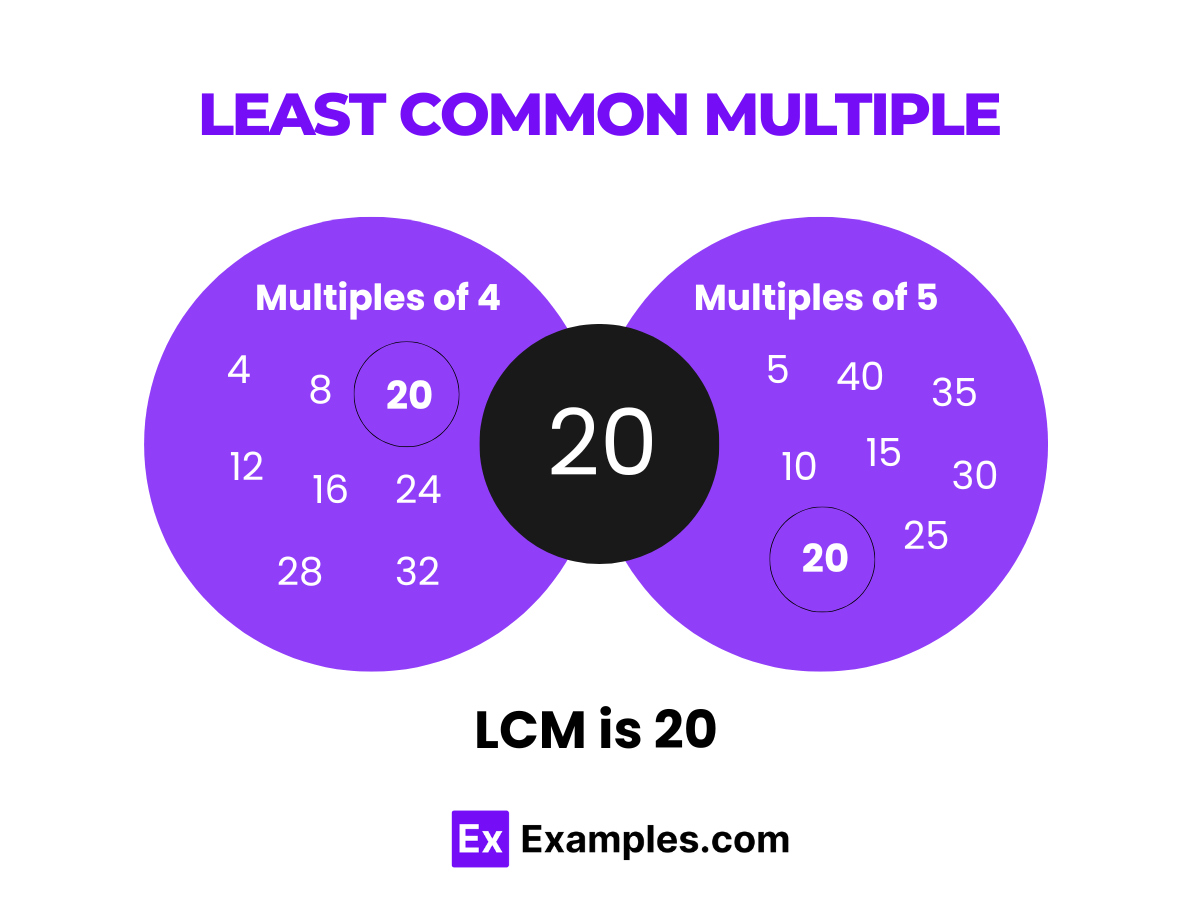
So, what is it? The Least Common Multiple (LCM) of two numbers is the smallest number that both of those numbers divide into evenly. In our case, we're looking for the smallest number that both 20 and 30 go into without leaving a remainder. The answer? It's 60. But why should you care?
For artists and designers, understanding LCM can be a game-changer. Imagine you're creating a repeating pattern. Let's say you have one motif that repeats every 20 pixels and another that repeats every 30 pixels. Finding the LCM of 20 and 30 (which is 60) tells you that the entire pattern will repeat every 60 pixels. This ensures perfect alignment and avoids those annoying, jarring misalignments that can ruin a beautiful design. Think wallpaper designs, fabric prints, or even digital art.
Must Read
Hobbyists, listen up! Are you a woodworker building a bookshelf? Maybe you need to evenly space dowels that are placed every 20 cm and shelves that are supported every 30 cm. Knowing the LCM helps you create a structure where the supports and dowels align perfectly, providing maximum stability and a professional finish. Bakers, think about cookie decorating – if you're alternating two different icing patterns with different spacing requirements, LCM is your friend! Even musicians can use the concept of LCM to understand rhythmic patterns and create interesting musical phrases.
Let's look at some examples. Imagine you're tiling a bathroom floor with two different sizes of tiles. One tile is 20 cm wide, and the other is 30 cm wide. If you want to create a pattern where the two tiles repeat seamlessly, you need to find a width that's a multiple of both 20 and 30. Using the LCM, you know that every 60 cm, the pattern will repeat perfectly. You could arrange the tiles in various ways to achieve this, like three 20cm tiles followed by two 30cm tiles.
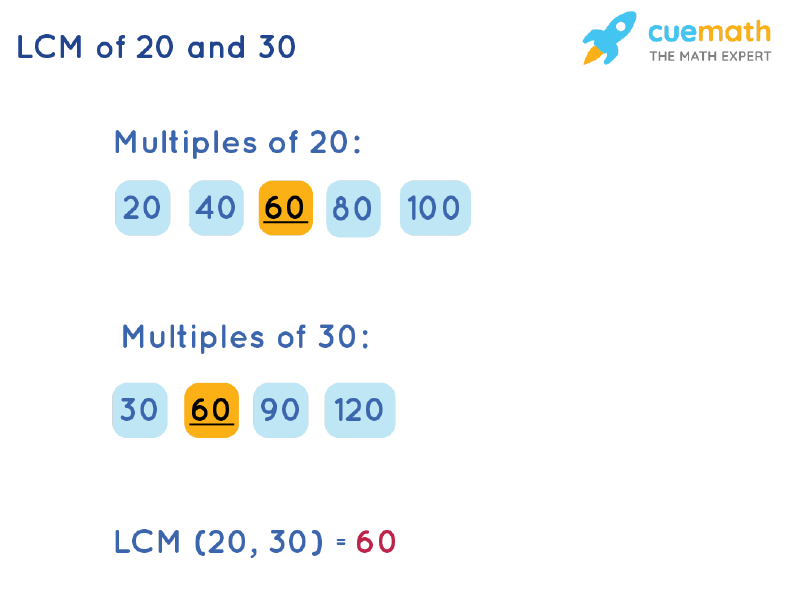
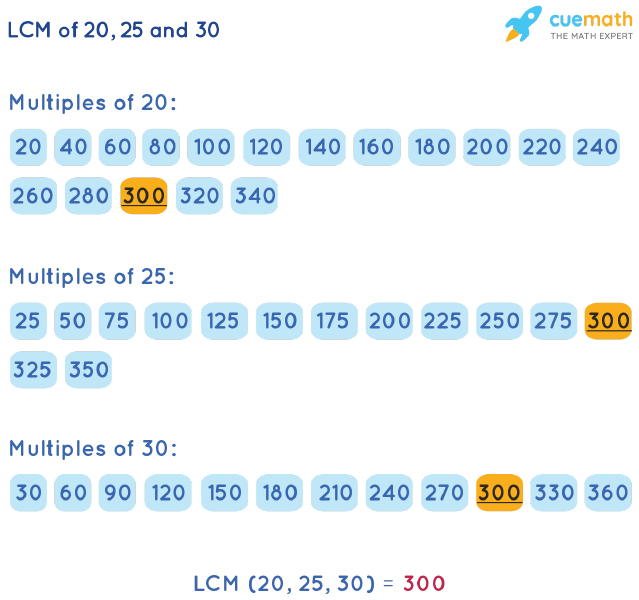
Want to try it at home? Grab a piece of paper and a pen. Write out the multiples of 20 (20, 40, 60, 80, 100...) and the multiples of 30 (30, 60, 90, 120...). The first number that appears on both lists is your LCM! You can also use online LCM calculators if you want a quicker solution. Experiment with different numbers and see how the LCM changes.
The beauty of understanding the LCM isn't just about finding the answer; it's about understanding the relationship between numbers. It's about finding order in what might seem like randomness. And that, in itself, can be incredibly enjoyable. So, the next time you're faced with a problem that requires finding a common ground, remember the Least Common Multiple. It might just be the unexpected tool you need to unlock your creative potential!