What Is The Efficiency Of Solar Energy
Ever just stand outside on a ridiculously sunny day and feel the warmth radiating down? Like, really feel it? It’s an almost overwhelming sensation of pure, raw energy. You know, the kind that makes you instinctively squint and think, "Wow, that's a lot of power just hitting my face." Or maybe you've had that slightly less pleasant experience of getting into your car after it's been baking in the sun for a few hours, and it feels like an oven? Yeah, that too is a testament to the sun’s incredible might.
That immense, free energy has always been there, just waiting for us to figure out how to properly harness it. And for decades, we've been getting better and better at exactly that, thanks to solar panels. But here's the zillion-dollar question that probably pops into your head after experiencing that scorching car interior or a perfectly sun-drenched afternoon: how much of that glorious sunshine are we actually turning into usable electricity? In other words, what is the efficiency of solar energy?
So, What's the Number? (The Big Reveal!)
Alright, let's cut to the chase, because I know you're curious. For most residential and commercial solar panels you'll see gracing rooftops today, the efficiency typically ranges between 15% and 22%. Yeah, you read that right. Not 100%. Not even 50%. It's a percentage that might make you tilt your head a little, right?
Must Read
To put it simply, if the sun blasts 100 units of energy at your solar panel, that panel is currently converting about 15 to 22 of those units into electricity for your home or business. The rest? Well, it mostly turns into heat or just gets reflected away. It's a bit like trying to catch water with a sieve – some gets through, but a lot doesn't.
Why Not 100%?! (The Annoying Physics Bit)
Now, before you get all disappointed and decide solar isn't worth it (hold your horses, it totally is!), let's dive into why it's not a perfect score. It's not because solar panel engineers are slacking off, I promise!
The main culprit here is, surprise surprise, physics. Solar panels work by using what's called the photovoltaic effect. When photons (tiny packets of light energy) hit the silicon in a solar cell, they knock electrons loose, creating an electric current. But not all photons have the right energy level to do this effectively. Some have too much, some too little.
- Spectral Loss: The sun emits a wide spectrum of light. Solar panels are optimized for certain wavelengths, meaning they can't effectively convert all the light hitting them.
- Heat Loss: Much of the unconverted energy turns into heat. And ironically, solar panels actually become less efficient when they get hotter. It's a bit of a Catch-22!
- Reflection: Just like a shiny surface, some sunlight bounces right off the panel before it even has a chance to be absorbed.
- Material Limitations: Current silicon technology simply has inherent limits to how much light it can convert.
So, you see, it’s not just a simple "catch all the light" game. It's a complex dance with photons, electrons, and the laws of the universe.

Factors That Play a Role (It's Not Just the Panel Itself!)
The efficiency number printed on the panel's spec sheet is usually under ideal, lab-controlled conditions. In the real world, several things can nudge that number up or down:
- Temperature: As mentioned, hotter panels are less efficient. A really scorching summer day can slightly reduce output.
- Dirt and Dust: A grimy panel is a less efficient panel. Think of it as putting sunglasses on your solar system.
- Shading: Even partial shading from a tree branch or chimney can drastically reduce a panel's output, often more than you'd expect.
- Angle and Orientation: Panels facing directly at the sun (or optimally angled for your location) will, naturally, perform better.
- Type of Panel:
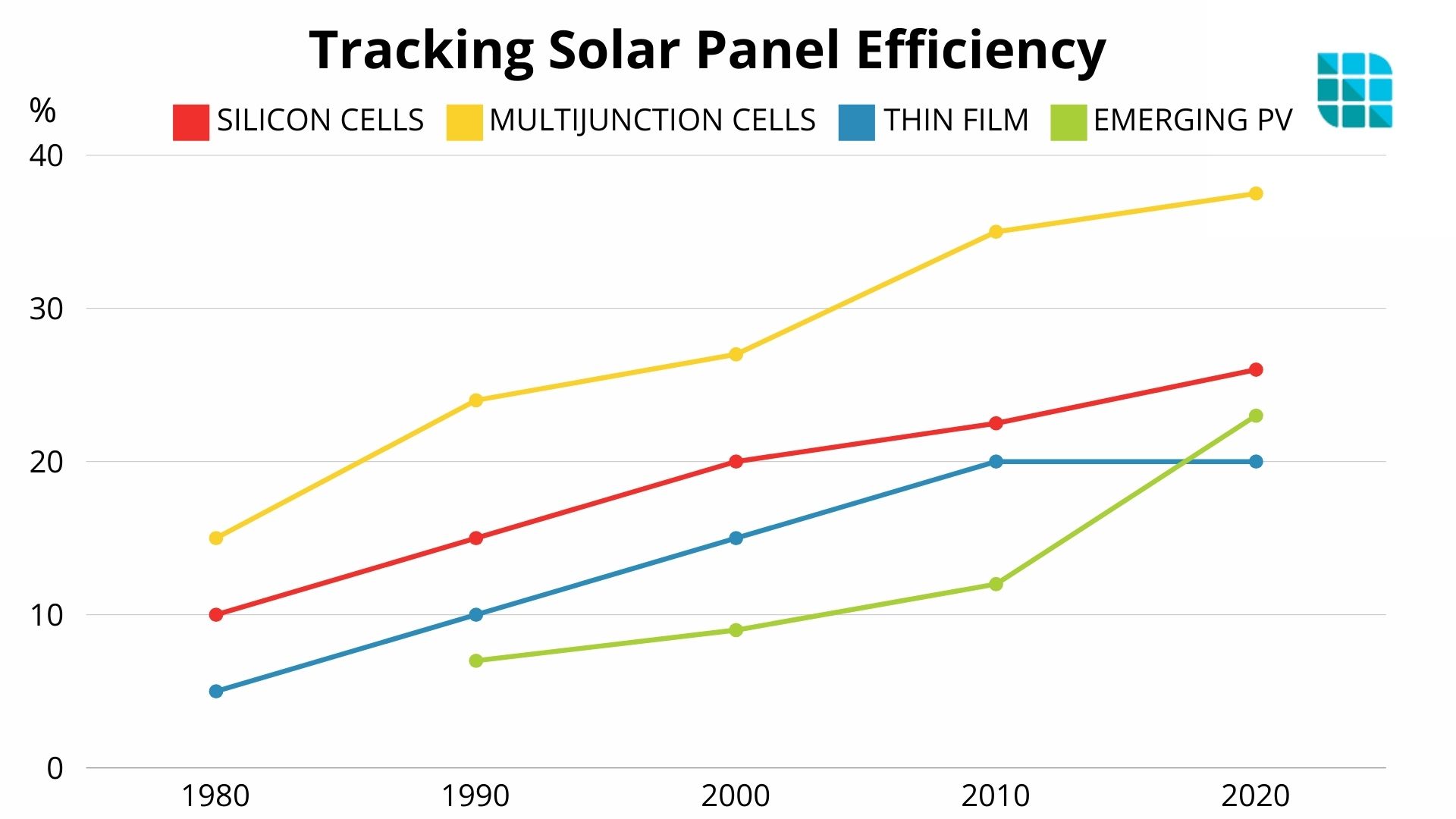
- Monocrystalline panels (the sleek, dark ones) are generally the most efficient (18-22% usually).
- Polycrystalline panels (the slightly bluer, speckled ones) are a bit less efficient but more cost-effective (15-18%).
- Thin-film panels (flexible, less robust) typically have lower efficiencies (around 10-14%) but have niche applications.
The Future is Bright (and More Efficient!)
Here's the exciting part! While today's commercial panels are in that 15-22% range, researchers are constantly pushing the boundaries. In labs, they've achieved efficiencies well over 40% with experimental cells (often multi-junction cells, which are like stacking different solar cells to catch different light wavelengths). Even hitting 25-30% in commercial panels isn't far-fetched for the not-so-distant future.
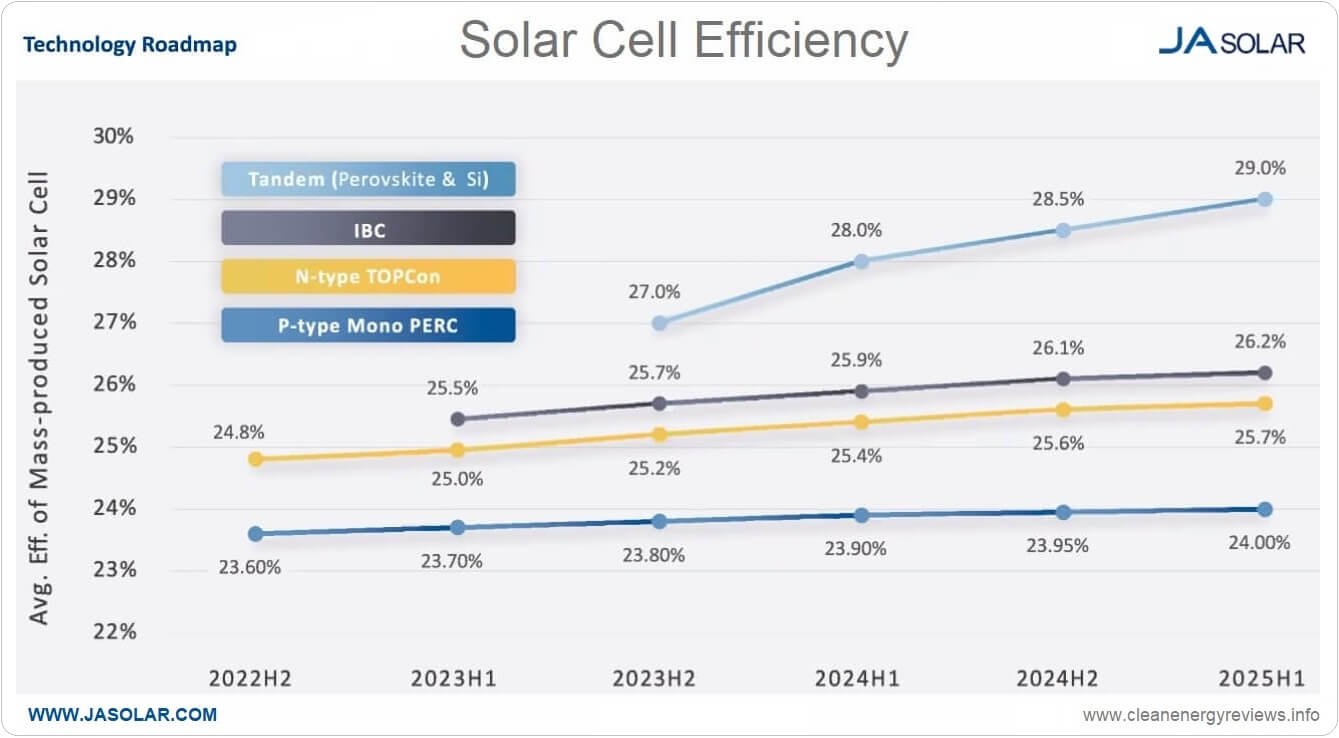
New materials like perovskites, quantum dots, and advances in traditional silicon are all promising avenues that could significantly boost efficiency in the coming years. So, the numbers you see today are not the ceiling, they're just where we are on an ever-improving journey.
So, Is 15-22% "Good Enough"? (Spoiler: YES!)
Absolutely! Think about it: you're getting free, clean energy from the sun, day after day, for decades. Even at 15-22% efficiency, solar panels are an incredibly powerful tool. The cost of solar has plummeted, making it more accessible than ever. Plus, when you factor in environmental benefits, energy independence, and potentially lower electricity bills, that percentage starts looking mighty fine.
It's not about being perfect; it's about being effective and sustainable. And right now, solar energy is doing a fantastic job of both. So next time you feel that intense sun, remember, we’re getting pretty darn good at catching its rays, and we’re only going to get better!