
What Is The Difference Between Wind And Air
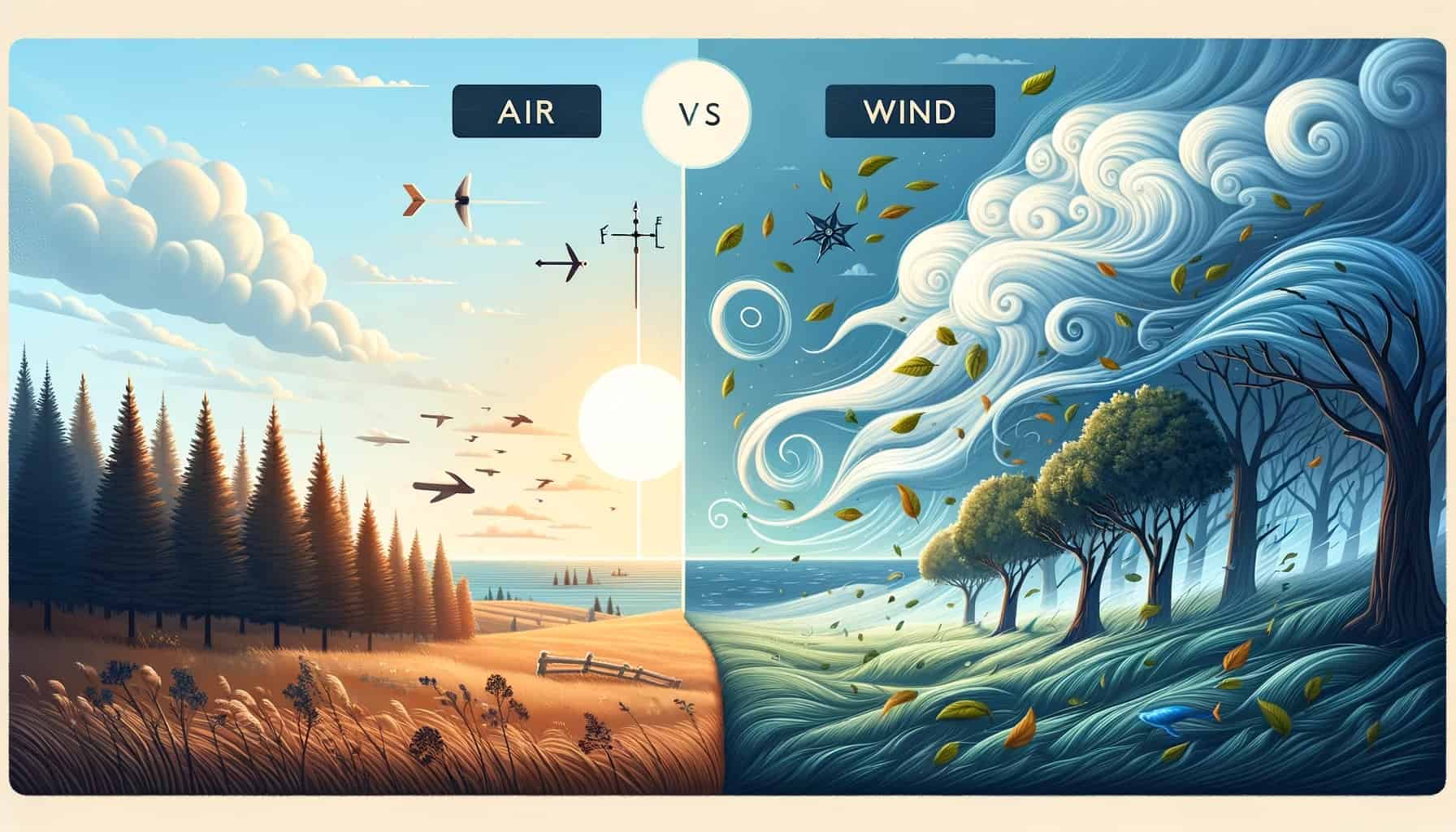
Have you ever stopped to think about the invisible force that rustles leaves, carries kites soaring, and fills sailboats' sails? We often talk about "wind" and "air" interchangeably, but understanding the subtle difference between them can unlock a whole new level of appreciation for the natural world and even inspire your creative pursuits! From painting landscapes to writing poetry, grasping this distinction can be surprisingly beneficial.
For artists, hobbyists, and even just curious minds, understanding the difference between air and wind offers several perks. Think about it: a landscape painter can more accurately depict the movement of trees and clouds by visualizing the wind's direction and intensity. A writer can use the concept of wind as a metaphor for change, momentum, or even a character's inner turmoil. Even a casual learner can impress their friends with newfound knowledge! It's all about seeing the world with a slightly more informed and nuanced perspective.
So, what's the real difference? Simply put, air is what we breathe, the mixture of gases (primarily nitrogen and oxygen) that surrounds us. Wind, on the other hand, is air in motion. It's the movement of air from an area of high pressure to an area of low pressure. Think of it like this: air is the ocean, and wind is a current within that ocean. You can have air without wind, but you can't have wind without air!
Must Read
Examples abound in art and literature. Consider J.M.W. Turner's dramatic seascapes, where swirling brushstrokes capture the ferocious power of wind whipping across the ocean. Or think of Emily Brontë's "Wuthering Heights," where the moors are constantly swept by wind, symbolizing the turbulent emotions of the characters. In photography, long exposure shots of landscapes can beautifully blur the movement of wind through grass or water, creating a sense of dynamism and energy. You can find countless poems that use wind as a symbol, whether it's for a force of change, freedom, or the ephemeral nature of life.

Want to explore this concept at home? Try these simple activities:
- Observe: Spend some time outside simply observing the effects of wind. How do trees sway? How does it feel on your skin? What sounds does it make?
- Create: Try painting or drawing a landscape scene and focusing on depicting the wind's influence. Use swirling lines and contrasting colors to convey movement.
- Write: Write a short poem or story using wind as a central metaphor. What does it represent to you?
- Experiment: Build a simple wind vane or anemometer to measure wind direction and speed. There are plenty of DIY tutorials online!
Ultimately, understanding the difference between air and wind isn't just about science; it's about deepening our connection to the world around us. It allows us to see the invisible forces that shape our environment and to appreciate the beauty and power of nature in a whole new way. And who knows? It might just spark your next great creative endeavor. Learning about seemingly simple concepts like this is enjoyable because it unlocks a greater understanding of everything around us. It fosters curiosity and allows us to see the world with fresh eyes.
![Wind vs Air - Difference Between Wind and Air [Updated 2022]](https://askanydifference.com/wp-content/uploads/2022/06/Difference-Between-Wind-and-Air.png)

