
What Is The Difference Between Banarasi And Kanjivaram Saree

Okay, saree lovers, gather 'round! We're about to embark on a thrilling adventure, a quest to understand two of the most dazzling divas of the saree world: the Banarasi and the Kanjivaram. It's like trying to tell the difference between Beyonce and Rihanna – both are queens, but their styles are totally unique!
Location, Location, Location!
Think of it like this: Banarasi sarees hail from the ancient city of Varanasi (also known as Banaras), in Northern India. Imagine bustling markets, the scent of incense, and the sacred Ganges river flowing by.
Kanjivaram sarees, on the other hand, strut their stuff from Kanchipuram in Southern India, a town known for its magnificent temples and silk weaving heritage. It's like the difference between New York pizza and Chicago deep-dish – both pizza, but a world apart!
Must Read
Silk Secrets: North vs. South
Both Banarasi and Kanjivaram sarees are made of silk, but here’s where they start to diverge. Banarasi silk is generally finer and more delicate.
Kanjivaram silk is known for being thicker, heavier, and more durable. It's the difference between a whisper and a confident shout!
Imagine Banarasi silk as a light, airy chiffon scarf and Kanjivaram silk as a luxurious, substantial throw blanket. They both keep you covered, but the feel is completely different.
The Zari Factor: Golden Glamour
Ah, zari, the shimmering thread that adds that touch of royalty! Both sarees use zari, but again, there are nuances.
Banarasi sarees often use a mix of real and imitation zari, creating intricate patterns without breaking the bank. Think of it as the perfectly placed costume jewelry that makes an outfit pop!
Kanjivaram sarees usually boast pure zari, often made of silver dipped in gold. It's the equivalent of wearing genuine diamonds – undeniably luxurious and adding to the saree's weight and cost!
Design Dreams: Motifs and Magic
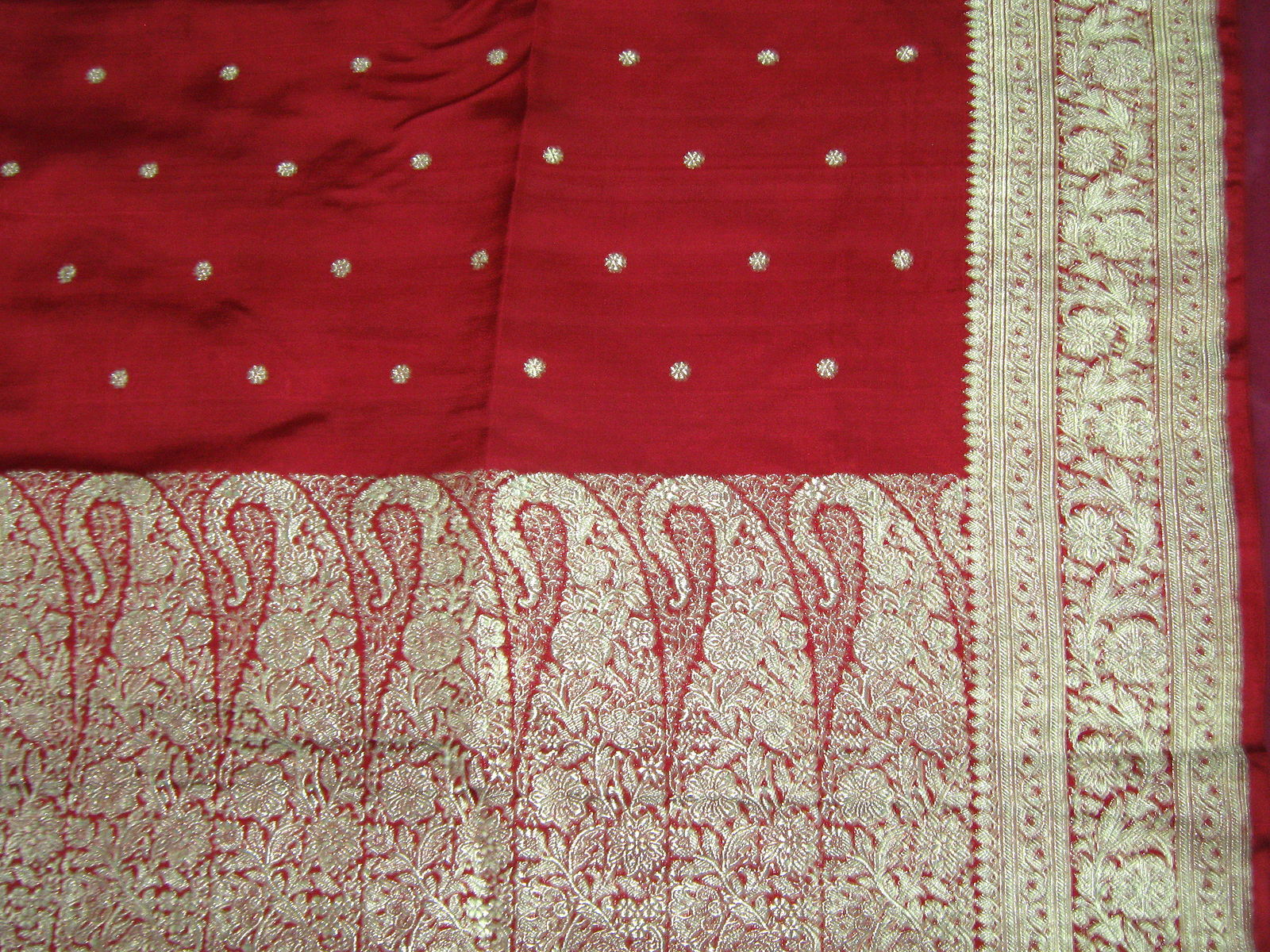
Now, let's talk about the fun part: the designs! Banarasi sarees often feature intricate floral and foliate motifs, along with designs inspired by Mughal art.

You might see paisleys, peacocks, and even scenes from nature woven into the fabric. Imagine a beautiful garden brought to life on a saree!
Kanjivaram sarees, on the other hand, often feature bold geometric patterns, temple borders, and mythical creatures. Think of powerful elephants, majestic lions, and the iconic ruku (a series of interlocking lines).
The motifs are often larger and more striking than those found on Banarasi sarees. It's like comparing a delicate watercolor painting to a bold, graphic print!
Border Patrol: A Defining Line
The border is a key element that sets these sarees apart. Banarasi sarees may have relatively narrow borders, or sometimes no borders at all.
Kanjivaram sarees are famous for their wide, contrasting borders. These borders often tell their own story, featuring intricate designs and vibrant colors that pop against the main body of the saree.
Think of the border as the frame of a masterpiece, highlighting the beauty of the artwork within.
Color Coordination: A Rainbow of Choices
Both Banarasi and Kanjivaram sarees come in a rainbow of colors, but certain shades are more commonly associated with each. Banarasi sarees often feature softer, pastel hues, along with rich jewel tones.

Kanjivaram sarees are known for their bold, contrasting color combinations. Think of vibrant reds, greens, yellows, and blues, often paired together to create a striking effect.
It's like the difference between a delicate watercolor palette and a bold set of acrylic paints!
Weight Watchers: Feeling the Fabric
As we've mentioned, Kanjivaram sarees are generally heavier than Banarasi sarees. This is due to the thicker silk and the use of pure zari.
Wearing a Kanjivaram saree is like being wrapped in a luxurious hug. Banarasi sarees are lighter and more comfortable for warmer weather.
Imagine wearing a cozy winter coat versus a breezy summer dress – both are beautiful, but they suit different occasions.
Price Point: Investing in Elegance
Both Banarasi and Kanjivaram sarees are considered investment pieces, but generally, Kanjivaram sarees tend to be more expensive due to the use of pure zari and the higher quality silk.
Think of it like buying a designer handbag versus a high-street version – both are stylish, but the quality and craftsmanship come at a price.
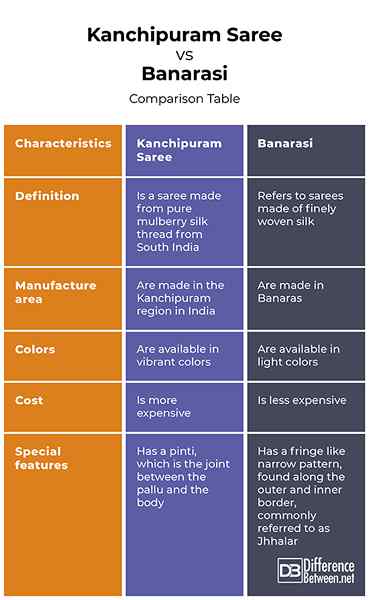
However, the price of both types of sarees can vary greatly depending on the quality of the silk, the intricacy of the design, and the amount of zari used.
Occasion Dressing: When to Wear What
Banarasi sarees are perfect for weddings, receptions, and festive occasions. Their delicate beauty and intricate designs make them a showstopper.
Kanjivaram sarees are often considered the ultimate bridal saree, especially in South India. Their rich colors, bold designs, and heavy silk make them a symbol of tradition and prosperity.
Imagine wearing a delicate tiara to a garden party versus a glittering crown to a royal ball – both are beautiful, but they suit different occasions.
Maintenance Matters: Taking Care of Your Treasures
Both Banarasi and Kanjivaram sarees require special care. Dry cleaning is usually recommended to preserve the delicate silk and zari.
Store your sarees carefully, wrapped in muslin cloth, to protect them from dust and moisture. Treat them with love, and they will last for generations!
It's like caring for a precious antique – a little effort goes a long way.
Spotting the Difference: A Quick Cheat Sheet
Okay, so how do you tell them apart in the wild? Look for these clues:
Banarasi:
- Finer, lighter silk
- Mixed or imitation zari
- Floral and foliate motifs
- Narrow or no borders
- Softer colors
Kanjivaram:
- Thicker, heavier silk
- Pure zari
- Geometric patterns and temple borders
- Wide, contrasting borders
- Bold, vibrant colors
Remember, these are just general guidelines. There are always exceptions to the rule!
Beyond the Basics: A World of Weaves
The world of Indian sarees is incredibly diverse. There are countless other regional variations, each with its own unique characteristics.
Exploring different saree styles is like embarking on a culinary adventure – there's always something new and delicious to discover!
So, go forth and explore the wonderful world of sarees! Don't be afraid to experiment and find the styles that make you feel like a queen.
The Final Verdict: It's All About Personal Style
Ultimately, the best saree for you is the one that makes you feel confident, beautiful, and comfortable. Whether you choose a delicate Banarasi or a bold Kanjivaram, wear it with pride and let your inner radiance shine!
It's not about following trends or adhering to rules; it's about expressing your unique personality and celebrating the beauty of Indian textiles.
So, embrace the magic of sarees and let your style speak volumes!