
What Is The Coldest Setting On A Refrigerator

Ever stared blankly into your refrigerator, wondering if you're living on the edge of food spoilage? Are you playing a constant guessing game with that mysterious temperature dial? Well, my friend, you're not alone! Let's crack the code on the coldest setting, and I promise, it’s less intimidating than you think!
Decoding the Deep Freeze Dial
First things first, let’s acknowledge the elephant (or maybe a frozen mammoth?) in the room: refrigerators aren't exactly known for their crystal-clear user interfaces. Instead of a nice, comforting temperature readout in Celsius or Fahrenheit, we often get a scale. A scale that, let's be honest, feels more like a suggestion than a precise measurement.
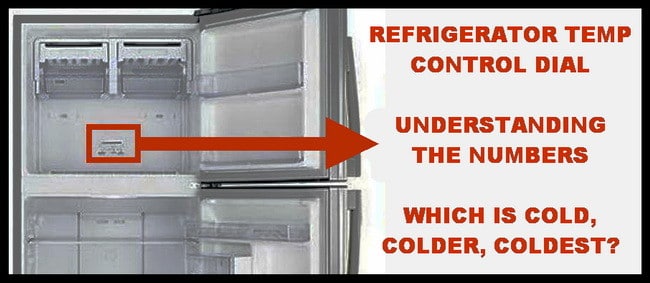
Typically, you'll encounter a numbered dial, often ranging from 1 to 5, 1 to 7, or even 1 to 9. Sometimes, it's simply labeled "Cold" to "Colder." The burning question, of course, is: which number unleashes the Arctic blast?
Must Read
The General Rule: Higher Number = Colder
That's right! In almost all cases (and I emphasize almost because appliance manufacturers love to keep us on our toes!), a higher number on that dial signifies a colder temperature. So, if you want to transform your lettuce into a leafy popsicle, crank that dial up to the highest setting!

Think of it like volume control on your TV. Turning it up makes it louder, and turning up the refrigerator setting makes it… colder. Simple, right?
But Wait, There's Always a Catch!
Okay, so here's where things get a tad nuanced. While "higher number = colder" is generally true, it's not an absolute law etched in stone. Some older refrigerators, especially those with dials that feel like they've seen a few world wars, might have a different system. In rare instances, a lower number might indicate a colder setting. I know, right? Appliance anarchy!

That’s why it's always best to consult your refrigerator's manual. I know, I know, reading the manual is about as appealing as cleaning the lint trap, but it could save you from accidentally freezing your entire vegetable drawer solid.
If you've misplaced the manual (join the club!), a quick Google search with your refrigerator's make and model number will usually unearth a digital copy. Problem solved!
The Coldest Setting in Action: Scenarios & Tales
Now, what happens when you unleash the full force of the coldest setting? Well, imagine this:

- The Permafrost Produce: Your poor leafy greens might transform into crunchy, icy shards. Not exactly salad material.
- The Frozen Fiasco: Milk jugs become solid blocks of dairy ice. Good luck pouring that on your cereal!
- The Eerie Echo: An unnatural quiet descends upon your fridge as all liquids slowly turn to ice. Spooky, yet strangely satisfying.
Okay, maybe I'm exaggerating slightly. But the point is, the coldest setting isn't always the best setting. You want your food to be cold enough to stay fresh, but not so cold that it becomes inedible.
A good target temperature is between 37°F (3°C) and 40°F (4°C). Use a refrigerator thermometer to monitor the temperature and adjust the dial accordingly. They're inexpensive and readily available at most grocery stores or online.
The Verdict: Embrace the Experiment!
Finding the perfect temperature sweet spot for your refrigerator is a bit of an experiment. Don't be afraid to adjust the dial and see what works best for your fridge and your food. Keep a close eye on your produce and dairy products to ensure they're staying fresh without turning into miniature glaciers.
And remember, when in doubt, err on the side of slightly too warm rather than turning your refrigerator into a commercial freezer. You can always adjust it a notch colder if needed. Now go forth and conquer the cold, armed with your newfound refrigerator knowledge!
"The coldest setting on a refrigerator is a powerful tool, but like any superpower, it must be used responsibly." – Refrigerator Guru (probably)
Happy chilling!