
What Is Stress And Strain Curve
Hey there, ever felt like you're being pulled in a million directions? Or maybe you've been under so much pressure you thought you might just… snap? Welcome to the club! We all deal with stress in our daily lives, and sometimes it feels like a heavy weight. But what if I told you there's a fascinating, empowering way to look at "stress" and "strain" that goes way beyond your to-do list? Grab a comfy seat, because we're diving into the wonderfully insightful world of the Stress and Strain Curve – and trust me, it’s not just for engineers!
Forget the kind of stress that makes your shoulders tense. We're talking about a concept from materials science that helps us understand how things (and even people!) react to pressure. It’s like a secret map to resilience, and once you understand it, you might just find a new perspective on your own strength.
What Exactly is "Stress" (the engineering kind)?
In engineering, stress isn't about deadlines or traffic jams. It’s a measure of the internal forces within an object. Imagine you’re trying to stretch a rubber band. The force you apply, divided by the area over which you're applying it, that's engineering stress! It’s all about how much force is distributed over a given area. So, if you push on a big object, the stress might be low, but if you push on a tiny needle with the same force, the stress is much, much higher. Makes sense, right?
Must Read
Think of it as the intensity of the internal forces trying to hold something together or pull it apart. The higher the stress, the more internal resistance the material is putting up.
And What About "Strain"?
If stress is the push or pull, then strain is the material's reaction to it – its change in shape or size. It’s literally how much an object deforms or stretches relative to its original size. So, continuing with our rubber band analogy, if you stretch it from 10 cm to 12 cm, it has undergone a certain amount of strain. It's often expressed as a percentage or a ratio, making it a way to describe how much something has elongated, compressed, or twisted.

In simple terms, strain is the measure of deformation. It’s the visual evidence of the material experiencing that internal stress. See? Not so scary now, is it?
Enter the Stress-Strain Curve: A Material's Autobiography Under Pressure!
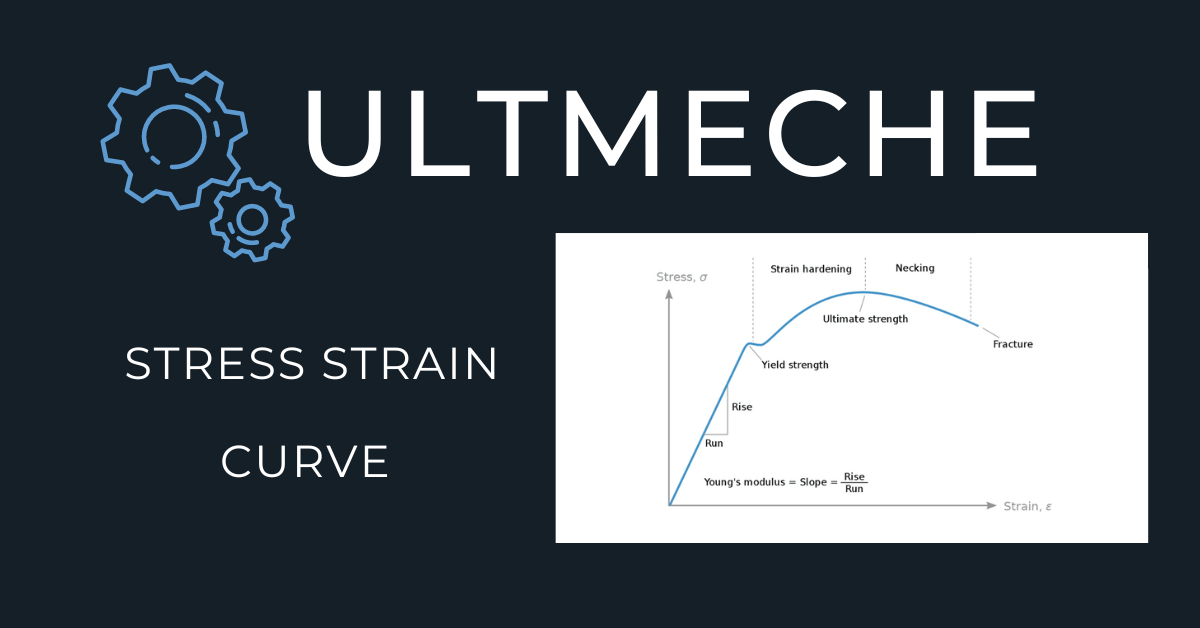
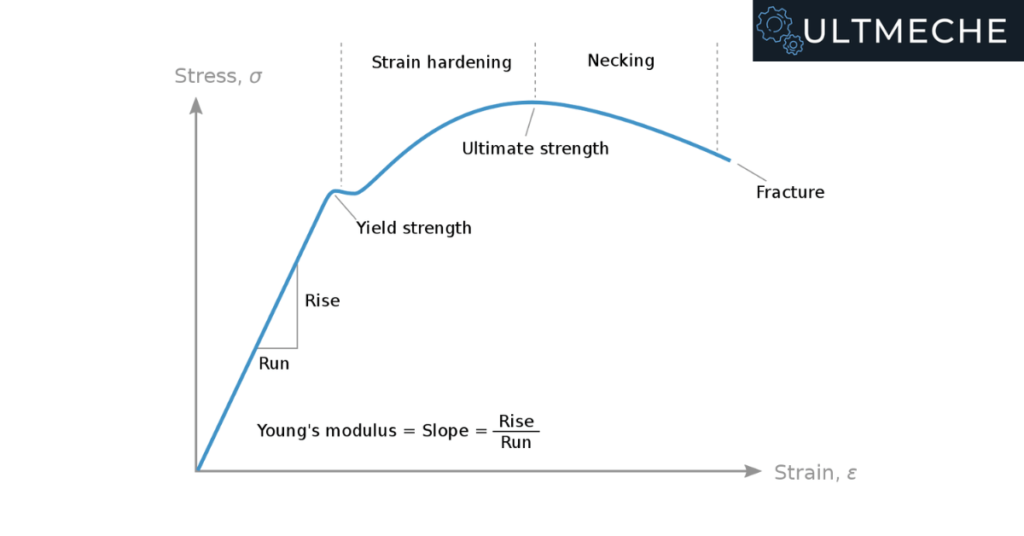
Now, here's where it gets really interesting! The Stress-Strain Curve is a graph that plots stress (the pressure applied) on the Y-axis against strain (the resulting deformation) on the X-axis. For any given material, this curve tells a powerful story about its properties – how it behaves when pushed, pulled, twisted, or squished. It’s like a diagnostic chart for how resilient, flexible, or strong something truly is!
Let's peek at some key moments on this curve, because they hold some fantastic life lessons:

-
The Elastic Region: The Bounce-Back Zone!
At the beginning of the curve, stress and strain are directly proportional. This is the elastic region. Here, if you remove the applied force, the material goes right back to its original shape. Think of a spring or, yes, that rubber band. You stretch it, let go, and zing! It’s back to normal. This represents a material's ability to resist permanent change. For us, it’s our capacity to handle everyday pressures and bounce back, feeling like ourselves again after a good night's sleep or a fun weekend. Isn't that empowering?
-
The Yield Point: The Threshold of Change!
Beyond the elastic region lies the yield point. This is the moment when the material begins to deform permanently. Apply any more stress past this point, and it won't fully return to its original shape. It might look different. In life, this is like that moment when a situation pushes you just a little too far, and you realize you've been fundamentally changed by the experience. Perhaps you've developed a new perspective, or a new boundary. Understanding your own yield point is key to setting healthy limits!

Understanding the Stress-Strain Curve: Key Concepts, Benefits and -
The Plastic Region: Bending Without Breaking!
After the yield point comes the plastic region. Here, the material continues to deform permanently as stress increases. It's changing shape, but it's still holding together! This is where materials like metals can be molded, bent, and shaped into new forms. Think about how a blacksmith hammers hot iron. This is such a powerful metaphor for personal growth! We endure tough times, we change, we adapt, and we might not be exactly the same as before, but we're often stronger and more resilient for it. We're bending, not breaking!
-
Ultimate Tensile Strength: Your Peak Performance!
The highest point on the curve is the ultimate tensile strength. This is the maximum stress a material can withstand before it starts to truly weaken and eventually fail. It’s its absolute peak capacity! For us, it’s a reminder that we all have incredible strengths and capabilities, but also a limit. Knowing your ultimate tensile strength isn't about finding your breaking point, but about appreciating your immense potential!
-
The Fracture Point: The Final Straw.
Finally, the curve descends to the fracture point, where the material breaks. Every material has its limit, and sometimes, things just snap. And you know what? That's okay. Sometimes, breaking is necessary for complete renewal. It teaches us about what we can (and can't) withstand, and when it’s time to seek support, rebuild, or simply step away.
Stress Strain Curve - ULTMECHE
Why This Curve Makes Life More Fun (and Meaningful)!
Isn't it incredible how a simple graph from materials science can offer such profound insights into our own lives? Understanding the Stress-Strain Curve helps us appreciate:
- Your amazing resilience: Just like elastic materials, you have an incredible ability to bounce back!
- The power of growth: Like plastic deformation, tough experiences can change you, but they often make you more adaptable and unique.
- The importance of boundaries: Knowing your "yield point" helps you protect your well-being.
- Your incredible strength: Recognizing your "ultimate tensile strength" empowers you to push your limits (safely!) and achieve amazing things.
- The necessity of rest and recovery: Even the strongest materials have a breaking point; knowing when to step back is crucial.
So, next time you feel a bit of "stress" (the everyday kind) or feel like you're "straining" to keep it all together, remember this curve. Think of yourself as a wonderfully complex material, capable of incredible elasticity, powerful plastic deformation, and immense ultimate strength. You're not just enduring; you're learning, changing, and growing!
The Stress-Strain Curve isn't just about steel and concrete; it's a profound metaphor for life, resilience, and the amazing human capacity to endure, adapt, and even flourish under pressure. It's a reminder that every bend, every stretch, every challenge is part of your unique story. You're far stronger than you think, and understanding these concepts can truly make you appreciate your own incredible design. Go forth and explore your amazing potential!