
What Is Made Of Carbon Fiber

Hey there! Grab a coffee, pull up a chair. We need to chat about something kinda cool, something you see everywhere but maybe don't really get: carbon fiber. You know, that sleek, black, super-strong stuff that makes bikes fly and planes lighter? Yeah, that stuff. Ever wondered what it actually is? Like, where does it come from? Is it space magic? Alien tech?
Nope! It's way cooler, because it's simpler than you think. And trust me, once you know, you'll feel like you've unlocked a secret level in life. Prepare to have your mind... lightly bent.
The Big Secret (Shh!)
So, the big reveal. Drumroll, please... Carbon fiber is made of, wait for it... carbon. Shocker, right? I know, I know, revolutionary! It's like finding out water is made of H2O. But seriously, it's not just any old carbon. We're talking about the same fundamental element that makes up diamonds, graphite in your pencil, and, you know, us!
Must Read
But arranged in a super special, incredibly clever way. Think of it like a LEGO set, but instead of houses, you're building a tiny, super-tough atomic skyscraper. Pretty neat for something you can also barbecue with, huh?
From Raw Goo to Super Material
Okay, so how do we get from 'just carbon' to this miracle material? It's not like you just dig up some carbon and start weaving it. Nah. The secret sauce often starts with something called polyacrylonitrile. Or, as we friends call it, PAN. Sounds fancy, right?
It's basically a type of plastic fiber. Yep, plastic! Crazy, huh? They take these PAN fibers, which are kinda like very thin fishing line, and then things get intense.
First, they stretch these fibers like crazy, lining up all the molecules in a nice, orderly fashion. Think of it like straightening out a tangled ball of yarn until all the strands are perfectly parallel. Then, they bake 'em. And by bake, I mean they put them in furnaces that are hotter than a dragon's breath (okay, slight exaggeration, but really hot!).
They first oxidize them – basically, heat them in air to prepare them for the real show. Then, the actual magic happens: they heat them in an oxygen-free environment, to temperatures that would make your oven cry – sometimes over 1,000 degrees Celsius! What happens? All the non-carbon stuff burns off, leaves, says 'adios!' And what's left? Pretty much pure carbon.
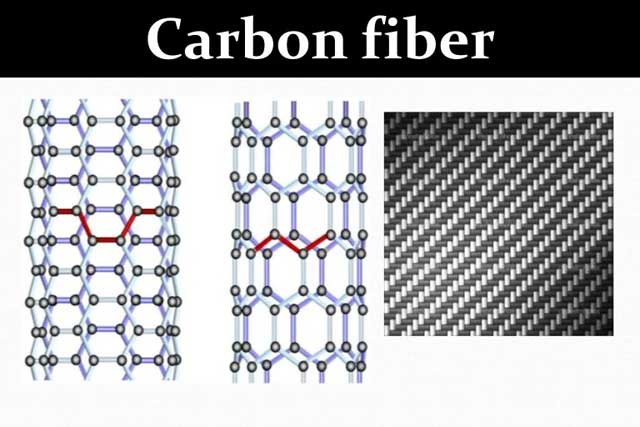
But not just any carbon. It forms long, thin, incredibly strong chains. Imagine a bazillion microscopic carbon atoms holding hands, forming super-long, super-skinny threads. These threads are the carbon fibers. They're thinner than a human hair, by the way. Mind-blowing, right? It's like a tiny, invisible army of strength.

The Weave, The Resin, The Magic Combo
Now, a single strand of carbon fiber is strong, sure, but it's also tiny and floppy. You can't build a race car out of one hair-thin strand, can you? So, they gather thousands of these strands together into a bundle, called a tow. These tows are what you see being woven into those familiar checkered patterns. Or sometimes, they're just laid out in specific, strategic directions.
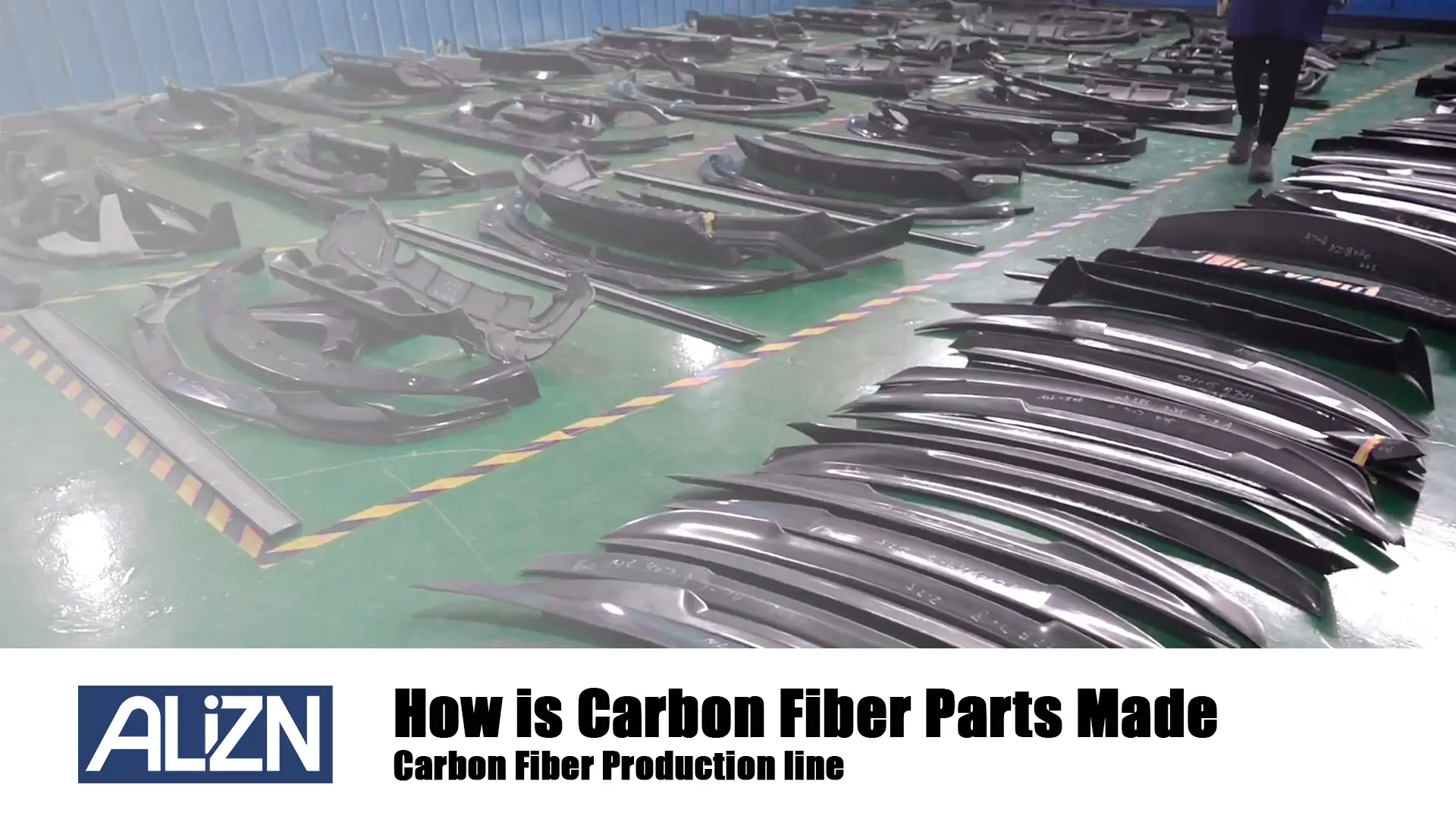
And here's the crucial part: once you have your woven fabric or laid-out fibers, you need to stick them together. This is where the resin comes in. Think of the resin as the super-strong glue that holds everything in place. It's usually an epoxy or a similar polymer. They soak the carbon fabric in this resin, then mold it into the desired shape, and finally, cure it (often with heat and pressure).
The magic combination? The incredibly strong, stiff carbon fibers carry the load, and the resin holds them precisely where they need to be, protecting them and transferring the forces between them. This is why carbon fiber parts are so incredibly stiff and unbelievably lightweight. It's not just strong; it's strong for its weight. You could make something strong out of steel, but it would weigh a ton! Carbon fiber gives you that strength without the extra bulk, making things feel almost... effortless.
Where Do We See This Wonder?
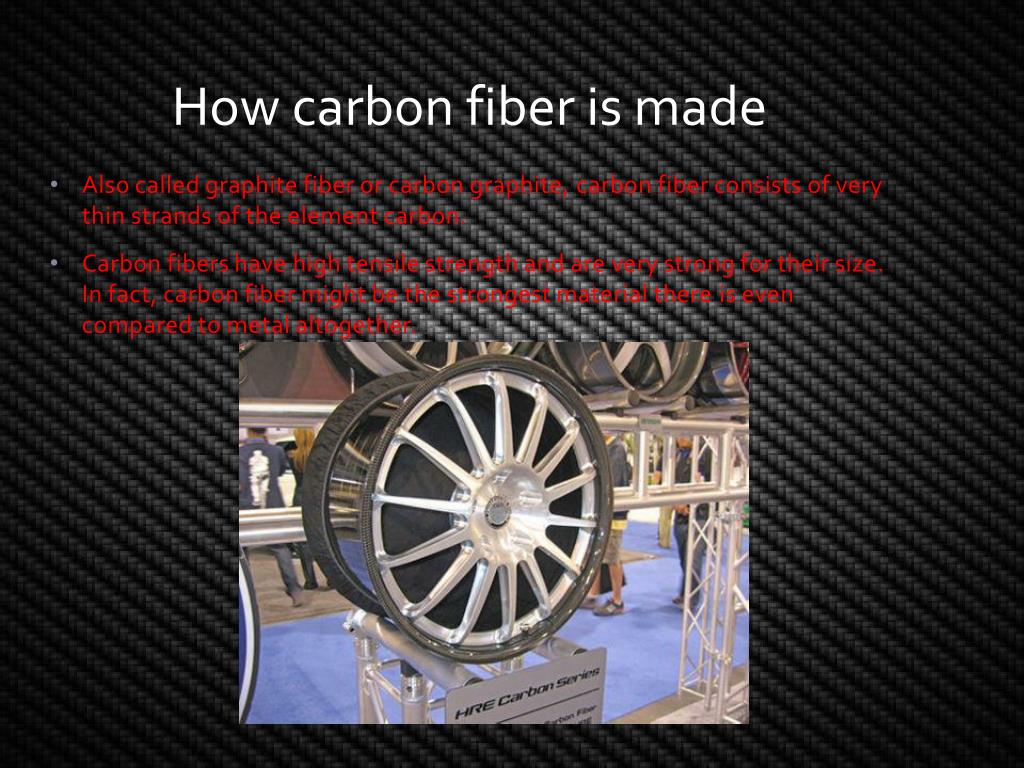
So, where do you find this wonder material? Pretty much anywhere you need strength without the heft! Think aerospace (hello, Boeing 787 wings!), Formula 1 cars (those things are practically carbon fiber shells, tough as nails but light as a feather), high-end bicycles (making climbs feel like a breeze), fancy golf clubs, super-light fishing rods, even some medical prosthetics.
If it needs to be tough, durable, and light enough to make you say "whoa," carbon fiber is probably having a party there. It's the rockstar of modern materials, seriously.
Why Is My Wallet Crying?
Okay, so it's amazing. Why isn't everything made of it? Well, remember that intense process? The special PAN precursor, the stretching, the super-hot ovens, the meticulous weaving, the fancy resins? All of that takes a lot of energy, specialized equipment, and skilled labor. It's a bit like making a Michelin-star meal versus a microwave dinner.
So, yeah, it's not cheap. It's a premium material for premium performance. You're paying for all that atomic-level engineering, my friend. And for the privilege of owning something that feels like it defies physics!
The Takeaway
So, next time you spot that sleek, black, often checkered material on a bike, a fancy car, or even a drone, you'll know its secret. It's not some alien metal or a magically grown plant. It's just humble carbon, transformed through an incredible process into one of the strongest, lightest, and most fascinating materials on Earth.
Pretty cool, right? You're practically an expert now. Go forth and impress your friends with your newfound carbon fiber wisdom! You're welcome.