
What Is Integrated Experience In Cpi
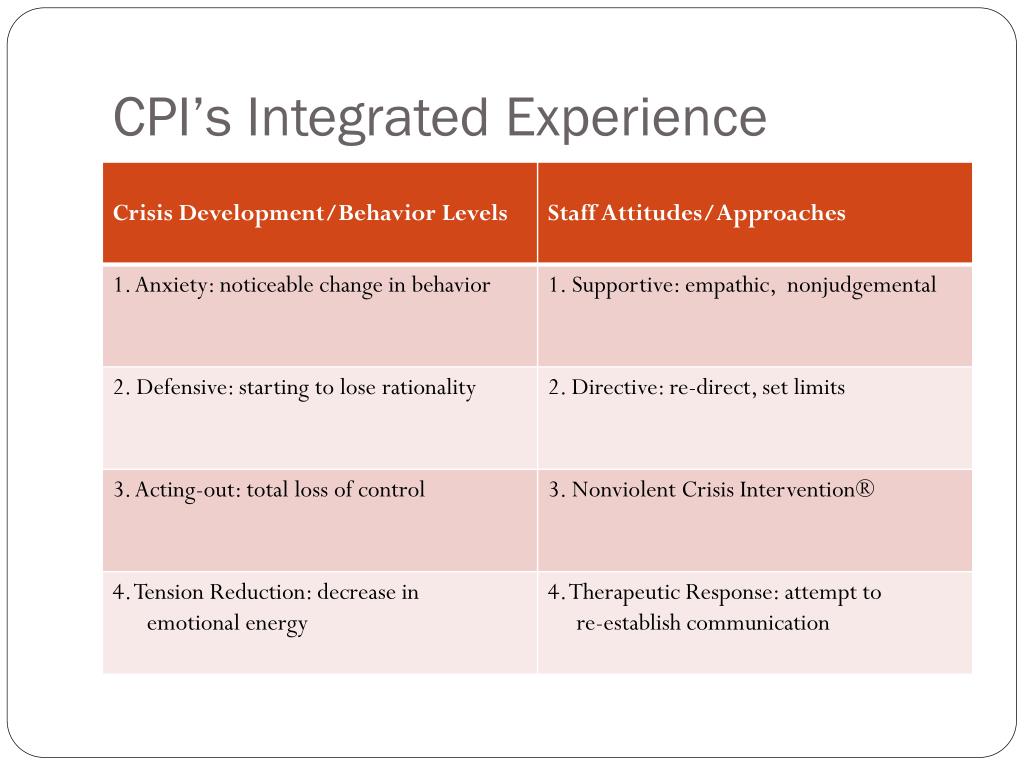
Ever had one of those days where everything just clicks? Maybe you were baking, and the cake came out perfectly golden. Or you were helping a friend, and they suddenly looked relieved, like a weight had lifted. That feeling, that moment when all the right ingredients come together for a happy outcome, is a little bit like what folks in the world of crisis prevention call the Integrated Experience in CPI.
Now, hold on a second. "Crisis Prevention Institute" (CPI) might sound a bit serious, maybe even a little daunting. Images of high-stakes situations might pop into your head. But at its heart, the Integrated Experience isn't just for superheroes in tough jobs; it's a beautiful, common-sense way of thinking about all our interactions with people, especially when things get a bit wobbly.
What's the Big Idea, Anyway?
Imagine you're trying to comfort a toddler having a mega-meltdown in the supermarket because, well, the world ended when they couldn't have that sparkly unicorn-shaped cookie. What do you do?
Must Read
You don't just yell, "Stop crying!" (Though sometimes, bless our hearts, we might want to!)
Instead, you probably bend down to their level (that’s a non-verbal cue!). You might use a soft, gentle voice (a verbal cue). Maybe you try to distract them with a funny face or offer a different, less sugary snack (changing the environment/offering an alternative). And all the while, you’re trying to stay calm yourself, even if you’re internally screaming (that's managing your own personal factors!).

See? You’re not just doing one thing. You’re doing all these things at once, blending them together like a master chef creating a delicious meal. Each ingredient—your words, your body language, the surroundings, and even your own mood—plays a vital role. When they all work in harmony, you've got yourself an Integrated Experience. It’s about creating a safe and helpful space, not just by using a specific technique, but by tuning into everything happening around you and within you.
It's Like a Symphony, Not a Solo Act
Think of it this way: if a symphony orchestra wants to create beautiful music, it's not enough for just the violin section to play perfectly. The flutes, the trumpets, the percussion—they all need to be in sync. The conductor needs to guide them, the acoustics of the hall matter, and each musician needs to be present and focused.

The Integrated Experience is just like that. In the world of CPI, when someone is in distress, it's not about one magic phrase or one secret handshake. It's about combining:
- Your verbal cues: The words you choose, your tone of voice, how quickly or slowly you speak. (Are you gently suggesting, or sounding demanding?)
- Your non-verbal cues: Your body language, eye contact (or lack thereof), facial expressions, how close you stand. (Are your arms crossed? Are you making eye contact that feels supportive, or confrontational?)
- The environment: Is the space too loud, too bright, too crowded? Can you gently guide someone to a quieter spot? Is there anything around that could be unsafe?
- Your personal factors: Your own feelings, your biases, your stress levels. Are you truly listening, or just waiting for your turn to talk? Are you calm, or feeling agitated yourself?
The "integration" part means these aren't separate checkboxes to tick off. They're all flowing together, influencing each other, and creating the overall "vibe" of the interaction. It's about being present and responsive to the whole person and the whole situation.

Why Should You Care? (Besides Making Life Smoother!)
Okay, so why does this matter for everyday folks like you and me, who might not be working in healthcare or education? Well, because we all interact with people! We all have moments where someone we care about (or even a stranger) is having a tough time.
Imagine your teenager slamming their door after a bad day at school. Or your partner looking completely overwhelmed after a stressful meeting. Or even that grumpy cashier at the grocery store. Applying the principles of an Integrated Experience can turn potentially explosive moments into opportunities for connection and understanding.

When you understand how all these different elements—your words, your posture, your own internal state—are working together, you become a more effective communicator and a more empathetic human being.
It means:
- Less stress for everyone: When you approach a difficult situation with an integrated mindset, you're more likely to de-escalate it before it blows up. Phew!
- Stronger relationships: People feel heard, understood, and respected when you pay attention to the whole picture, not just their words.
- Safer interactions: By being aware of your environment and your own reactions, you can help prevent situations from becoming dangerous, for both you and the other person.
- More effective problem-solving: When you truly understand the layers of what’s happening, you’re better equipped to find solutions that actually work.
It's about being kind, being smart, and being aware. It’s about creating an atmosphere where everyone feels a little bit safer, a little bit more understood, and a whole lot more human. So, next time someone around you is having a rough moment, remember the integrated experience. You might just turn a potential crisis into a moment of calm, connection, and even a little bit of unexpected harmony. And who doesn't want more of that in their daily life?