
What Is Heat Sink In Computer

Ever had your laptop sitting on your lap, purring like a kitten one moment, and then suddenly feeling like a tiny, aggressive toaster oven the next? You know that feeling, right? That warm, slightly alarming glow through your jeans? Well, my friend, you've just experienced your computer's way of saying, "I'm getting a little hot under the collar here!"
And that, in a nutshell, is why we need something called a heat sink in our computers.
What Even Is This "Heat Sink" Thing?
Imagine trying to run a marathon in a full winter coat on a scorching summer day. You'd get pretty toasty, pretty fast, wouldn't you? Your computer's brain, the Central Processing Unit (CPU), is doing its own version of a marathon every single second you're using it. It's crunching numbers, loading websites, playing games – basically doing all the heavy lifting. And just like any hardworking marathon runner, it generates a whole lot of heat.
Must Read
If that heat just sat there, stewing, your CPU would get so hot it would throw a tantrum, slow down, freeze, or even permanently damage itself. Think of it like trying to cook a complicated meal in an oven with no ventilation. Eventually, things just get too smoky and messy.
Enter the heat sink, the unsung hero of your PC's internal climate control system.

Your Computer's Tiny Air Conditioner (Sort Of)
So, what is it? Visually, a heat sink is often a block of metal – usually aluminum or copper – covered in a bunch of thin, metallic "fins." If you've ever seen the radiator in your car, or perhaps the cooling fins on an old air-cooled motorcycle engine, you're pretty much looking at the same principle, just on a much smaller, more intricate scale.
Think of those fins like tiny, metallic highways designed for one purpose: to give heat as many routes as possible to escape. The more surface area, the more heat can jump off the CPU and into the surrounding air. It’s like opening all the windows in a stuffy room to let the heat out.
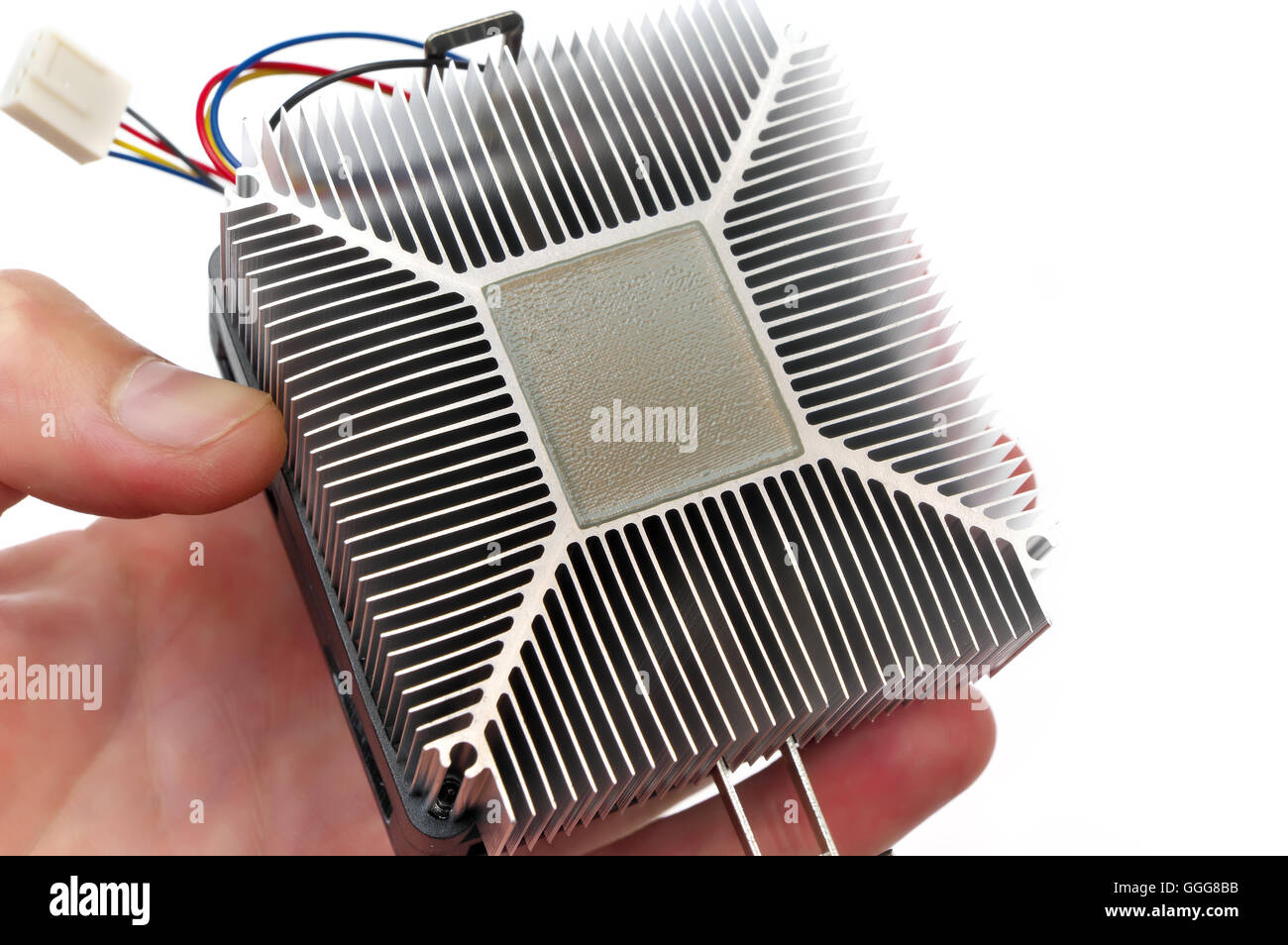
The heat sink's main job is to act as a thermal sponge. It soaks up that intense heat directly from the CPU, pulls it through its metallic body, and then spreads it out across all those lovely fins.
The Dynamic Duo: Heat Sink & Fan
Now, a heat sink alone is good, but it often needs a little extra oomph. That's where its best buddy, the cooling fan, comes in. You know that whirring sound your computer sometimes makes when it's working hard? That's usually the fan kicking into high gear.
The fan sits right on top of or next to the heat sink, and its job is simple but crucial: to blow air over those fins. This rapidly dissipates the heat that the heat sink has collected, pushing the warm air away and drawing in cooler air. It’s like someone fanning you furiously after you've eaten a ghost pepper – that immediate relief as the heat gets whisked away.

Without the fan, the heat sink would just get really hot and then stop being effective because there'd be no constant movement of air to carry the heat away. They're a true power couple!
The Secret Sauce: Thermal Paste
There's one more ingredient in this cooling cocktail, often unseen but utterly vital: thermal paste. This isn't just regular superglue! It's a special, thermally conductive goo that sits in a tiny, thin layer between your CPU and the base of the heat sink.
Why? Because even the smoothest metal surfaces have microscopic imperfections. These tiny air gaps act like little insulation pockets, hindering heat transfer. Thermal paste fills these microscopic gaps, creating an almost perfect thermal bridge, allowing heat to zip from the CPU straight into the heat sink without any detours. Think of it as the ultimate matchmaker for heat transfer.
Why Should You Care?
Next time your computer's fan kicks into gear, making that familiar whoosh, you can smile knowingly. You'll understand that deep inside, a tiny metallic marvel, the heat sink, is working tirelessly with its fan buddy and a slick layer of thermal paste to keep your computer's brain cool, collected, and ready for whatever digital adventure you throw at it.
It's what prevents your trusty machine from turning into that aggressive toaster oven, ensuring smooth sailing, fewer crashes, and a longer, happier life for your digital companion. So, give a silent nod to the humble heat sink – it's quite literally keeping your cool.