
What Is Difference Between Voltage And Ampere

Ever find yourself staring blankly at the back of your phone charger, a jumble of numbers swimming before your eyes? Voltage? Amps? What's the deal? Don't worry, you're not alone. Understanding electricity doesn't require a Ph.D. in physics. Think of it as understanding why you need both gas and a steering wheel to drive your car – different, but equally essential.
Let's break it down in a way that even someone who thinks circuits are just fancy spaghetti can understand.
Voltage: The Push Behind the Flow
Imagine water flowing through a pipe. Voltage is like the pressure that pushes the water. It's the electric potential difference that drives the electrons through a circuit. Think of it as the "oomph" behind the electricity. It's measured in Volts (V). A higher voltage means a stronger push, and thus, potentially more power.
Must Read
Fun fact: The term "volt" is named after Alessandro Volta, an Italian physicist who invented the first electrical battery. So, next time you’re fiddling with a battery, give a little mental nod to Mr. Volta!
Think of voltage like the force behind a fire hose. A higher voltage setting on your taser gun can give you a much stronger shock. High voltage doesn't mean more electric current or more power. It just means the electric current gets delivered quicker than the usual.

Amperage: The Flow Itself
Now, back to our water pipe analogy. Amperage, or current, is the amount of water actually flowing. It's the rate at which electric charge flows through a circuit. We measure it in Amperes (A), often shortened to amps. More amps mean more electrons are moving, and thus, more work can be done.
Think of amperage as the width of the water pipe. A wider pipe (higher amperage) allows more water (electrons) to flow through at the same pressure (voltage). This is why a device needing a lot of power, like a hairdryer, requires a higher amperage.
Think of it this way: A thin stream of water (low amps) won't fill a bucket very quickly, even if the pressure (voltage) is high. You need a substantial flow (high amps) to get the job done.
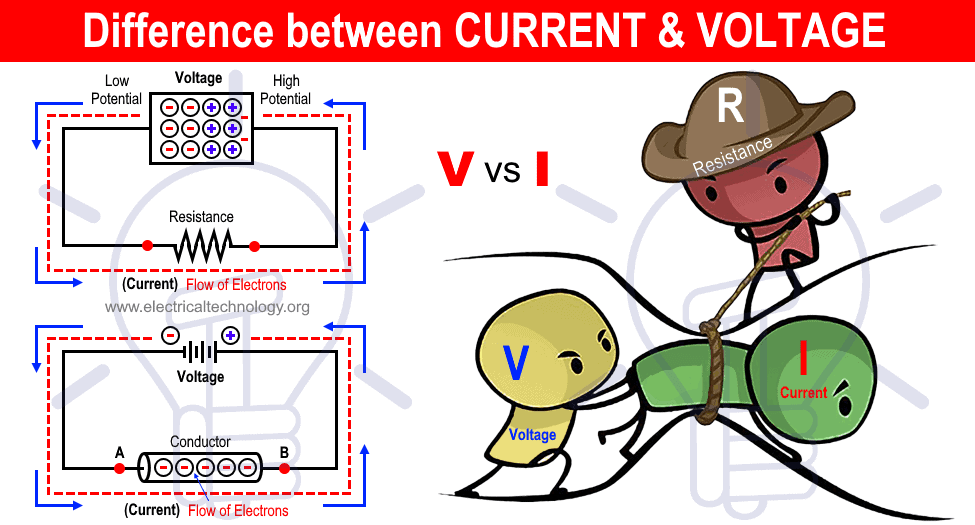
Voltage vs. Amperage: The Dynamic Duo
So, how do voltage and amperage work together? They're intertwined, like peanut butter and jelly. Power (measured in Watts, W) is the product of voltage and amperage (Watts = Volts x Amps). This is a crucial equation!
Imagine you're trying to power a light bulb. You need enough voltage to get the electrons moving, and enough amperage to deliver the necessary "juice" to light it up. If you have too little voltage, the bulb won't light at all. If you have enough voltage but too little amperage, the bulb will be very dim.
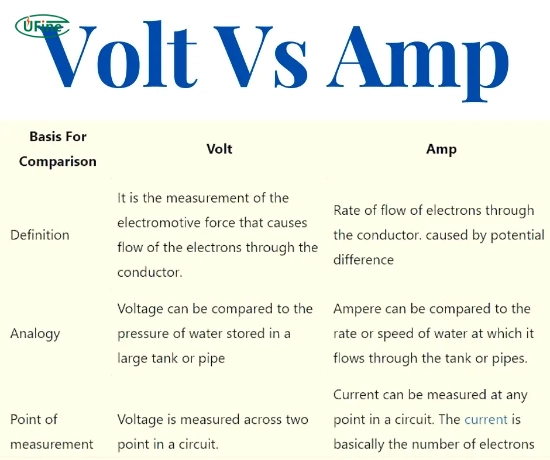
Practical Tip: When choosing a charger for your phone or laptop, pay attention to both the voltage and amperage. Using a charger with the wrong voltage can damage your device. Using one with the same voltage but a lower amperage will charge it slower, and one with a higher amperage won't damage it but it may charge it quicker.
Real-World Examples: Let's Get Practical
- Phone Charger: Typically operates at 5V (voltage) and 1-2A (amperage).
- Laptop Charger: Usually around 19-20V (voltage) and 3-5A (amperage).
- Wall Outlet (in the US): Delivers 120V (voltage). The amperage available depends on the circuit breaker, typically 15-20A.
Notice the difference? Laptops require more power than phones, hence the higher voltage and amperage.
Warning: messing with electricity can be dangerous. If you ever feel unsure about anything electrical, always consult a qualified electrician. Playing around with high voltage can be as shocking as a plot twist in your favourite show!

Voltage and Amperage in Pop Culture
Remember that scene in "Back to the Future" when Marty McFly plugs his guitar into Doc Brown's ridiculously oversized amplifier? While exaggerated for comedic effect, it highlights the need for sufficient power (voltage and amperage) to run equipment. The more power-hungry the device, the more "juice" it needs!
The Spark of Understanding
Understanding the difference between voltage and amperage empowers you to make smarter choices when buying electronics, troubleshooting problems, and simply navigating the modern, electrically-powered world. It's not about becoming an engineer; it's about gaining a basic literacy that makes your life easier and safer.
From charging your phone to understanding why your lights flicker sometimes, the concepts of voltage and amperage are constantly at play. So next time you flip a switch or plug in a device, take a moment to appreciate the invisible force that powers our lives. It's not magic; it's just electricity, understood.