
What Is Alkali Metals And Alkaline Earth Metals
Hey there, chemistry enthusiast! Or maybe you're just trying to survive your next exam? Either way, let's chat about alkali metals and alkaline earth metals. It sounds scary, right? Don't worry, it's way less intimidating than parallel parking.
Alkali Metals: The Super-Reactive Crew
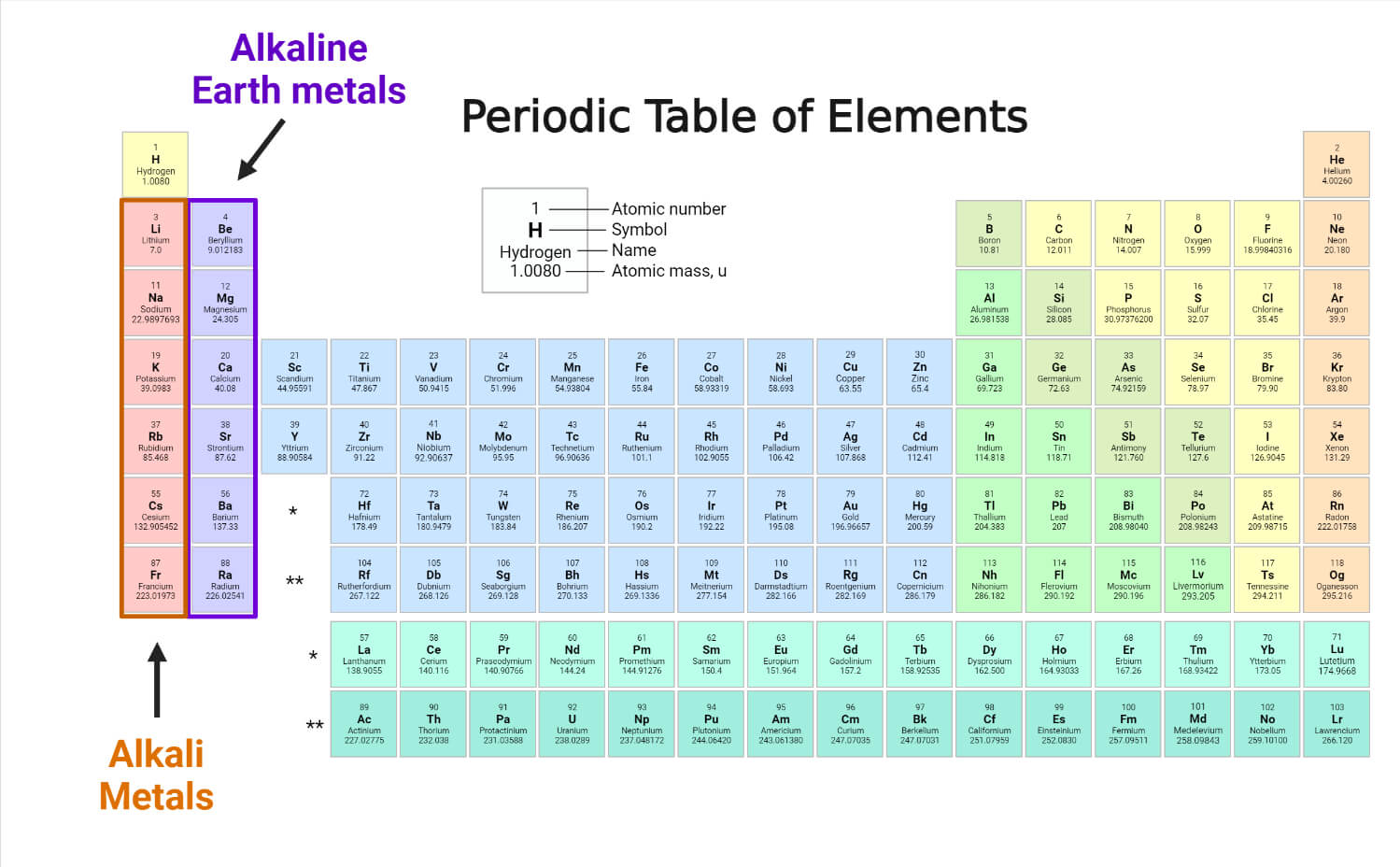
Okay, so alkali metals. These guys are in Group 1 of the periodic table. Think Lithium (Li), Sodium (Na – yes, like table salt!), Potassium (K), Rubidium (Rb), Cesium (Cs), and Francium (Fr). Francium's like the recluse of the group; super rare and radioactive! We won't be inviting that one to parties any time soon.
What makes them special? Well, they're ridiculously reactive. Like, throw-them-in-water-and-they-explode reactive. Seriously! Don't try this at home, unless you really want to become a YouTube sensation for the wrong reasons.
Must Read
Why the reactivity? They only have one valence electron. They are desperate to get rid of that one electron, to be more stable. Like when you finally get rid of that one annoying coworker who keeps humming show tunes. Stability at last!
Because they're so eager to lose that electron, they form +1 ions super easily. This makes them excellent at bonding with, say, chlorine to make table salt (NaCl), or other non-metals. It's like they were born to bond. Or maybe they were synthesized in a lab... tomato, tomahto.

Think about it: Sodium in salt, lithium in batteries, potassium in bananas (that's why you get muscle cramps when you're low!). They're everywhere, doing their thing, being super reactive and generally helpful. Except for the exploding-in-water part. That's just rude.
Alkaline Earth Metals: The (Slightly) Less Wild Bunch
Next up: alkaline earth metals! These fellas reside in Group 2 of the periodic table. We're talking Beryllium (Be), Magnesium (Mg), Calcium (Ca), Strontium (Sr), Barium (Ba), and Radium (Ra). Radium is another radioactive one - keep that distance!

So, are they like the alkali metals' calmer, slightly less explosive cousins? Pretty much. They're still reactive, but not quite as eager to go boom. They're more like... a slow simmer instead of a full-on volcanic eruption.
The key difference? They have two valence electrons. So, they want to lose both electrons to become stable. Which means they tend to form +2 ions.
This also means they're still pretty reactive, just not in the "immediately burst into flames" kind of way. More like the "slowly corrode over time" kind of way. Still fascinating, right? Or are you starting to regret that coffee break?

Where do you find these guys? Magnesium is in Epsom salts and chlorophyll (makes plants green!), Calcium is crucial for your bones (drink your milk!), and Barium... well, Barium's used in X-rays. So, you've probably encountered them all at some point!
They are found in earth's crust, hence the name. Did you see that coming?

Alkali vs. Alkaline Earth: The Key Differences
Let's recap, shall we? Think of it as the TL;DR (Too Long; Didn't Read) version:
- Alkali Metals (Group 1): One valence electron, +1 ions, super reactive (think explosions!).
- Alkaline Earth Metals (Group 2): Two valence electrons, +2 ions, still reactive (but less boom-y).
Both groups are metals, both are reactive, and both are incredibly important in various ways. So next time you're chowing down on a banana or taking an antacid, remember those alkali and alkaline earth metals, working hard behind the scenes! Who knew chemistry could be so... edible?
So, feeling like a chemistry whiz yet? Go forth and impress your friends (or at least survive that exam!). You got this!