
What Is A Stress Strain Curve
Alright, gather 'round, folks! Imagine we're at your favorite cozy café, sipping on something delicious, and I'm about to blow your mind with something that sounds incredibly dry but is actually, I kid you not, hilarious and profoundly human. We're talking about the Stress-Strain Curve.
Yes, I know, it sounds like something your college professor mumbled about before you gently drifted off to sleep. But trust me, this isn't just for engineers with pocket protectors. This little graph is basically the biography of anything that can be pushed or pulled, including, metaphorically speaking, you after a particularly long Monday!
The Dynamic Duo: Stress & Strain
First up, let's meet our celebrity duo: Stress and Strain. Think of Stress as how much pressure you're putting on something. It's the force applied over a certain area. Like when you're trying to fit into those jeans from high school, and your tummy is feeling a significant amount of "stress."
Must Read
And Strain? That's the resulting deformation or change in shape. It's how much those jeans actually stretch (or don't, in my case). It's the material's way of saying, "Okay, I'm bending, I'm twisting, I'm... changing!"
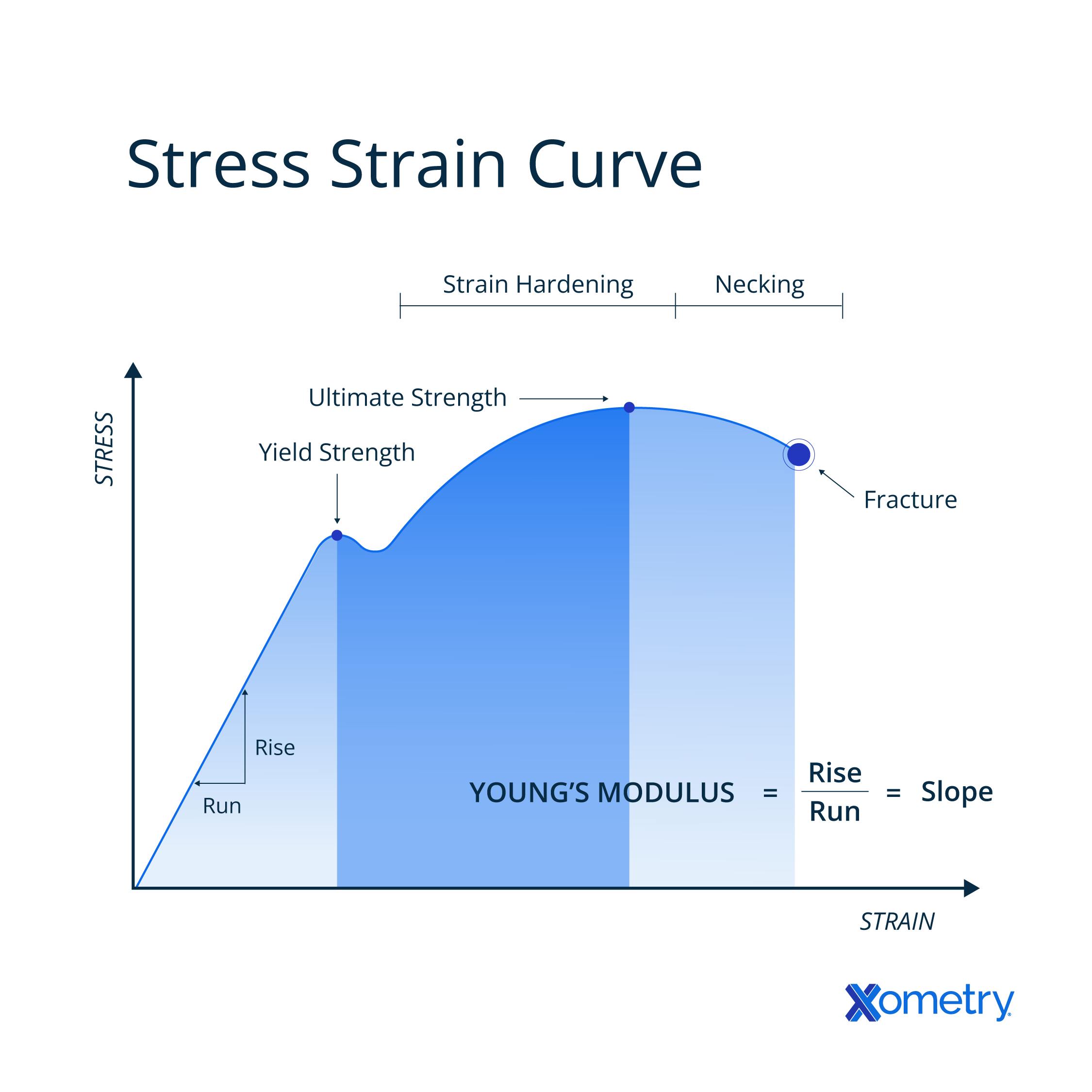
The Stress-Strain Curve is simply a beautiful, often dramatic, chart plotting how much strain a material experiences for a given amount of stress. It’s like watching a dramatic reality show where a material slowly buckles under pressure!
Act I: The Elastic Wonderland
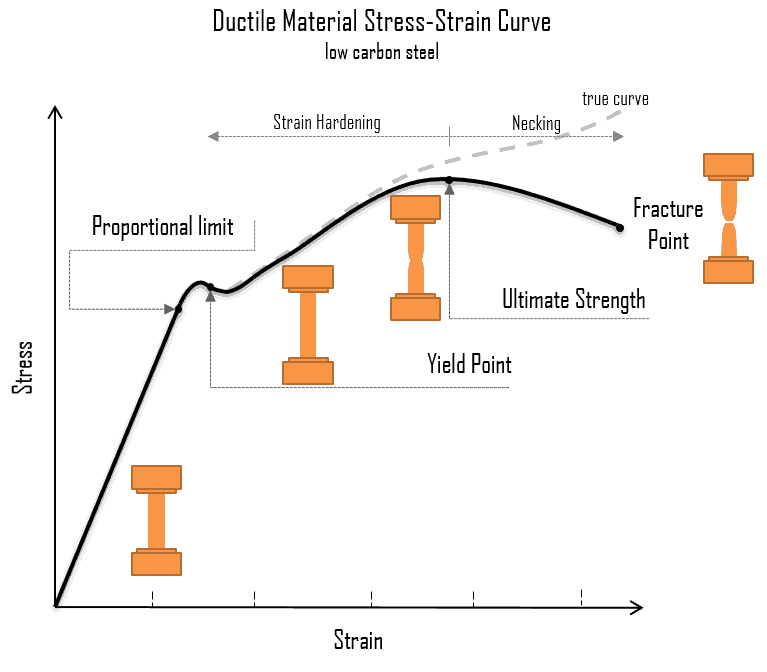
When you first start applying stress, most materials enter what we call the elastic region. This is the happy-go-lucky phase. Imagine stretching a rubber band. You pull it, it gets longer, you let go, and poof! Back to its original shape. No harm, no foul. Your patience on a Tuesday morning? Pretty elastic.

This region is all about linearity. The more you pull, the more it stretches, in a perfectly predictable way. It’s like the honeymoon phase of material physics.
Act II: The Yield Point – No Turning Back!
But every good story has a turning point, right? Enter the Yield Point. This is the moment when the material says, "Okay, I've had enough of this stretching and returning nonsense. I'm changing permanently now." If you stretch that rubber band past its yield point, it won't snap back to its original length. It'll be a little bit longer, a little bit sadder.
This is where permanent deformation begins. Think of accidentally bending a paperclip too far. It stays bent! Your ability to pretend you like your Aunt Mildred's fruitcake? Eventually, it hits a yield point, and you just can't fake it anymore.

Act III: The Plastic Playground
After the yield point, we enter the plastic region. This is where the material continues to deform significantly without immediately breaking. It's like Play-Doh! You can mold it, stretch it, twist it, and it holds its new shape.
Many metals, like copper, love to hang out here. This is why you can bend a coat hanger into a crude antenna or shape a piece of jewelry. They're being beautifully, wonderfully plastic.
The Climax: Ultimate Tensile Strength
As you keep applying stress (and generating more strain), you'll eventually hit the Ultimate Tensile Strength (UTS). This isn't the break point, but it's the maximum stress the material can handle before it starts to weaken and "neck."
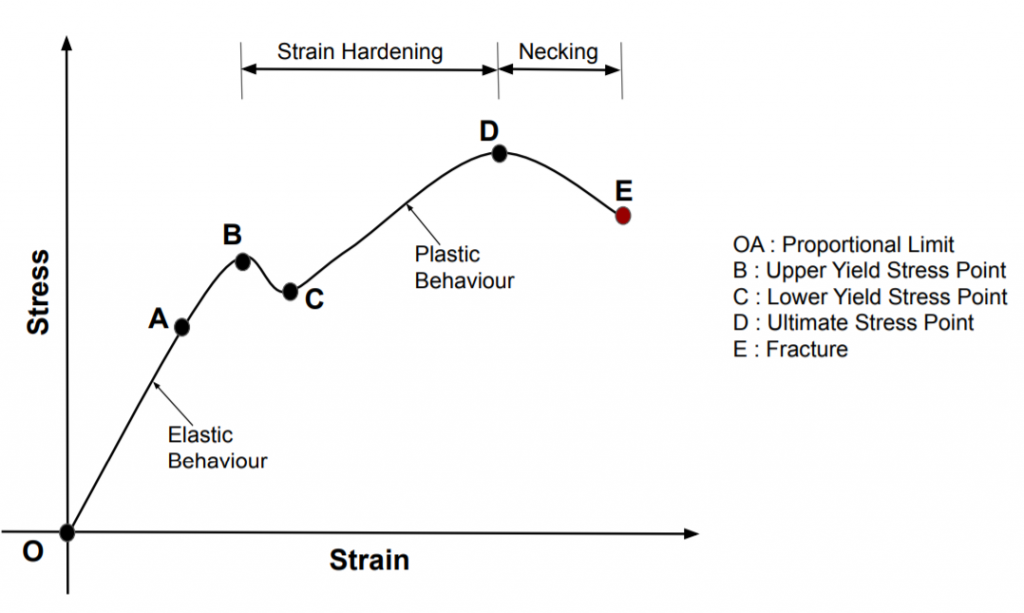
"Necking," you ask? Imagine pulling on a piece of taffy or a hot dog bun. Just before it breaks, you'll see a narrower section form. That's necking! It's the material literally shrinking its cross-section to concentrate the remaining stress. It's basically saying, "I'm giving it my all, but I'm starting to get really, really tired."
The Grand Finale: Fracture!
And then, inevitably, comes the Fracture Point. SNAP! The material breaks. This is where the story ends for that particular piece of material. Whether it's a dramatic, sudden snap (like a potato chip – very "brittle") or a slow, drawn-out tear (like chewing gum – very "ductile"), fracture is the end of the line.
Interestingly, some materials, like ductile ones, can stretch a phenomenal amount in the plastic region before breaking. Think of a copper wire. Others, like ceramics, are super strong but have tiny plastic regions; they just go straight from elastic to Shatter! (Hence, the "brittle" classification).
Why Should You Care?
So, why does this wonderfully dramatic curve matter? Because it's how engineers design everything from bridges to airplanes to your trusty coffee mug! They need to know if a material will bend beautifully (plastic), snap back like a champ (elastic), or just catastrophically fail (fracture).
It's how we ensure that your car doesn't crumple like tin foil in a fender bender, but also that it does crumple in a controlled way to absorb impact in a serious crash, protecting you.
Next time you see a paperclip, a skyscraper, or even yourself pushing through a tough day, remember the epic journey of the stress-strain curve. It's a testament to resilience, limits, and the dramatic, often humorous, ways things respond to pressure. And just like you after a long week, sometimes, even the strongest materials just need to yield a little before they snap!