What Is A Polymer In Science
Ever marveled at the bounce of a rubber ball, the smooth glide of a non-stick pan, or the incredible strength of a climbing rope? Chances are, you're experiencing the magic of polymers without even realizing it! We live in a world woven with these fantastic materials, from the clothes on our backs to the devices in our pockets, and even the very building blocks of life itself. Understanding polymers isn't just for scientists; it's about appreciating the clever chemistry that makes so much of our modern comfort and convenience possible.
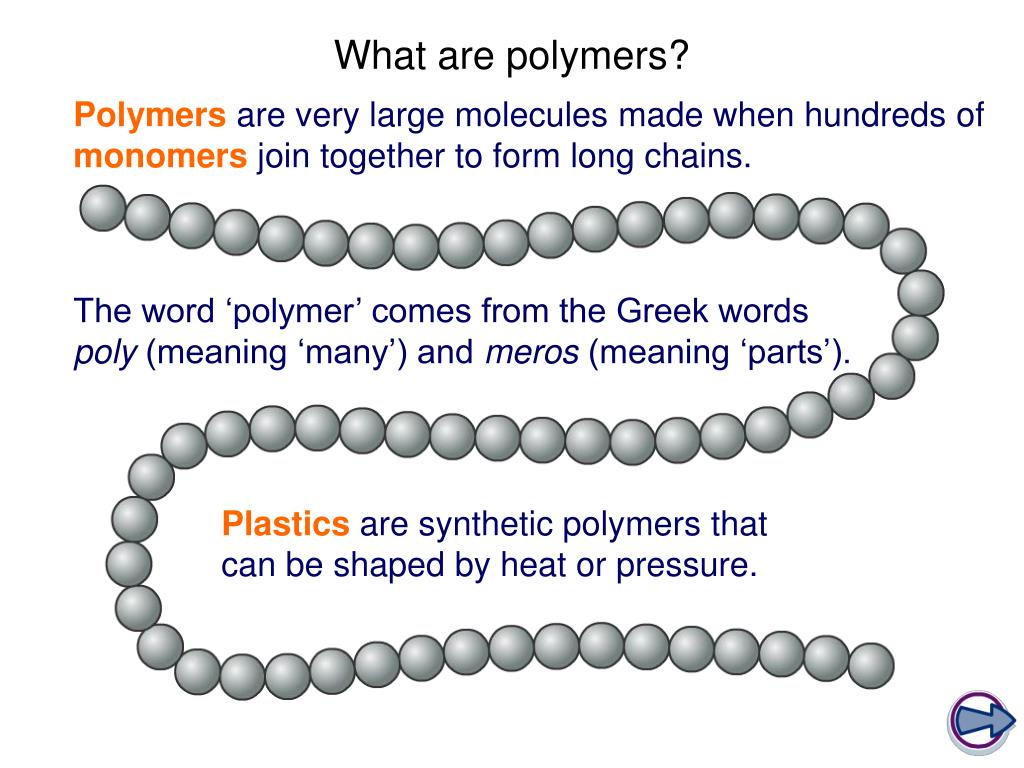
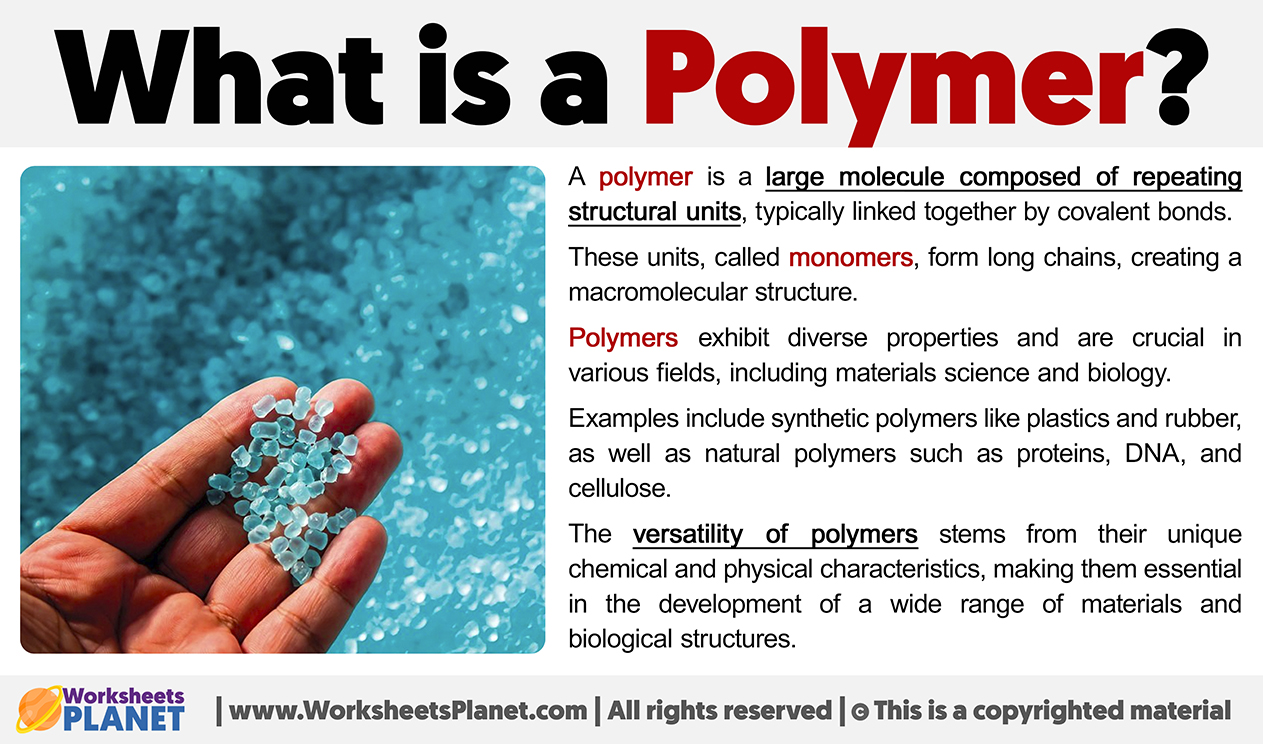
So, what exactly is a polymer? Think of it like this: imagine a single LEGO brick. That's a monomer, a small, individual chemical unit. Now, picture snapping thousands, even millions, of those identical (or similar) LEGO bricks together in a long, repeating chain. Congratulations, you've just built a polymer! The word "polymer" literally comes from Greek roots meaning "many parts." These incredibly long, chain-like molecules give materials their unique properties – whether that's elasticity, strength, flexibility, or even the ability to insulate.
The benefits and purpose of polymers in everyday life are truly vast. They are the backbone of countless industries because they can be engineered to be incredibly versatile. Need something strong and lightweight? Think Kevlar vests or carbon fiber bicycle frames. Need something flexible and waterproof? Consider your rain jacket or rubber tires. Polymers protect our food, house our electronics, transport water, and even deliver medicines within our bodies. They allow for lighter vehicles, more durable infrastructure, and innovative medical treatments, constantly pushing the boundaries of what's possible.
Must Read
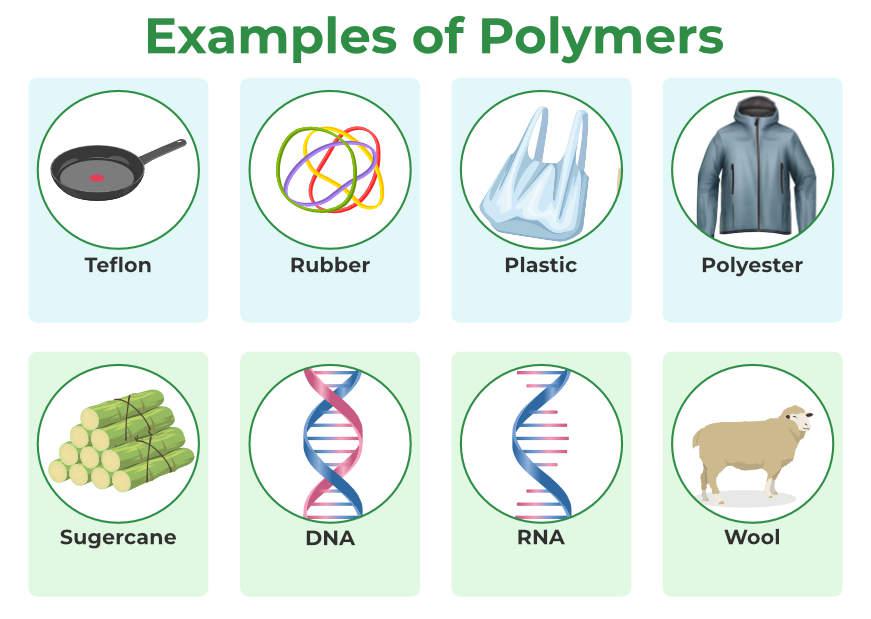
Common examples are everywhere. Your plastic soda bottle? That’s PET, a type of polyester. The sturdy pipes under your sink? Probably PVC (polyvinyl chloride). The cozy fleece jacket keeping you warm? Often made from polyester. Beyond these synthetic wonders, nature is also a master of polymers! Wood, cotton, silk, and wool are all natural polymers. Even your own DNA and the proteins that make up your muscles and enzymes are complex, highly organized polymers essential for life. Our ability to replicate and improve upon nature's designs has revolutionized everything.
To "enjoy" polymers more effectively, start by simply noticing them. The next time you pick up a product, glance at its material composition. Appreciate the engineering marvel that allows a simple plastic bag to be both lightweight and strong, or a tire to withstand thousands of miles of road. Understand the recycling symbols on plastics – these are codes for different polymer types, helping us dispose of them responsibly. And critically, consider the sustainability aspect: how can we use these incredibly useful materials more wisely, reduce waste, and innovate towards greener polymer solutions? By simply being more aware, you'll gain a deeper appreciation for these molecular superstars that quietly shape our world.