What Is A Normal Temp To Keep Your House At
Okay, so picture this: I walked into my friend Sarah's house the other day, and I swear I immediately started sweating. Like, armpits-damp, forehead-glistening sweating. I asked her, totally casually of course (because who wants to be rude?), "Is it just me, or is it, um, toasty in here?" She just shrugged and said, "Oh yeah, I like it warm." I was internally screaming. "Warm"?! It felt like a sauna! It got me thinking, though: what actually is a normal temperature to keep your house at?
Turns out, there's no single, universally agreed-upon answer. Surprise! (Did you really expect a definitive answer in this crazy world? Me neither.) But there are some generally accepted ranges, and a lot of factors that influence what's right for you.
The Official (and Not-So-Official) Recommendations
Let's start with what the "experts" say. The U.S. Department of Energy suggests setting your thermostat to 78°F (26°C) when you're home and need cooling. Yup, you read that right. 78! My initial reaction was pretty much the same as yours probably is: "Are they insane?!" But hear them out. This is primarily for energy efficiency. It's cheaper to keep your house a little warmer when you're home and using the AC than to blast it super cold.
Must Read
When you're away, they recommend cranking that thermostat up to 85°F (29°C). And at night, they suggest 82°F (28°C). Again, the goal is to save money on energy bills. Think of it as a tiny sacrifice for the greater good of your wallet (and the planet, maybe?).
Now, I know what you're thinking: "That sounds absolutely miserable!" And honestly, I'm with you. But the DOE's recommendations are really just guidelines. What's comfortable is subjective, and that's where things get interesting.

The Comfort Factor: It's All About You (and Your Housemates)
So, forget those rigid government numbers for a second. What temperature makes you feel good? This is the most important question, right? Some people thrive in warmer temperatures, while others (like me) prefer a cooler environment. Maybe Sarah is genuinely happy in her tropical paradise! Who am I to judge?
Consider these factors when deciding your ideal indoor temperature:

- Your activity level: Are you constantly moving around, cleaning, and chasing after kids? You might prefer a cooler temperature. Are you mostly sitting still, reading, or working from home? You might be okay with a slightly warmer setting.
- Your clothing: Wearing shorts and a t-shirt? You'll probably want a cooler temperature than if you're bundled up in a sweater and leggings. (Side note: I live in my leggings year-round. No shame.)
- Your age: Infants and elderly people may be more sensitive to temperature changes and require a warmer environment.
- Your health: Certain medical conditions can affect how you perceive temperature.
- Your house itself: Is your house well-insulated? Does it have a lot of windows that let in sunlight? These factors can significantly impact how warm or cool your house feels. (Old houses can be drafty, believe me!)
- Your fellow inhabitants: Are you living with other people? Compromise is key! Maybe one person loves the heat and the other wants to live in an icebox. Find a happy medium. (Good luck with that, though!)
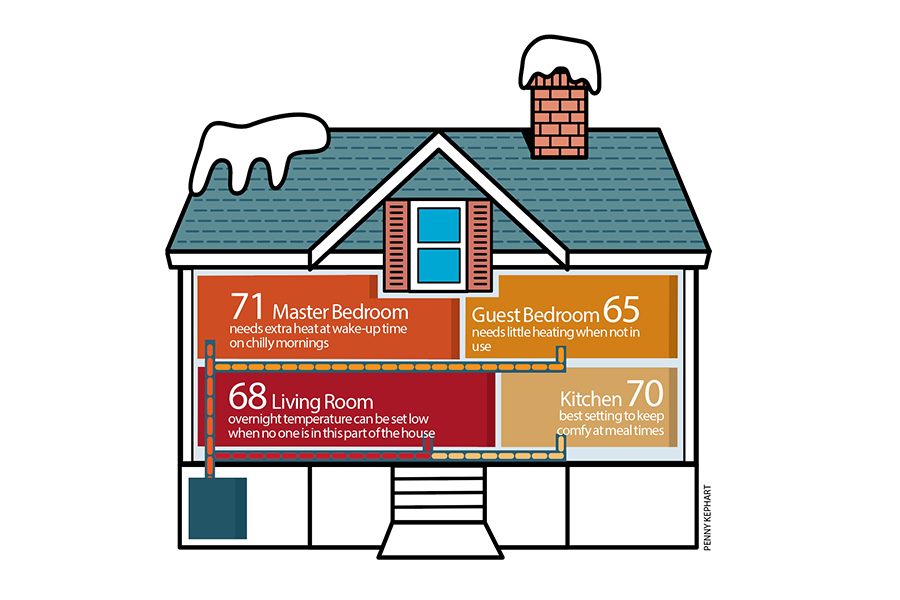
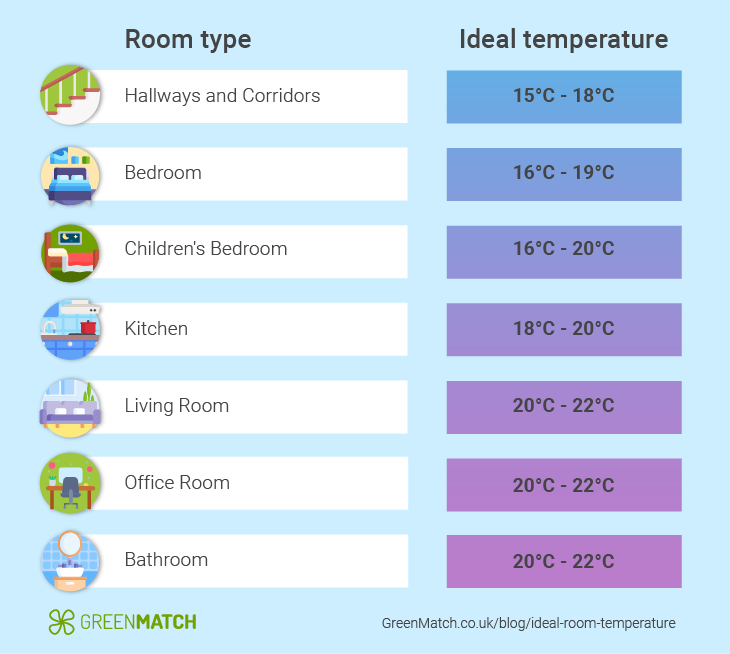
Personally, I find that somewhere between 68°F (20°C) and 72°F (22°C) is my sweet spot. It's cool enough that I'm not sweating, but not so cold that I'm shivering. But that's just me! Your perfect temperature might be completely different.
Tips for Finding Your Ideal Temperature
Okay, so how do you actually figure out what's best for you?
- Experiment: Try adjusting your thermostat a few degrees at a time and see how you feel. Give it a day or two at each setting before making another change.
- Use a programmable thermostat: Set different temperatures for different times of the day and night. This way, you can be comfortable when you're home and save energy when you're away or asleep.
- Consider a smart thermostat: These thermostats learn your preferences over time and automatically adjust the temperature to optimize comfort and energy savings. Plus, you can control them with your phone! (Tech is amazing, isn't it?)
- Talk to your housemates: Open communication is essential for a harmonious living environment. Discuss your preferences and try to find a compromise that works for everyone.
Ultimately, the "normal" temperature for your house is whatever makes you feel comfortable and happy (while also being reasonably energy-efficient, of course). Don't be afraid to experiment and find what works best for you and your household. And maybe, just maybe, try to convince Sarah that 78 degrees is a little too toasty. Just a thought!