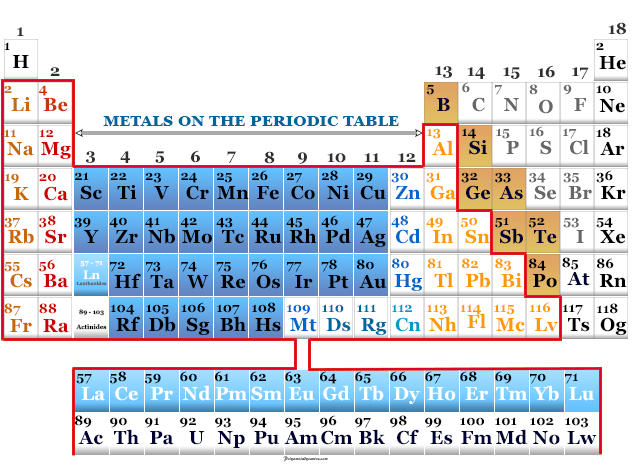
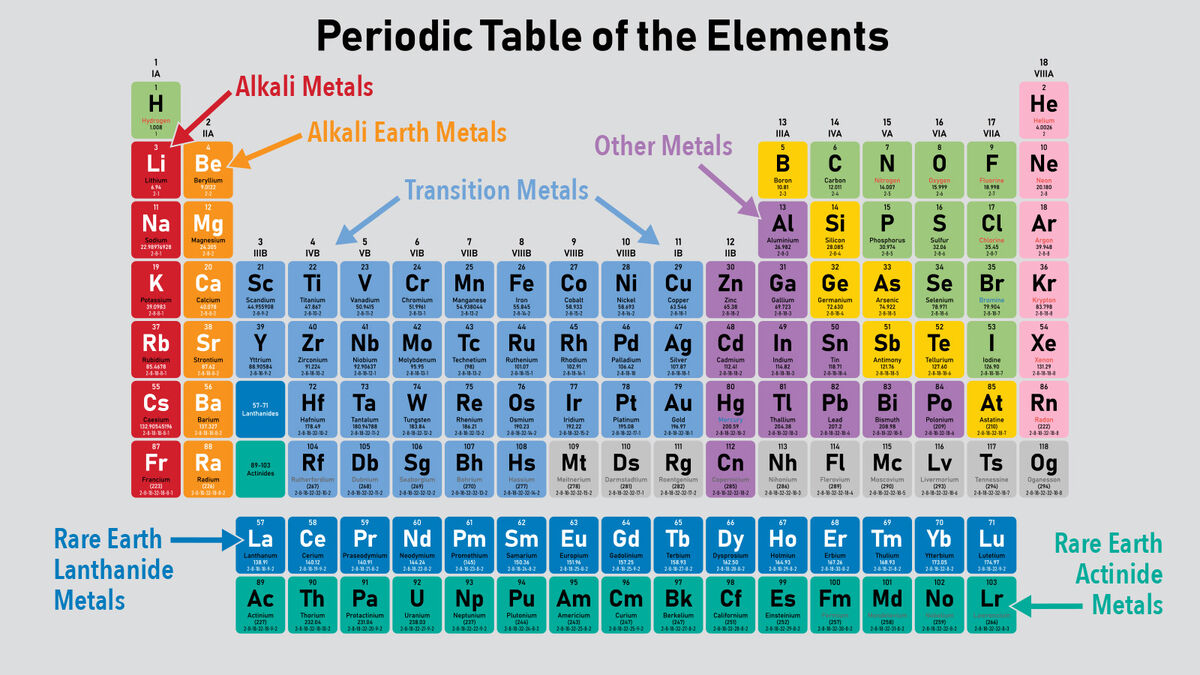
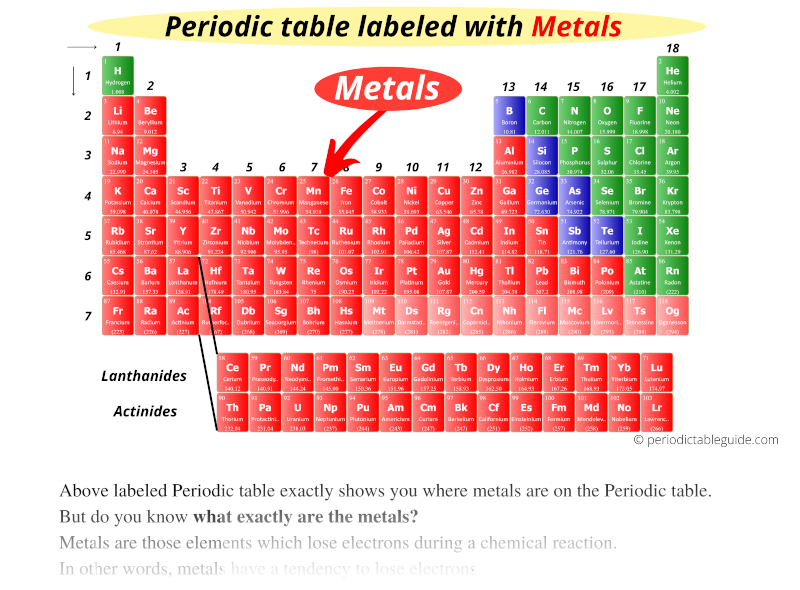
What Elements Are Metals On The Periodic Table
Ever wondered why that shiny new ring feels so good on your finger, or why your phone's battery lasts (hopefully!) through the day? The answer, in large part, lies within the fascinating world of metals! We often take them for granted, but metals are the unsung heroes of modern life, silently supporting everything from the skyscrapers we marvel at to the tiny electronic components that power our devices.
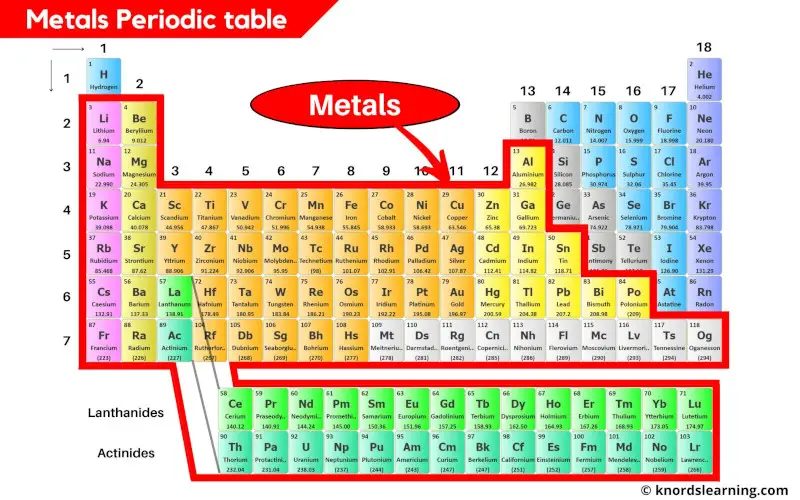
So, what exactly makes an element a metal on the periodic table? Well, picture the periodic table as a bustling city. The vast majority of the residents, about three-quarters of them, are metals! They tend to cluster on the left and in the center of the table. What unites them is a set of shared properties: they're typically shiny, conduct electricity and heat very well, are malleable (can be hammered into shapes), and ductile (can be drawn into wires). Think of copper wiring, gold jewelry, or the iron in steel girders – these are all classic examples of metallic traits in action.
The benefits and purpose of metals are almost limitless. Take for example the simple lightbulb. Without tungsten, a metal with a very high melting point, we wouldn't have long-lasting incandescent lights. Our transportation infrastructure heavily relies on steel, an alloy primarily made of iron, for bridges, cars, and trains. In the medical field, titanium is used for implants because it's biocompatible and strong. And of course, let's not forget about the crucial role metals play in electronics. Without gold, silver, and copper facilitating electron flow, our computers, smartphones, and the entire internet would cease to function.
Must Read
But beyond their practical applications, understanding metals offers a deeper appreciation for the world around us. Knowing that the rust on an old iron gate is a chemical reaction between iron and oxygen, or that the vibrant colors in fireworks often come from metallic salts, adds a layer of richness to everyday experiences. Learning about metals is essentially learning about the building blocks of our world.
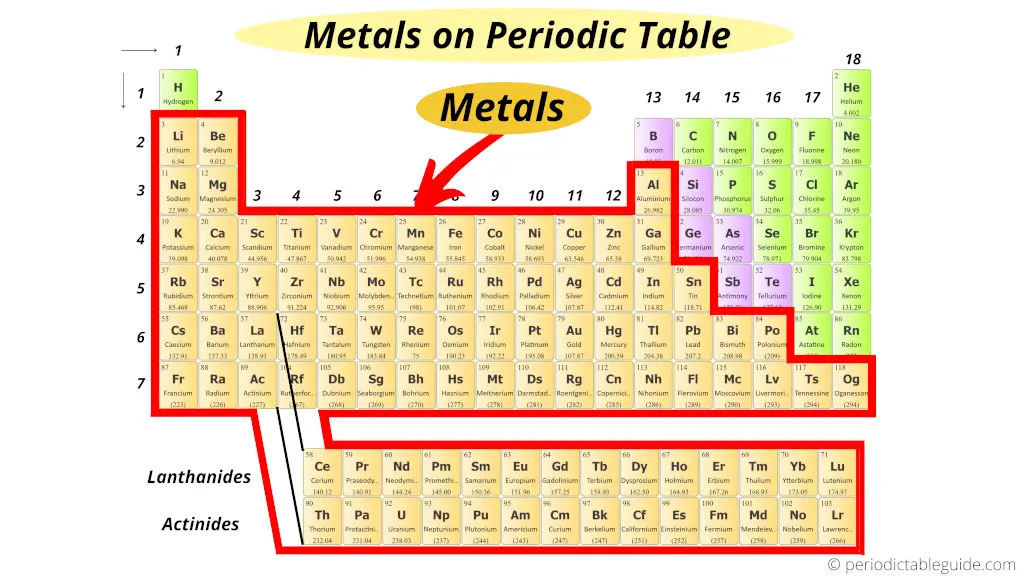
So, how can you enjoy and learn more about metals effectively? Here are a few practical tips:
- Explore the Periodic Table: Spend some time examining the periodic table and identify the metals. Notice their location and the trends in their properties.
- Conduct Simple Experiments: There are numerous safe and easy experiments you can do at home to observe metallic properties. For example, test the conductivity of different metals using a simple circuit.
- Visit Museums and Science Centers: Many museums have exhibits dedicated to minerals and metals. These exhibits often showcase the beauty and diverse applications of metals.
- Read Popular Science Articles and Books: There are countless resources available online and in libraries that delve into the science and history of metals.
- Consider a Chemistry Course: For a more in-depth understanding, taking a chemistry course can provide a solid foundation in the properties and reactions of metals.
Ultimately, understanding the elements that constitute metals opens up a whole new perspective on the world. It transforms the mundane into the fascinating, revealing the intricate science that underpins our modern lives. So go forth and explore the metallic world – you might just be surprised by what you discover!