
What Does Hss Stand For Steel
Okay, so picture this: you're scrolling through some cool engineering stuff online, or maybe just watching a documentary about a massive skyscraper going up, and suddenly you see it. HSS. And you're thinking, "Hold up. Is that some secret society? A new tech giant? Or just… what?" Well, grab your imaginary coffee, because we're about to demystify this little acronym that pops up all over the steel world.
Because let's be real, acronyms can be a bit of a mind-bender, right? Especially when they float around without context. It’s like trying to understand a meme from two years ago – bewildering!
So, What Does HSS Stand For? (Drumroll, please!)
Alright, no more teasing. When you see "HSS" in the context of steel, it actually has
Must Read
The first, and probably most common, interpretation is: High-Strength Steel.
The second, equally vital, is: Hollow Structural Section.
See? Told ya! Two for the price of one. Let's break 'em down, shall we?
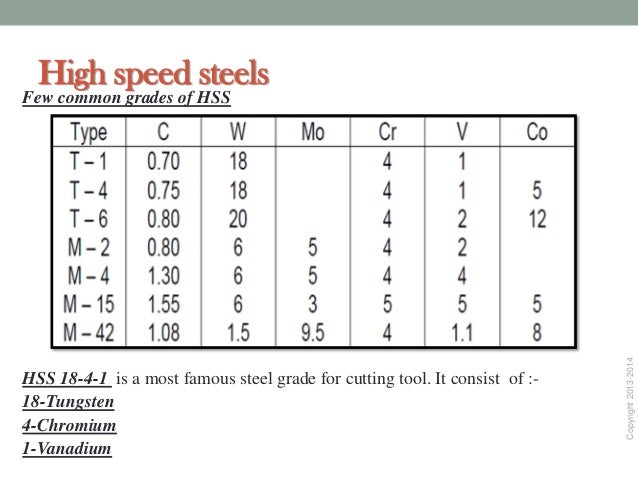
HSS as High-Strength Steel: The Superman of Metals!
Think of regular steel as, well, strong. Really strong! It holds up buildings, makes cars, and generally does a fantastic job. But then there's
It’s steel that has been specially formulated and often heat-treated to give it
Why do we need such a powerhouse? Simple: for things that need to be
It's used everywhere from the chassis of your car (making it safer for you, yay!) to massive construction projects and even aerospace components. It’s truly the unsung hero that allows engineers to push boundaries and build bigger, better, and safer things. Pretty cool, right?
So next time you marvel at a modern skyscraper, remember, there's a good chance High-Strength Steel is doing some heavy lifting, literally!
HSS as Hollow Structural Section: The Smart Tubes!
Now, let's pivot to the other HSS, the
Why hollow? Great question! It might seem counter-intuitive at first. Why use a hollow piece when a solid one seems stronger? Well, here’s the trick: for many applications, especially those where a material is subjected to twisting (torsion) or bending forces, a hollow section can be
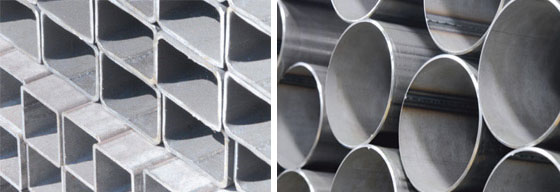
Think about it: a lot of the strength in a beam is concentrated at its outer edges. The material in the very center contributes less to resisting bending. By removing that inner material and making it hollow, you can save a ton of weight without significantly compromising strength. It's like a bird's bones – hollow, but incredibly strong and light!
These Hollow Structural Sections are fantastic for columns, beams, trusses, and even architectural features where you want a clean, modern look. They're often seen in exposed steelwork in modern buildings, stadium roofs, and even heavy machinery frames.
Their uniform strength in multiple directions (especially square and rectangular HSS) makes them a go-to for designers. Plus, the smooth surfaces are just so aesthetically pleasing, aren't they? Who knew steel tubes could be so fashionable?
So, Which HSS Are We Talking About?
Good question! Most of the time, the context will tell you. If someone is talking about a steel grade with superior properties, they likely mean High-Strength Steel. If they're discussing a type of beam or column, especially in a diagram showing its cross-section, they're probably referring to a Hollow Structural Section.
Sometimes, it can even be both! You could have a Hollow Structural Section made from High-Strength Steel. Mind blown, right?
The key takeaway is that HSS isn't just a random jumble of letters. It's shorthand for some truly fundamental concepts in how we build our world. From the cars we drive to the towering buildings that scrape the sky, HSS (in both its forms!) is silently doing some incredible work.
So, there you have it! Next time you see HSS, you'll be nodding knowingly, armed with your new steel superpower. Go forth and impress your friends with your newfound wisdom! You're practically an engineer now. (Kidding! Mostly.)