
What Does Guarding Mean In Medical Terms

Ever had a tummy ache so bad you instinctively curled up, hands clutched over your belly? Or maybe you've seen someone flinch and pull away when a doctor gently presses on a painful spot? What you're witnessing, in its most basic form, is a natural human reaction. But in the medical world, this protective instinct has a very specific, diagnostic name: guarding.
It sounds a bit like something from a medieval fantasy, doesn't it? A knight guarding their treasure, or a dragon guarding its hoard. And in a way, it’s not far off! Your body is a precious treasure, and guarding is its way of deploying a protective defense mechanism when something's amiss.
What Exactly Is Medical Guarding?
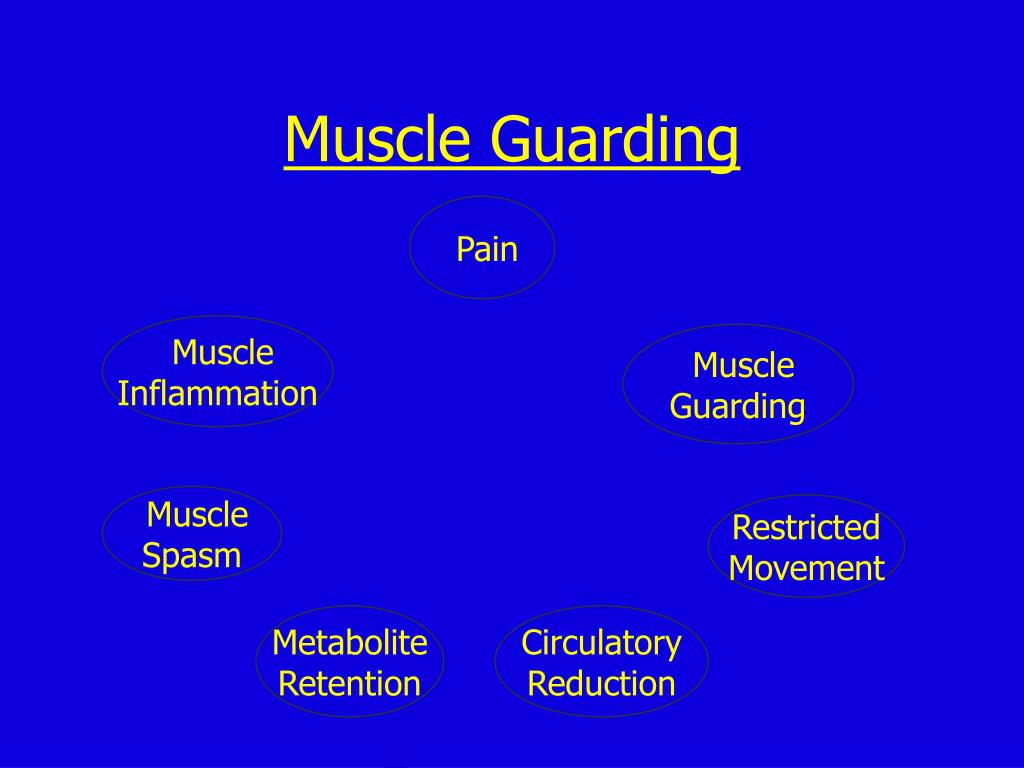
When doctors talk about guarding, they're referring to an involuntary muscle contraction that happens when an area of your body, usually your abdomen, is inflamed, injured, or infected. It's not just you voluntarily tensing up because it hurts (though that can happen too!). Instead, it's your nervous system hitting the emergency button, causing the muscles around the troubled area to stiffen and become rigid, often without you even consciously trying.
Must Read
Think of it as your internal security system kicking in. If a doctor presses on an area where there’s a problem, those muscles automatically clench to shield the vulnerable spot, much like a turtle pulling into its shell when poked. It’s your body saying, "Danger! Keep away!"
Spotting the Signs: More Than Just a Flinch
For a doctor, identifying guarding is a crucial diagnostic clue. When they gently palpate (that's doctor-speak for 'feel with their hands') your abdomen, they’re feeling for that subtle or not-so-subtle rigidity. If they feel your muscles resisting, becoming board-like, or causing you to involuntarily pull away, they know something significant is going on underneath.

There's a distinction, too, between voluntary guarding (where you consciously tense up because you anticipate pain) and involuntary guarding, which is the true medical sign. The involuntary kind is a reflex, a primal response that’s much harder to control, even if you try to relax. It’s like when someone throws a ball at your face and you blink without thinking – totally automatic!
Why Does It Matter So Much?
Guarding is a big deal because it often points to a serious underlying condition. It’s a red flag that tells healthcare professionals there could be inflammation or irritation within the abdominal cavity itself. For example, it’s a classic sign of conditions like appendicitis, peritonitis (inflammation of the lining of the abdomen), or even issues with your gallbladder or kidneys.
Fun Fact: Animals exhibit guarding too! Ever seen a dog limp and pull its paw away if you try to touch it? Or a cat hiss and tense up if you try to touch a sore spot? That's their version of guarding!
Your Body, Your Messenger
So, what does this mean for you? It's a powerful reminder that your body is constantly communicating. Those aches, pains, and even involuntary muscle responses are signals. Learning to listen to them, and communicating them effectively to your doctor, is key to your health.
If you're ever experiencing pain, especially in your abdomen, try to be honest and descriptive with your doctor. Don't try to "tough it out" or hide any discomfort, particularly when they’re examining you. Explaining exactly where it hurts and what it feels like helps them connect the dots – and guarding is often one of those very important dots!
A Little Reflection
In our fast-paced lives, it's easy to disconnect from the subtle messages our bodies send. But guarding reminds us of the incredible, built-in protective systems we possess. It’s a testament to how intelligent our bodies are, always striving to keep us safe, even when we’re not consciously aware of it. So next time you feel a twinge or an ache, take a moment to appreciate your body's wisdom. It’s constantly guarding you, always on duty!
