
What Does A Roach Nest Look Like

Alright, settle in, grab a metaphorical cup of coffee, because we're about to delve into a topic that makes most people want to jump out of their skin: what a roach nest actually looks like. And before you start picturing some intricate, woven structure like a bird's nest, let me stop you right there. Roaches are many things – ancient, resilient, surprisingly fast – but interior decorators? Nah, not so much.
The first thing to understand is that the term "roach nest" is a bit of a misnomer. These creepy crawlies don't build nests in the traditional sense. They don't meticulously weave twigs or mud. Instead, they have what we lovingly refer to as harborage points. Think of it less as a home and more like a really, really terrible party zone that just keeps getting more crowded and, frankly, grosser.
So, What Are We Looking For?
When you're trying to spot a roach "nest," you're not looking for a single, obvious structure. You're looking for a collection of tell-tale signs that scream, "Hey, there's a bustling metropolis of nightmares living here!"
Must Read
Sign #1: The Droppings. Oh, The Droppings.
This is probably the most common and stomach-churning indicator. Roach droppings often look like tiny specks of black pepper or coffee grounds. If the infestation is heavier, they might resemble small, dark, cylindrical pellets. And here's where it gets truly delightful: on vertical surfaces, you might see dark smears or streaks. Imagine a roach, doing its business, and then dragging its little hindquarters through it. Pure poetry, really.
Finding these isn't just about one or two specks. We're talking about finding them clustered together. If you see a pile of what looks like black pepper flakes behind your fridge or inside a cabinet, congratulations, you've found a roach latrine. And where there's a latrine, there's usually a whole family reunion happening nearby.
Sign #2: Egg Casings (Oothecae) – The Roach Baby Boom
This is where things get truly disturbing. Female roaches carry their eggs in a protective casing called an ootheca (pronounced oh-oh-THEE-kuh). These aren't individual eggs; they're more like a tiny, purse-shaped capsule packed with anywhere from 10 to 50 eggs, depending on the species. Imagine a tiny, brown, pill-shaped leathery purse, about 1/4 to 1/2 inch long. Sometimes they’re reddish-brown, sometimes darker.
When you see these, it’s a massive red flag. It means roaches aren't just visiting; they're reproducing in your space. Finding even one or two discarded oothecae means you've got a population that's not only established but actively expanding. It’s like finding a maternity ward in your kitchen drawer.
Sign #3: Shed Skins – They Grow Up So Fast (And Grossly)

Like all insects, roaches have an exoskeleton. As they grow, they shed this outer layer in a process called molting. These discarded skins, or cast skins, look like pale, translucent replicas of the roaches themselves. You might find them in various sizes, indicating that roaches of all ages are present and accounted for.
Finding these shed skins is proof positive that roaches are not just passing through, but are actually developing and maturing in your home. It’s like finding discarded clothing, except it’s from an insect, and it means they’re actively setting up shop and getting comfortable.
Sign #4: The Roaches Themselves (Duh!)
Okay, this might seem obvious, but if you're seeing roaches scurrying about, especially during the day, you've got a problem. Roaches are primarily nocturnal. If they're bold enough to come out when the lights are on, it means their population is so dense that they're being forced out of their prime hiding spots due to overcrowding. Think of it as a house party where so many people have shown up that they're spilling out onto the lawn.

And if you turn on a light and see them scatter like tiny, six-legged projectiles? That's not just one roach, my friend. That's a full-blown roach stampede, all heading back to their cozy (and likely disgusting) harborage point.
Sign #5: The Smell – The Odor of Infestation
This is often overlooked, but it's a huge clue in severe infestations. Roaches produce a distinctive, musty, oily odor. Some describe it as a "stale beer" smell, others as just generally "unpleasant." This smell comes from their pheromones, droppings, and dead roaches. The stronger the smell, the larger the population.
If you open a cabinet and are hit with an inexplicable, slightly sweet but overwhelmingly foul odor, that’s your roach alarm bell ringing. It’s the smell of a thousand tiny nightmares brewing.

Where Do These "Nests" (Harborage Points) Happen?
Roaches love dark, warm, and humid places. They're basically looking for a spa vacation, but make it gross. Common locations include:
- Behind and under appliances (fridges, stoves, dishwashers – oh, the warmth!)
- Under sinks (hello, plumbing leaks and dampness!)
- Inside kitchen cabinets and pantries (food crumbs are their Michelin-star dining)
- In cracks and crevices in walls, floors, and baseboards
- Behind loose wallpaper or decaying plaster
- Inside electronics (the warmth of a computer or television is surprisingly appealing to them!)
- Piles of cardboard, newspapers, or clutter
The Big Picture: What Does a Dense Harborage "Look" Like?
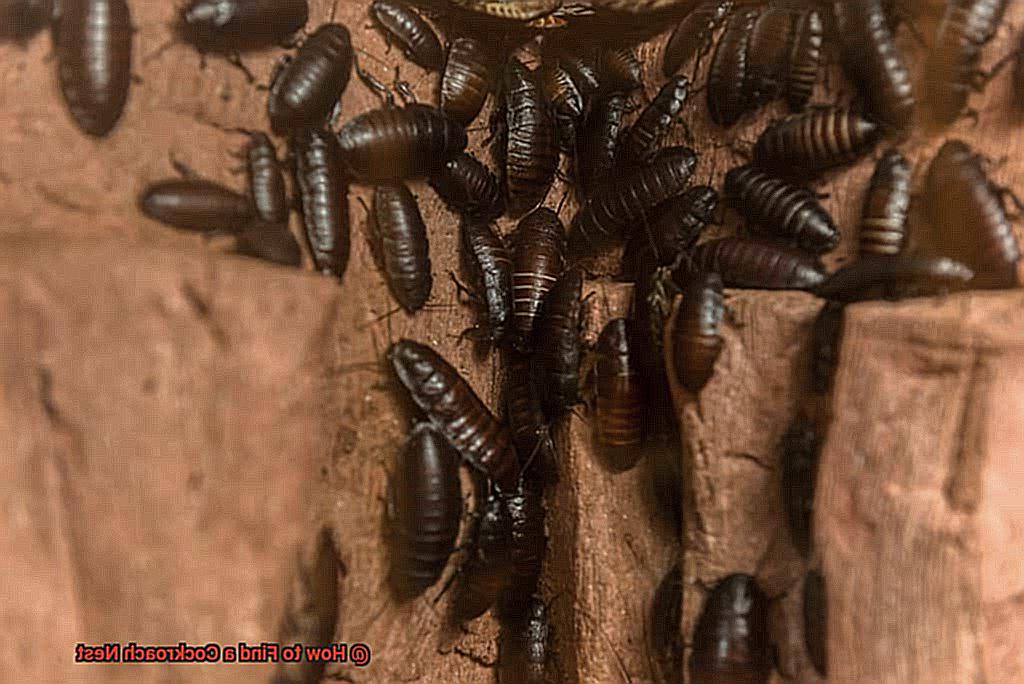
When you finally pull out that fridge, or look into a dark void under the sink and hit it with a flashlight, what you might see isn't a neat arrangement. It's a chaotic, horrifying tableau. Imagine a disgusting diorama made by a particularly disturbed artist:
- A dark, greasy film covering surfaces from their secretions.
- Layers upon layers of black pepper-like droppings.
- Dozens, possibly hundreds, of those tiny pill-shaped egg casings, both empty and full.
- Mounds of translucent, discarded shed skins.
- And, of course, actual roaches. Lots of them. Adults, nymphs, all scurrying and scrambling over each other like a truly terrible horror movie scene.
It’s not a cozy nest. It’s a biological dump site slash breeding ground slash roach rave. It’s a place where they feel safe, where food is accessible, and where they can continue their relentless mission to multiply and gross us out.
So, there you have it. The unsettling, yet crucial, guide to spotting a roach "nest." If you start seeing these signs, don't just sigh and pretend it's dust. You've got a situation on your hands. And trust me, you don't want those little party animals to overstay their welcome. Or, you know, ever have a welcome in the first place.