
What Does 50 Milliamps Look Like On A Multimeter

So, you're staring at your multimeter. The display blinks. It taunts you with numbers. Let's talk about 50 milliamps (mA).
Fifty milliamps. It’s a number, right? But what is it? Let's try to visualize this elusive value.
Visualizing the Invisible: The 50mA Mystery
First, let's ditch the physics textbook. Nobody wants to calculate electron flow on a Tuesday. We want relatable examples!
Must Read
Imagine a tiny, tiny ant. Like, shrunk-down-by-a-mad-scientist tiny. Now, imagine fifty of them.
Crawling in single file. Carrying microscopic crumbs. 50mA? Maybe. Probably not. But it's a start!
Unpopular Opinion Time! (Brace Yourselves)
Here's my controversial take: 50mA is like that one guest at a party. You know, the one who's slightly too enthusiastic?
Not causing a scene, but definitely... there. Like that friend who insists on doing karaoke even though they can't sing.
They're not going to blow the circuit breaker, but you're definitely aware of their presence.
Everyday Encounters with Milliamp Magic
Think about your phone charger. Charging a phone? That's likely a few hundred milliamps. 50mA is a smaller sip of that energy.
It's not chugging a soda, it's more like cautiously licking the condensation off the can.
Consider a small LED. The kind that blinks on a gadget. Possibly drawing somewhere near 50mA when illuminated.

The LED Analogy: A Flicker of Understanding
That tiny LED. It's not a spotlight, right? It's a gentle glow. A subtle signal.
That's kind of what 50mA feels like. It’s a gentle push of electricity. Not a powerful surge.
Imagine a firefly. A single, solitary firefly blinking in the dark. 50mA might be its electrical soulmate.
The "Barely There" Phenomenon
50mA on a multimeter can feel anticlimactic. You expect a lightning bolt. You get... a number.
It's the electric equivalent of finding a single, stray sock in the dryer.
You're like, "Okay, it's something. But what does it mean?"
Another Controversial Thought: It's Relative!
Here's another potentially offensive statement: 50mA is only interesting in context.
If you're expecting amps, 50mA is basically zero. If you're working with microamps, it's a massive flood.

It’s like saying a drop of water is big or small. Depends if you're in the desert or the ocean.
Human Body? Proceed With Extreme Caution!
Okay, serious moment. 50mA through the human body? Not good. Very not good.
We're talking potentially dangerous territory. Don't go testing this theory, ever!
Treat electricity with respect. Always. It's not a game. Safety first, kids! Always.
The Respect Electricity Deserves
Think of electricity like a grumpy badger. Treat it with respect, and it will probably leave you alone.
Poke it with a stick (or a screwdriver)? You're gonna have a bad time. A potentially shocking bad time.
So, 50mA through your heart? Absolutely terrifying. 50mA powering a tiny gadget? Perfectly acceptable.
The Multimeter's Secret Language
Ultimately, understanding 50mA (or any current reading) comes down to experience.
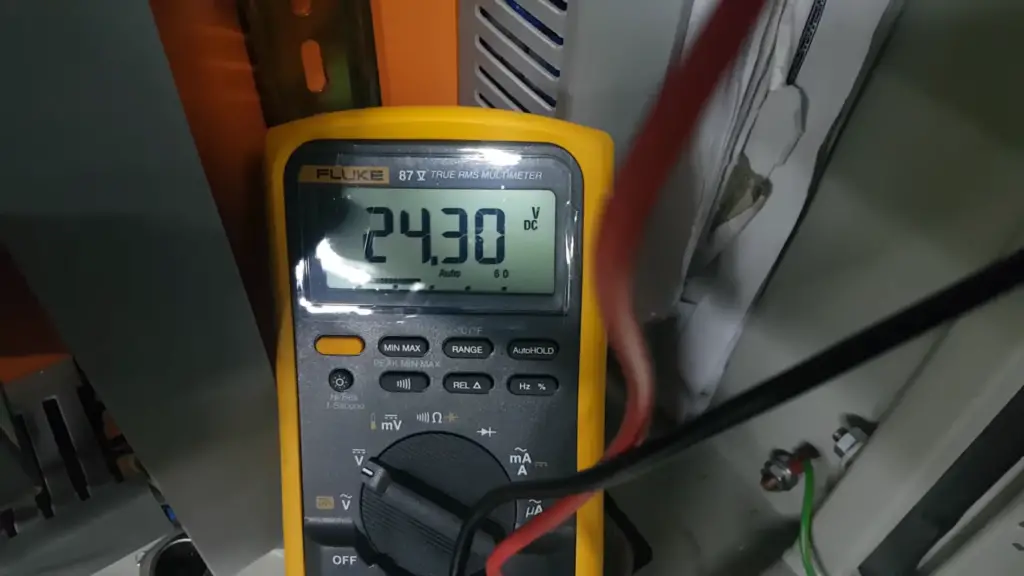
The more you play with circuits, the better you'll get a feel for what different values mean.
It's like learning a new language. At first, it's just gibberish. Eventually, you start to understand the nuances.
Embrace the Learning Process
Don't be afraid to experiment (safely, of course!). Build simple circuits.
Measure the current draw of different components. Get a feel for how things work.
Think of your multimeter as a magical translator. It's turning invisible electricity into numbers you can understand.
Beyond the Numbers: Intuition and Experience
After a while, you'll start to develop a sort of "electrical intuition." You'll just know if something is drawing too much current.
It's like a mechanic who can tell something's wrong with a car just by listening to the engine.
That kind of knowledge only comes from experience. And a healthy dose of curiosity.

The Journey to Electrical Enlightenment
So, what does 50mA look like on a multimeter? It looks like a starting point.
It's a chance to learn, to experiment, to build something amazing.
It's a reminder that even small amounts of electricity can do incredible things. (Or be incredibly dangerous. Remember the badger!).
The Final (Potentially Unpopular) Thought
My final unpopular opinion? Stop obsessing about the exact numbers.
Focus on understanding the bigger picture. Is the current within the expected range? Is something drawing too much or too little?
Don't get bogged down in the minutiae. See the forest for the trees (or the circuit for the components!).
Because at the end of the day, 50mA is just a number. It's what you do with that number that really matters.
So, go forth and measure! Explore the fascinating world of electricity! And remember... respect the grumpy badger!