
What Do Hurricanes Need To Form
Remember that time you were planning a fantastic beach trip, maybe even booked a fancy Airbnb, and then you started obsessively checking the weather app? You were probably praying for sunshine and gentle breezes, but then your eye caught it: that tiny, innocent-looking swirl icon out in the distant ocean. Uh oh. Before that little swirl decides to crash your vacation (or worse, your whole coastal region), it needs a pretty specific set of circumstances to even think about becoming a full-blown hurricane. It’s not just a random act of atmospheric whimsy, folks. It's more like a very particular, high-stakes cosmic cooking show.
So, you're curious about what makes these monster storms tick? What’s the secret sauce, the magic potion, the forbidden recipe that turns a humble tropical disturbance into a roaring, destructive force of nature? Pull up a comfy chair, because we're about to dive into the essential ingredients a hurricane needs to form. Think of it as a checklist for Mother Nature’s wildest children.
Warm Ocean Water: The Fuel
First up, and arguably the most crucial item on the menu: super warm ocean water. We're talking bathtub warm, at least 80°F (26.5°C) or even toastier. And it's not just the surface; it needs to be warm all the way down to about 150 feet (50 meters) or more. Why so particular? Because this warm water is the hurricane’s absolute lifeline, its high-octane fuel.
Must Read
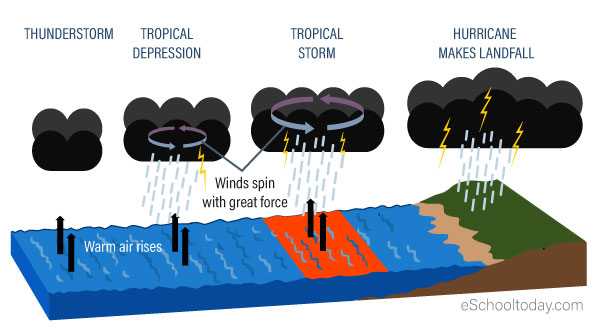
When the ocean water is this toasty, it evaporates like crazy, pumping massive amounts of heat and moisture into the atmosphere. This rising warm, moist air is the engine that drives the whole system. No warm water, no engine. Simple as that. It’s why hurricanes usually form in the late summer and early fall when the tropical oceans have had all summer to bake under the sun. It’s like waiting for your oven to preheat before you can even think about baking that cake, right?
Moisture in the Air: The Batter
Speaking of that rising warm, moist air, the next ingredient is a no-brainer: plenty of moisture in the atmosphere. You've got all that evaporation happening from the warm ocean, and that moisture needs to go somewhere. It condenses, forms clouds, and creates thunderstorms – lots and lots of them.
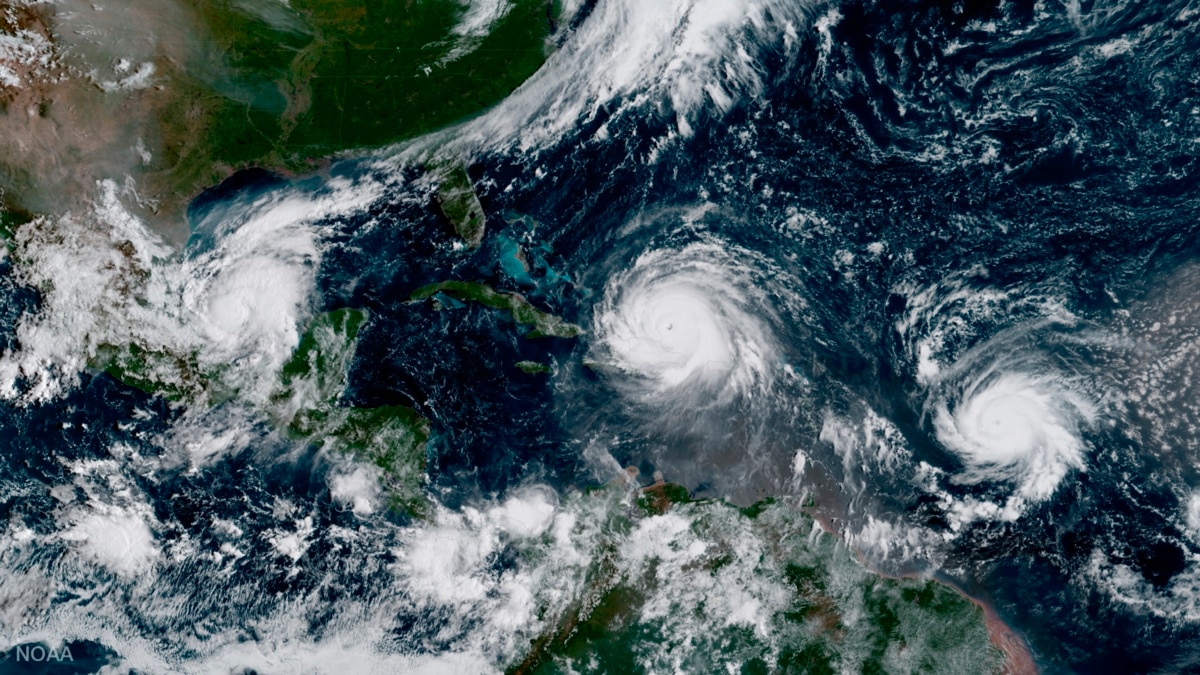
These thunderstorms aren't just pretty light shows; they're the building blocks of the hurricane. A continuous supply of humid air allows these thunderstorms to flourish and organize into that iconic spiraling structure. If the air is too dry, it chokes the system, preventing those towering storm clouds from forming and sustaining themselves. Imagine trying to make a delicious batter without enough liquid – it’d just be a crumbly mess, wouldn't it? Hurricanes need that rich, humid air to hold everything together.
Low Wind Shear: Keeping It Together
Okay, this one might sound a bit techy, but trust me, it’s vital. Hurricanes need low wind shear. What the heck is wind shear? It's basically how much the wind changes in speed or direction as you go higher up in the atmosphere.
Think of a spinning top. If you try to spin it on a wobbly table or in a really gusty room, it’s just going to tip over, right? A hurricane is like that spinning top. It needs to build vertically, like a tall, majestic tower of thunderstorms. If there’s strong wind shear, it rips the top off the storm, displacing the heat and moisture, and preventing it from organizing into that beautiful, deadly spiral. It literally tears it apart. So, for a hurricane to thrive, the atmosphere needs to be relatively calm and uniform from top to bottom. It’s all about maintaining that structural integrity, folks!
A Pre-existing Disturbance: The Starter Kit
Hurricanes don't just spontaneously poof into existence out of thin air (or water). They need a little nudge, a pre-existing weather disturbance, to get things going. This is their "starter kit."
Often, these are tropical waves that roll off the coast of Africa. Sometimes it's an old frontal boundary that's gotten a bit stagnant. Whatever it is, it's a loosely organized area of low pressure with some scattered thunderstorms already present. This disturbance provides the initial "spin" and allows all those other ingredients (warm water, moisture) to start concentrating and working together. Without that initial spark, even with perfect conditions, nothing really takes off. It's like having all the ingredients for a fire but no match.

Distance from the Equator: The Spin Doctor
And finally, a little something called the Coriolis effect. This is why hurricanes never form right on the equator (within about 5 degrees latitude, give or take). The Coriolis effect is a force (due to Earth's rotation) that deflects moving objects – like winds! – to the right in the Northern Hemisphere and to the left in the Southern Hemisphere.
This force is what gives hurricanes their characteristic spin. Right on the equator, the Coriolis effect is practically zero. So, even if all the other conditions are perfect, there's nothing to get that rotational motion going. It's like trying to spin a basketball while standing perfectly still on a frictionless surface – good luck with that! You need a bit of leverage, and that's what being slightly off the equator provides. It’s Earth's own natural spin doctor, if you will.
So there you have it: the full ingredient list for a hurricane. Warm ocean water, plenty of moist air, minimal wind shear, a little pre-existing starter, and a sweet spot far enough from the equator for Earth's rotation to work its magic. Remove any one of these crucial components, and you simply don't get a hurricane. It's a delicate, powerful balance, and understanding it helps us appreciate just how incredible, and sometimes terrifying, our planet's weather systems really are. Stay safe out there, folks!
