
What Class Of Fire Extinguisher Is Used For Grease Fires

Ever been cooking up a storm in the kitchen? The aromas are amazing, everything is sizzling just right. Then, suddenly, a rogue flame leaps up from a pan of hot oil. Panic might set in!
It’s a truly startling moment. Grease fires are incredibly quick and can be scary. But don't worry, there's a special hero ready for just this kind of challenge.
Imagine a world where every problem has a perfect solution. Fire safety is a bit like that! Not all fires are created equal. Each kind needs its own unique approach.
Must Read
This is where the magic of fire extinguisher classes comes in. It’s like a secret language, telling you exactly what kind of fire a particular extinguisher can tackle. Knowing this can feel quite empowering.
We have fires that burn ordinary things, like wood or paper. Then there are fires involving liquids, gases, or even fancy metals. Each one is a different beast!
But the grease fire, oh, the grease fire! This one is a truly unique character. It's a fiery dancer that moves with surprising speed and intensity.
What makes a grease fire so special and, frankly, a bit of a troublemaker? It’s fueled by cooking oils and fats. These substances burn at very high temperatures.
And here's the kicker: you absolutely cannot use water on a grease fire. Water, the universal quencher for many fires, actually makes a grease fire much, much worse. It's like throwing gasoline on it!
This happens because water is heavier than oil. It sinks, turns into super-heated steam instantly, and then violently splatters the burning grease everywhere. This spreads the fire faster than you can say "Oh no!"
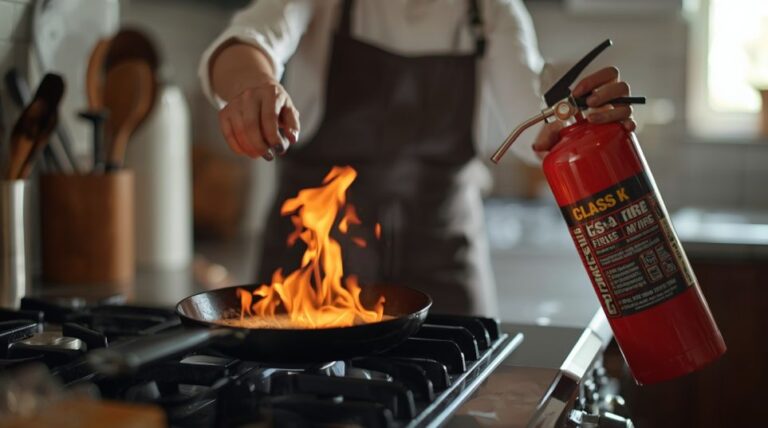
So, for this particular kitchen villain, we need a very specific superhero. A true specialist among fire extinguishers. And its name is a simple yet powerful letter.
The class of fire extinguisher designed specifically for grease fires is known as Class K. That's right, just a single, mighty letter! It stands for "Kitchen."
Isn't that neat? It’s not just any old extinguisher. It’s custom-built for the sizzling, bubbling, and sometimes rebellious world of cooking fats and oils. It’s a precision tool.
"Class K fire extinguishers are specifically designed for fires involving combustible cooking media (vegetable or animal oils and fats) in commercial cooking equipment."
The Class K extinguisher works in a super cool way. It doesn't just try to smother the flames. It actually performs a little bit of science magic.
It releases a special wet chemical agent. When this agent hits the hot grease, it reacts. This reaction is called saponification, which is a fancy word for turning fat or oil into soap!

Imagine turning something dangerous and fiery into a harmless, foamy blanket. That’s what the Class K extinguisher does! It creates a thick, soapy foam that cools the grease and seals off the oxygen.
This dual action of cooling and smothering is what makes it so incredibly effective. It’s not just putting out the fire; it’s making sure it stays out and doesn't reignite.
You'll typically find these robust protectors in commercial kitchens. Think of bustling restaurants, busy cafeterias, and any place where large-scale cooking happens.
They are essential equipment for professional chefs and culinary teams. It brings a real sense of security to those high-pressure environments. Knowing they have the right tool is invaluable.
The Class K extinguisher is a testament to human ingenuity. It’s a reminder that for every challenge, there’s a smart solution waiting to be discovered.
It's special because it tackles a very specific, very dangerous type of fire with elegant precision. It’s not a generalist; it's a dedicated expert.

For us, learning about Class K is entertaining because it unveils a hidden world of specialized safety. It's like discovering a secret gadget in a spy movie.
It makes you look at every fire extinguisher you see in a new light. They aren’t just red cans on a wall. They are specific tools, each with a unique purpose and a story.
This knowledge empowers you. You now understand why kitchens have specific fire safety protocols. You can appreciate the thought and science behind preventing major incidents.
While most home kitchens won't have a full-blown Class K extinguisher (they are quite specialized and larger), the knowledge is still super useful. It teaches us about the dangers of grease fires.
At home, if you have a small grease fire, remember to never use water. Instead, try to smother it with a metal lid or a baking sheet. Turn off the heat source immediately.
Even better, having a small ABC-rated extinguisher, which can handle multiple fire types including some grease fires (though less effectively than a K), is always a good idea for home use.

But for those big, hot, commercial cooking environments, the Class K extinguisher is the undisputed champion. It’s the unsung hero, constantly standing guard.
So next time you're enjoying a meal at your favorite restaurant, take a moment to appreciate the safety measures in place. Perhaps even spot a red extinguisher!
It's a little piece of specialized knowledge that makes the world a safer, and more interesting, place. Who knew fire safety could be so engaging?
It certainly makes you curious, doesn't it? To know more about these silent guardians and their incredible abilities. It might even inspire you to check out your own home's fire safety.
So, when it comes to grease fires, remember the mighty Class K. It's more than just an extinguisher; it's a testament to intelligent design and effective protection.
It's a real lifesaver, and understanding how it works adds a fascinating layer to our everyday world. It's truly a special piece of firefighting innovation.