
What Chemical Is In Fire Extinguisher
Imagine you’re walking through a hallway, maybe at work, or even at your favourite coffee shop. There it is, hanging conspicuously on the wall: a bright red cylinder, looking ready for action. It’s a fire extinguisher, of course! We all know what it does – stops fires – but have you ever paused to wonder what magical potion is actually inside that thing? Is it just super-water? Or some kind of secret anti-fire ray?
Well, pull up a comfy chair, because we’re about to dive into the wonderfully practical world of fire extinguisher chemistry. Trust me, it’s far more interesting (and way more important!) than you might think. No fancy lab coats required, just a bit of curiosity!
The Classic: Water (H2O)
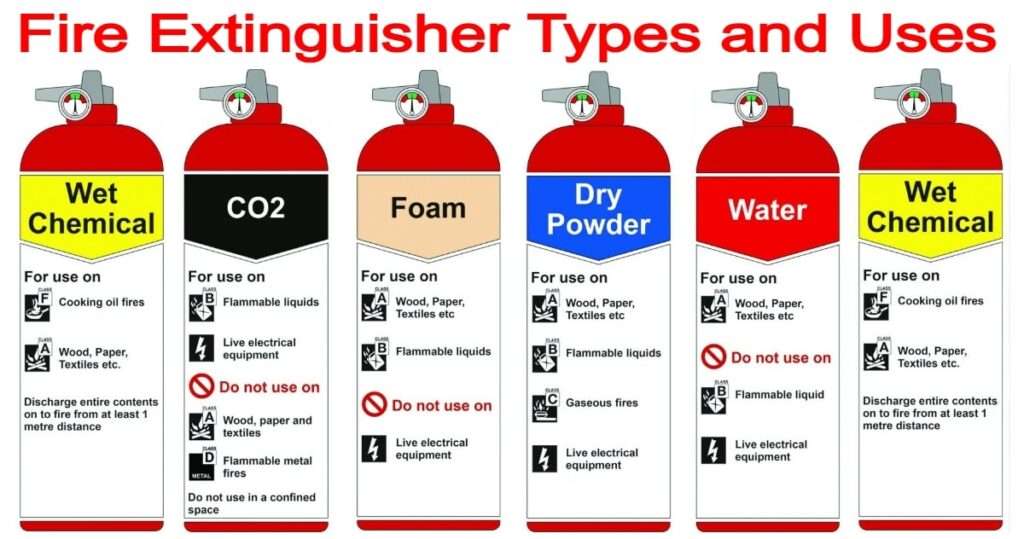
Let's start with the one we all know and love: water. Yes, good old H2O, familiar from your tap! Some fire extinguishers are just packed with plain water, often with a little something extra to make it spray better or prevent freezing. These are usually labelled "Class A" and are fantastic for fires involving ordinary combustibles – think wood, paper, textiles, that sort of thing.
Must Read
How does it work? Simple! Fire needs heat to keep going, right? Water is like that friend who always brings a huge bucket of ice to the party. It rapidly cools everything down, soaking up the heat until the burning material is just too chilly to keep the fire going. It's the most straightforward method, effectively chilling the fire into submission. So, for a bonfire that got a bit too ambitious, a water extinguisher is your go-to hero. But remember, never use water on grease or electrical fires – that’s a recipe for a much bigger mess and potential danger!
The Fizzy Friend: Carbon Dioxide (CO2)
Next up, we have the silent but incredibly effective superhero: Carbon Dioxide, or CO2. You know this gas from fizzy drinks – it’s what makes your soda pop! In an extinguisher, CO2 is stored under high pressure, and when released, it comes out as a blast of super-cold gas. These are often labelled "Class B" for flammable liquids and "Class C" for electrical fires.
How does this invisible force fight fire? Well, fire needs oxygen to breathe, just like we do. When you spray CO2, it swoops in like a party crasher, pushing all the oxygen away from the fire. No oxygen? No fire! It’s like putting a really heavy, invisible blanket over the flame. Plus, because it’s a gas, it leaves absolutely no messy residue behind. This makes CO2 extinguishers perfect for delicate electronics or kitchen fires where you don't want to ruin your expensive gadget or create a cleaning nightmare. CO2 is clean and efficient, making it a favourite in offices and server rooms.
The Powdery Powerhouse: Dry Chemical (ABC/BC)
Now for the real workhorse you’ll see almost everywhere: the Dry Chemical extinguisher. These are typically multi-purpose and carry an "ABC" rating, meaning they tackle Class A (ordinary combustibles), Class B (flammable liquids), and Class C (electrical) fires. This makes them incredibly versatile, a true jack-of-all-trades in the fire-fighting world.
What’s inside? Usually, it's a fine powder, often made of monoammonium phosphate (for ABC types) or sodium bicarbonate (for BC types). Think of it like a super-fine, fire-fighting baking soda! When you spray it, this powder acts in a couple of clever ways. Firstly, it forms a crusty barrier, smothering the fire by cutting off its oxygen supply – much like CO2. But here's the clever bit: it also interrupts the chemical reaction of the fire itself. Imagine a tiny, energetic dance party where the fire is grooving. The dry chemical powder bursts in and trips up all the dancers, effectively stopping the party dead in its tracks.
While incredibly effective, the downside is that these powders can make a huge mess. Cleaning up after one of these goes off is quite a chore, but when it comes to stopping a raging multi-class fire, a bit of clean-up is a small price to pay!

The Kitchen Crusader: Wet Chemical (Class K)
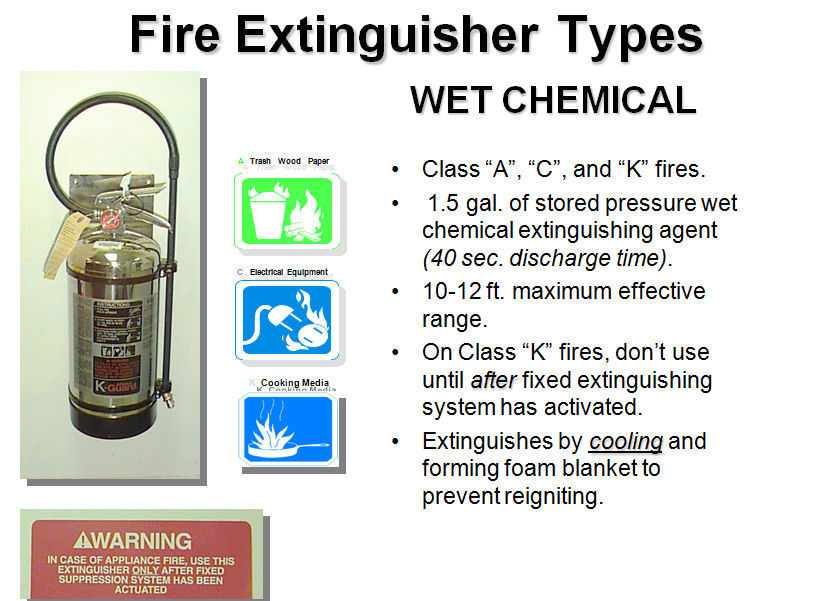
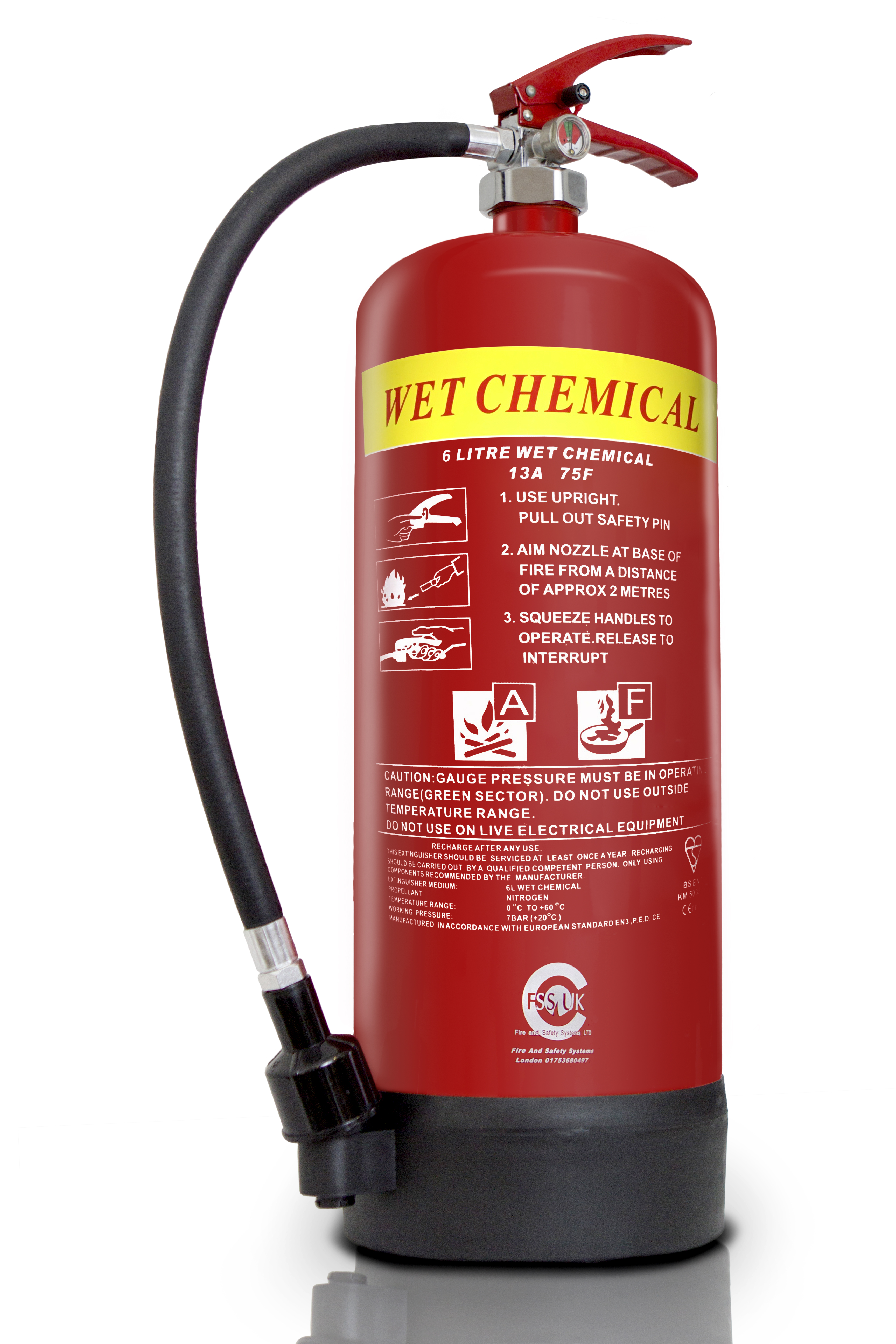
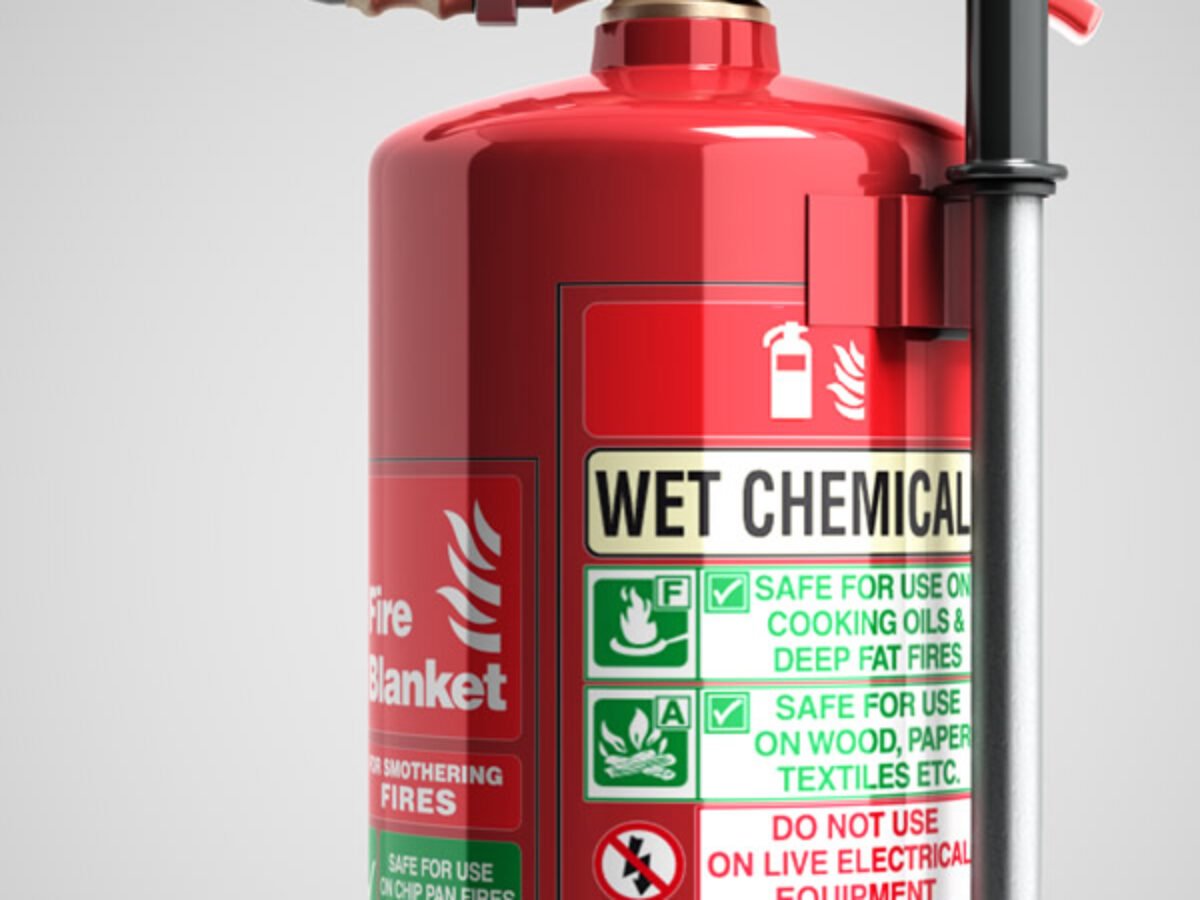
For the gourmet chefs and passionate home cooks among us, meet the Wet Chemical extinguisher, specially designed for "Class K" fires. What kind of fires are those? Oh, just the terrifying kind involving cooking oils and fats, like deep fryers going rogue. These fires burn incredibly hot and can be notoriously difficult to put out with other methods.
The chemical inside is typically a potassium-based solution. When sprayed onto hot cooking oil, it performs a neat trick called saponification. Don't let the fancy word fool you! It simply means the chemical reacts with the burning fat or oil to create a soapy, foam-like layer. Think of it like giving the fire a big, foamy hug that says, "Nope, not today!" Not only does it cool the oil (removing heat), but that soapy foam forms a thick, non-combustible blanket that smothers the flames and prevents re-ignition. These are indispensable in commercial kitchens, but a good idea for any serious home cook too.
The High-Tech Hero: Clean Agents
Finally, for those super-sensitive environments – like data centers, museums with priceless artefacts, or laboratories with delicate equipment – there are Clean Agent extinguishers. These contain chemicals like Halotron or FM-200. Their superpower? They put out fires without leaving behind any damaging residue.
Like CO2, they often work by displacing oxygen and interrupting the fire’s chemical reaction. But unlike dry chemicals, they don't leave a dusty film, and unlike water, they don't cause water damage. It’s like they stop the fire with a whisper, not a shout. They're the elegant, precision tools of the fire-fighting world, protecting our most valuable and fragile assets.
So, Why Should We Care About This Stuff?
Okay, you might be thinking, "This is all very interesting, but why should I, an everyday person, bother knowing the difference between monoammonium phosphate and potassium acetate?" And that’s a fair question!
The answer is simple: knowing saves lives and property. Using the wrong type of extinguisher can be worse than using no extinguisher at all. Imagine throwing water on a grease fire – instead of putting it out, you'd likely spread the flames and make the situation far more dangerous! Or dousing your expensive laptop with a dry chemical powder to put out a tiny spark – sure, the spark might go out, but your laptop is probably toast anyway.
Think of it like this: if you need to hammer a nail, you grab a hammer, right? You wouldn’t try to use a screwdriver, even though both are tools. Fire extinguishers are tools too, and each is designed for a specific job. Knowing which tool to grab means you can act quickly, effectively, and most importantly, safely, when every second counts.
It’s about being empowered, not panicked. A little knowledge about these chemical champions empowers you to protect yourself, your family, your home, or your workplace from a small flame turning into a big disaster. Those labels on the extinguishers aren't just for show; they're vital instructions telling you which chemical superhero is inside, ready to leap into action against a specific type of villainous fire.
So, the next time you spot that unassuming red cylinder on the wall, you’ll know it’s not just a generic fire stopper. It’s a finely tuned device, packed with specific chemicals, each one a silent guardian ready to spring into action against different types of fiery threats. And now, you’re in on the secret! Stay safe, stay curious, and maybe give that everyday hero a little nod of appreciation. You never know when knowing its secret weapon might just save your day!