
What Causes The Battery Light To Come On
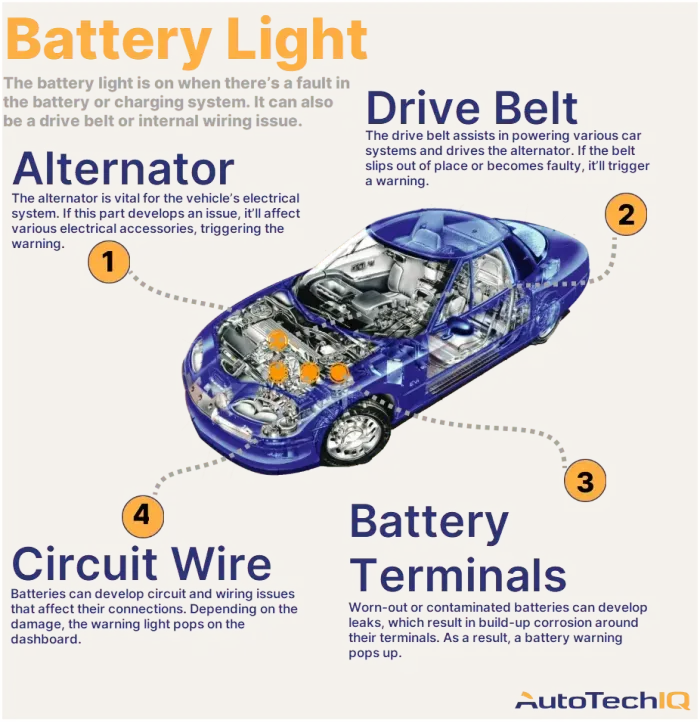
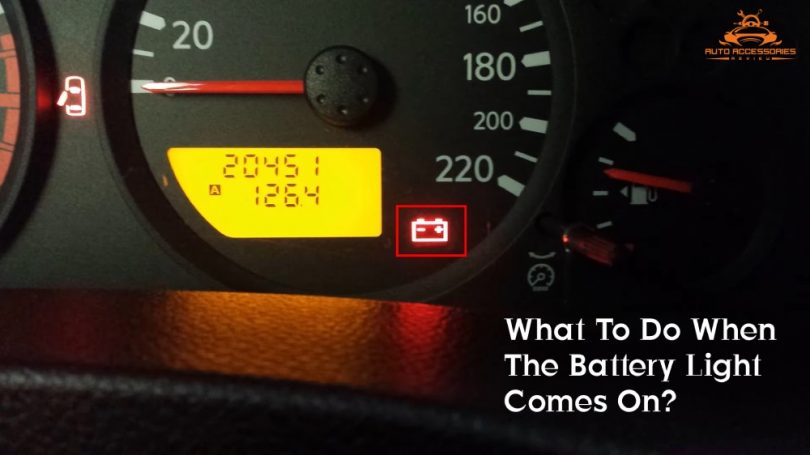
Picture this: You’re cruising along, maybe singing off-key to your favorite tune, maybe just enjoying the drive, when suddenly – bam! – a little red light flickers to life on your dashboard. It looks like a tiny battery, and your heart probably does a little flop right there in your chest. "Oh great," you think, "is my car about to die? Am I stranded? Did I forget to feed the car electricity for breakfast?"
That little symbol, my friend, is often the harbinger of a minor panic attack for many drivers. And for good reason! It’s one of those lights that just screams "trouble ahead." But here’s the thing: while it looks like a battery, and it is related to your battery, it’s not always as simple as just "my battery is dead." Nope, this little guy is usually telling you something a bit more profound, and perhaps, more urgent.
It's Not (Always) Just the Battery, My Friend!
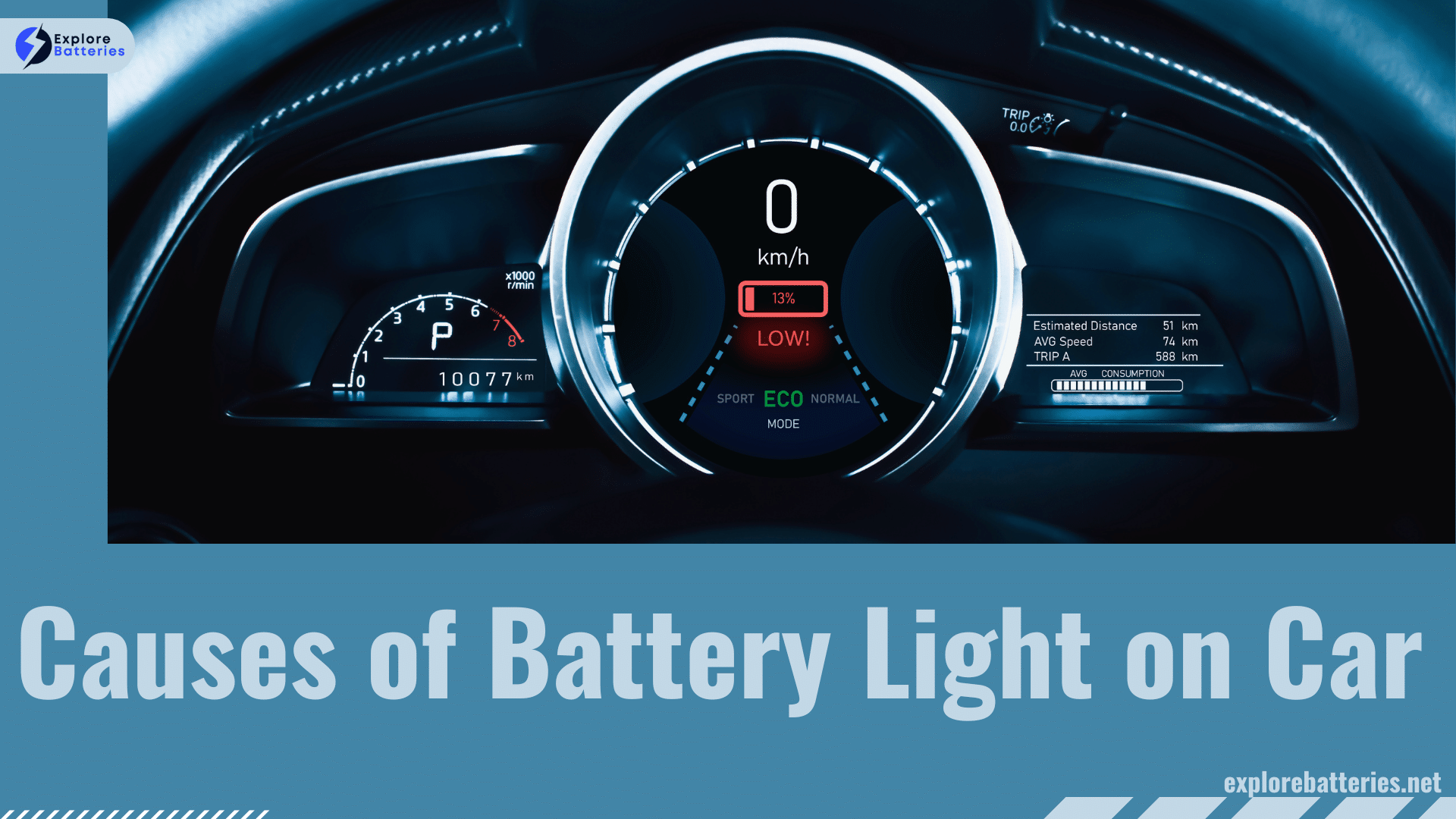
I know, I know, the symbol is literally a battery. So it’s natural to assume a dead battery is the culprit. And sure, sometimes a truly awful battery can trigger it. But more often than not, when that battery light glows, it’s waving a big, red flag about your car’s entire charging system. Think of your car as having its own miniature power grid, and this light is the alarm that screams, "Houston, we have a power generation problem!"
Must Read
Let's dive into the fascinating (and sometimes frustrating) world of what actually keeps your car juiced up. Because understanding these components will make that little red light seem a lot less mysterious.
The Usual Suspects: What's Really Going On?
The Alternator: The Star of the Show (That Often Goes Rogue)
This is, hands down, the most common reason that battery light comes on. Your battery gets your car started, right? But it’s the alternator’s job to keep it charged while you’re driving and to power all your car’s electrical systems – the radio, the lights, the wipers, your heated seats (oh, glorious heated seats!).
Think of the alternator as your car’s personal power plant. It takes mechanical energy from the engine (via a belt, we’ll get to that) and converts it into electrical energy. If your alternator goes kaput, it stops charging the battery, and suddenly, your car is running purely on battery power. And trust me, that battery wasn't built for the long haul on its own.
The Serpentine Belt: The Unsung Hero (Until It Snaps)
Remember how I said the alternator gets its power from the engine via a belt? That’s typically the serpentine belt. It’s a long, winding belt that powers a bunch of accessories, including, you guessed it, the alternator. If this belt is worn out, loose, or (gasp!) breaks entirely, your alternator won't spin. No spin, no charge. Simple as that.
You might also notice other things failing if the serpentine belt is the issue, like your power steering suddenly feeling like you’re wrestling an alligator, or your AC blowing hot air. So, if the battery light comes on and things feel... stiff, check this belt out!

Failing Battery: Yes, Sometimes It *Is the Battery
Okay, so I spent all this time saying it’s not just the battery. But sometimes, a battery that’s on its last legs can't hold a charge properly, even if the alternator is doing its job. This can sometimes confuse the charging system enough to trigger the light. More often, a battery that's too weak makes the alternator work overtime, possibly leading to its early demise. It's a vicious cycle!
If your car has been struggling to start, or if your battery is old (typically 3-5 years is its lifespan), it might be time for a new one anyway.
Loose or Corroded Battery Cables/Terminals: The Simple Fix
Sometimes, the fix is blessedly simple. If the cables connected to your battery are loose, corroded, or just not making a good connection, the charging system won't be able to effectively send power to the battery or receive power from the alternator. It's like trying to get water through a leaky hose – some gets through, but not enough, and the system knows it's struggling.
A quick visual inspection (when the car is off, of course!) can often reveal this. Clean off any white, powdery crud and make sure those connections are snug.
Voltage Regulator Issues: The Brains Behind the Power
The voltage regulator ensures your alternator is pumping out the correct amount of voltage. Too little, and your battery doesn't charge. Too much, and you could fry your car's electrical components. (Yikes!) Often, the voltage regulator is built right into the alternator, so when one goes bad, the other usually tags along for the ride.
If this tiny brain isn't regulating, the battery light will flicker on to let you know something is amiss with the power flow.

What To Do When That Light Comes On
So, the red battery light just popped up. Don't panic! (Easier said than done, right?) But seriously, here’s the quick lowdown:
- Reduce Electrical Load: Turn off anything not absolutely essential – radio, AC, heated seats, even your headlights during the day if it's safe. You're conserving precious battery power.
- Head Straight to a Mechanic: This isn't a light you want to ignore for long. Your car is running on borrowed time (and battery power), and it *will eventually die.
- Don't Turn Off the Engine Unnecessarily: If you're close to home or a shop, try not to shut off the engine. Each start draws a lot of power from the battery, and if it's not recharging, you might not be able to restart it.
Ultimately, that little battery light is your car's way of saying, "Hey, something isn't quite right with how I'm making and using electricity!" It’s a crucial warning that shouldn't be ignored. Knowing what causes it is the first step, and getting it checked out promptly is the second. Stay safe out there, and keep those electrons flowing!