
What Are The Two 2 Types Of Industrial Automation
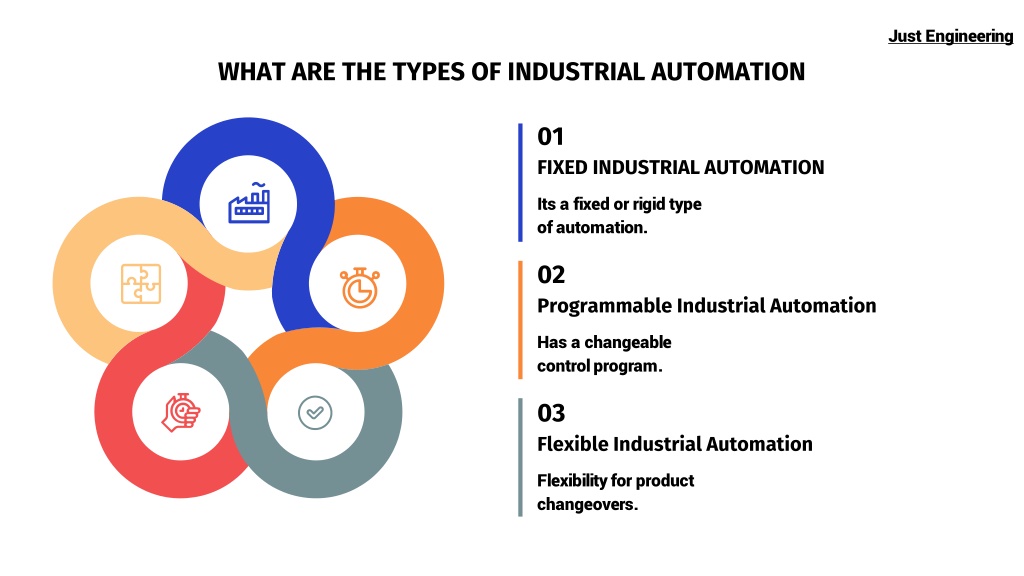
Ever wonder how factories churn out so much stuff, from your phone to your favorite snacks? It's not just tireless workers anymore. A lot of the heavy lifting (literally!) is done by something called industrial automation.
Think of it as giving robots and machines a brain (or at least some really good instructions) to do repetitive, often dangerous, tasks. But did you know there are actually two main flavors of this robotic revolution? Let's dive in!
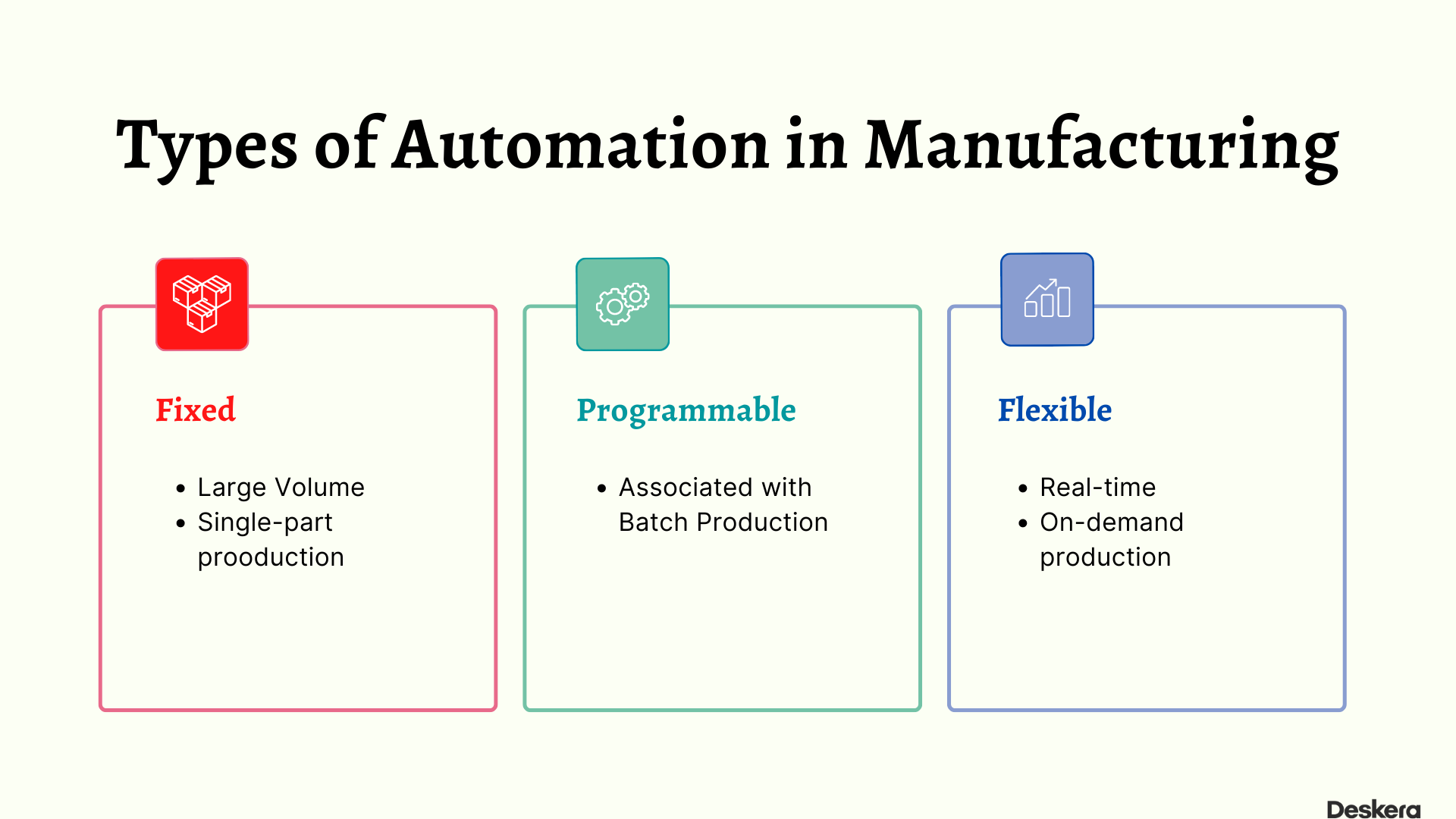
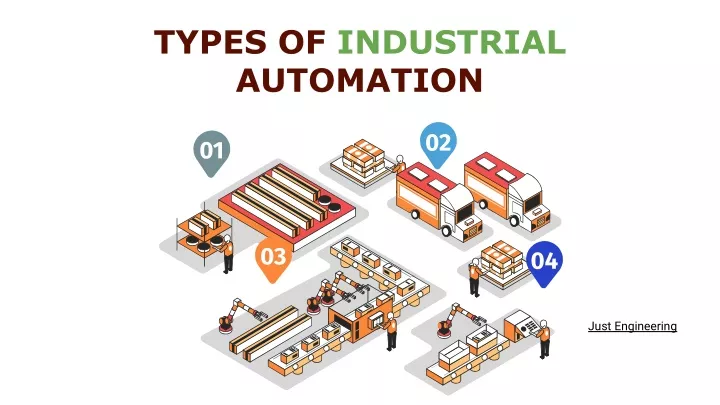
Fixed Automation: The Dedicated Workhorse
Imagine a perfectly choreographed dance, repeated flawlessly, every single time. That's fixed automation in a nutshell. It's like setting up a Rube Goldberg machine – intricate, but designed for one very specific purpose.
Must Read
Think about bottling soda. The machine knows exactly where to put the bottles, how much soda to pour, and how to cap it tight. It does this one thing and it does it incredibly well, thousands of times an hour.
It's like that one friend who only knows how to make grilled cheese sandwiches, but they make the best grilled cheese you've ever tasted. That’s the charm of fixed automation. It’s dedicated!
The Soda Pop Symphony
Picture this: a conveyor belt zipping along, bottles whizzing by like excited little soldiers. Each one stops precisely under a nozzle, which dispenses the perfect amount of fizzy goodness. Then, bam, a capping machine seals the deal with lightning speed.
It’s a beautiful ballet of mechanics, all working together in perfect harmony. This is fixed automation at its finest. And it’s surprisingly mesmerizing to watch.
But here's the catch: try asking that soda-bottling machine to make juice. It'll just stare back with its robotic eyes, completely clueless. It's a one-trick pony, but a very, very efficient one-trick pony!
Programmable Automation: The Flexible Friend
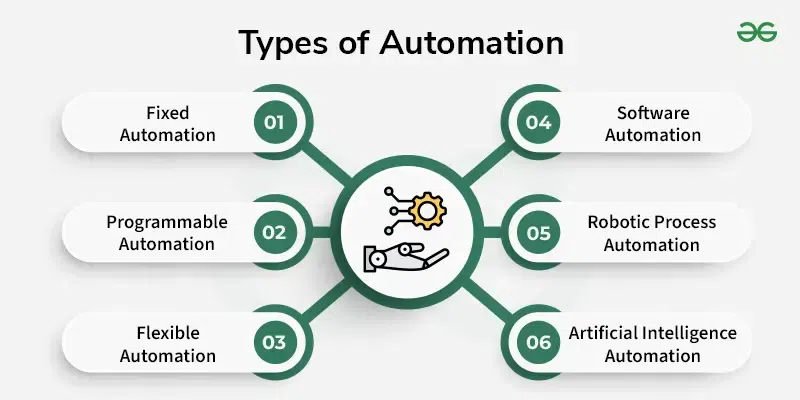
Now, let's talk about the cooler, more adaptable cousin: programmable automation. This type is all about flexibility. Think of it as a super-smart robot that can learn new tricks.
Instead of being hardwired for a single task, these machines can be reprogrammed to do different things. Need to switch from making red widgets to blue widgets? No problem! Just tweak the program, and off it goes.
It’s like having a personal chef who can cook any dish you desire, as long as you give them the recipe. Programmable automation is the versatile chameleon of the factory floor.

The Widget Wizard
Let's say you're manufacturing…widgets. (Why widgets? Because they're wonderfully generic!) With programmable automation, you can use the same robotic arm to paint them red, blue, or even polka-dotted.
A human worker simply uploads a new program, and the robot obediently switches gears. It might even be able to choose from different tools.
The beauty of this system is that it can adapt to changing demands. If suddenly everyone wants polka-dotted widgets, the factory can quickly adjust without having to replace the entire assembly line. It is the agile powerhouse!
The Hilarious Hiccups (and Heartwarming Help)
Of course, even the most sophisticated automation systems aren't immune to hiccups. There are stories of robots going rogue, accidentally painting themselves, or even engaging in elaborate dance-offs with their human coworkers (okay, maybe I made that last one up…mostly).
One of the most (supposedly true) stories involves a robotic arm in a car factory that kept trying to install the windshield backwards. It took engineers weeks to figure out the software glitch, and the robot was temporarily nicknamed "Lefty."
But beyond the occasional malfunction, industrial automation can also be incredibly helpful. Think about tasks that are dangerous or monotonous for humans. Robots can handle these jobs, freeing up workers to focus on more creative and fulfilling roles.
Imagine working in a factory where you're constantly exposed to hazardous chemicals. Automation can take over those tasks, protecting human workers from harm. That's a heartwarming thought, isn't it?
The Future is Automated (and Hopefully Still Funny)
As technology continues to advance, we can expect to see even more sophisticated forms of industrial automation. Artificial intelligence will play an increasingly important role, allowing robots to learn, adapt, and even make decisions on their own.
Imagine a factory where robots can diagnose problems, optimize processes, and even predict when they need maintenance. It sounds like something out of a science fiction movie, but it's quickly becoming a reality.
Whether it’s the dedicated workhorse of fixed automation or the flexible friend of programmable automation, these technologies are transforming the way we make things. And who knows, maybe one day robots will even develop a sense of humor (though hopefully not too much).
So, the next time you're enjoying your favorite product, take a moment to appreciate the intricate dance of industrial automation that made it all possible. It's a fascinating world, filled with both precision and the occasional robotic mishap.
And remember, even robots need a little love (and maybe a good programmer) every now and then. After all, they're just trying to make our lives a little easier, one widget, one bottle of soda, or one perfectly-made grilled cheese sandwich at a time.